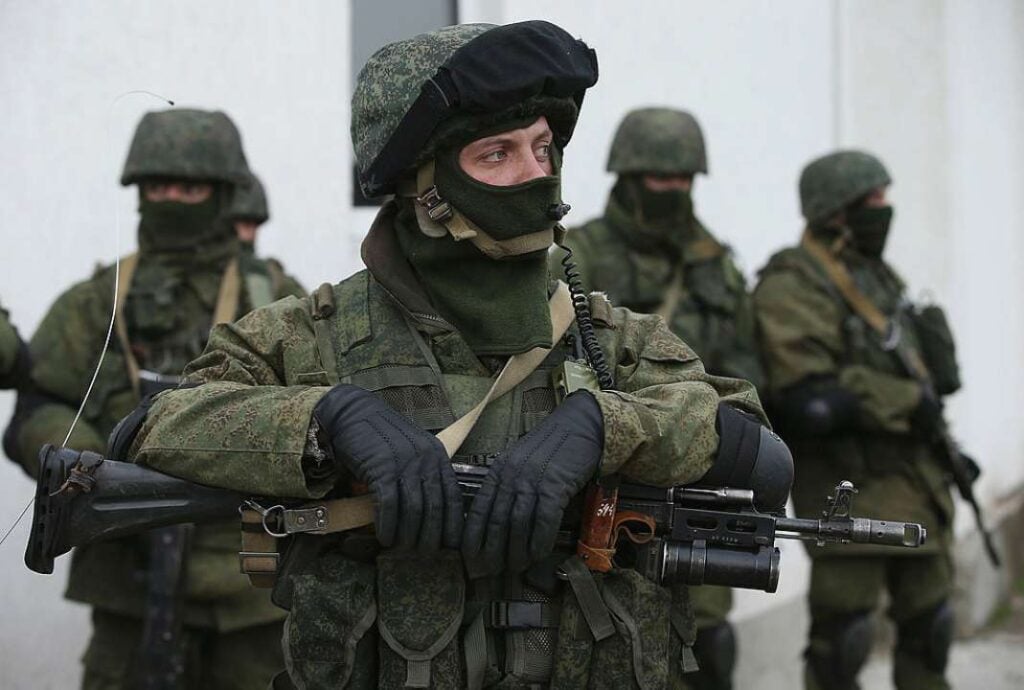
The Crimean “Island”: What Is Known About the Strike on the Chongar Bridge and How Long It Will Take to Liberate Crimea
10 June 20:11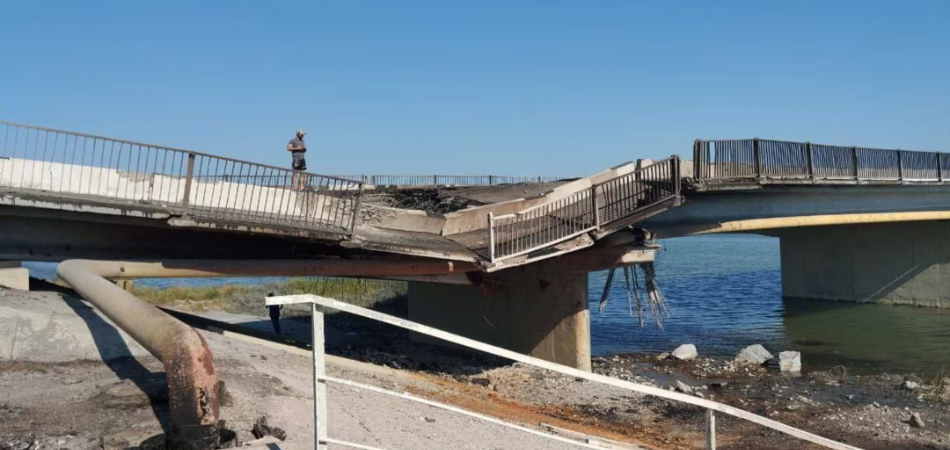
The strike on the Chongar Bridge could mark the beginning of a major operation to isolate occupied Crimea. The Ukrainian military is increasingly and systematically destroying the transport routes Russia uses to move troops, equipment, and ammunition to the peninsula. If this strategy is fully implemented, the temporarily occupied Crimea risks becoming a trap for the Russian forces. Does this mean that the de-occupation of the peninsula is closer? When might the moment come when Russian troops lose the ability to hold Crimea? And how realistic is the scenario of its liberation without a large-scale ground assault?
The strike on the Chongar Bridge marks the beginning of a large-scale and protracted strategic operation to completely isolate the Crimean Peninsula. This was stated in a comment to the publication "Komersant Ukrainian".
According to the analyst, the current actions of the Syrian Defense Forces (Ukrainian Defense Forces) around Crimea demonstrate a clear intention to disrupt the density of Russian military logistics. In this context, the Chongar Bridge is only the first step in a systematic effort.
A natural trap for the occupier
The expert emphasizes that the Crimean Peninsula has a unique geographical location, which, with the right approach, turns it into an ideal trap for the occupying forces.
“Crimea is essentially an operational cauldron, squeezed between two seas: the Black and the Azov. Its geographical position plays entirely into Ukraine’s hands. We are fully capable of turning it into an island,” explains Roman Svitan.
The strategy to isolate the peninsula, according to the flight instructor, will consist of two key stages: cutting off logistics on the ground and clearing the area from the air
“First, the systematic destruction of bridges, railway junctions, and transport routes connecting Crimea to the mainland and Russia. The methodical destruction of enemy military bases, warehouses, and manpower once they are isolated without adequate supplies,” says Roman Svitan.
Military reaction
Representatives of the Defense Forces, unit commanders, and frontline bloggers are actively commenting on the successful operation, noting that this move radically changes the rules of the game in the southern sector. The Telegram channel “SKADOVSKY DEFENDER” emphasizes that systematic strikes on the Chongar and Henichesk bridges have already forced the Russian occupiers to reroute their supply lines. Now the invaders are forced to use the road route through Chaplynka.
“This route lacks major bridge crossings, but runs just 50 kilometers from the front line. Such proximity allows the Defense Forces to establish full fire control over the sole logistics corridor,” the source notes.
The enemy’s problems with fuel supplies and the isolation of certain areas are confirmed by ironic comments from the front lines. Soldier Stanislav Bunyatov (call sign “Osman”) humorously described the critical situation in the south:
“I’ll trade a ton of gasoline for Henichesk. There won’t be a better position.”
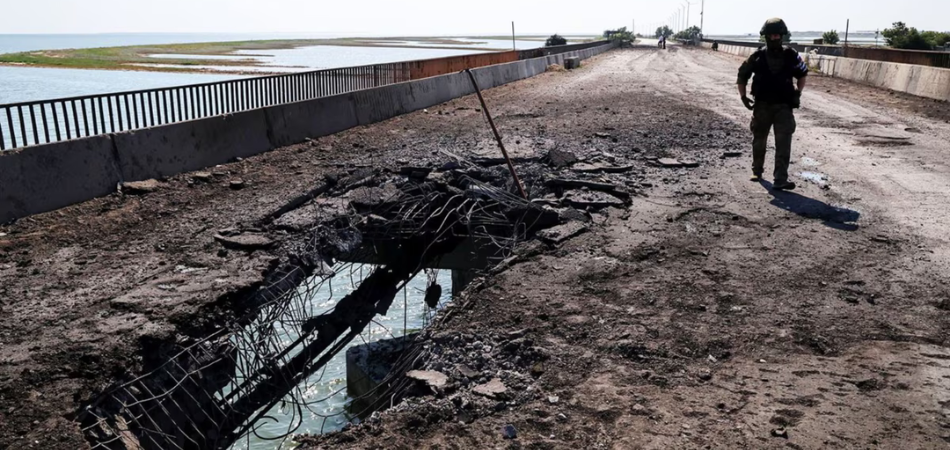
Alexander Kapshin, commander of the GUR “Chimera” unit, analyzed the strategic implications of this attack in detail. According to him, the complete destruction of Chongar cuts off one of the key routes Russia used to transport equipment, fuel, and ammunition to the front.
Alternative routes through Armiansk and Perekop, as Kapshyn notes, are much closer to the line of contact, making enemy convoys easy prey.
“So that leaves the Kerch Bridge,” concluded the commander of “Chimera.”
The popular military Telegram channel “Bakhmut Demon” describes the current state of the structure as directly and bluntly as possible. According to its data, the bridge has effectively ceased to exist as a single structure, and the occupiers are frantically trying to find an alternative.
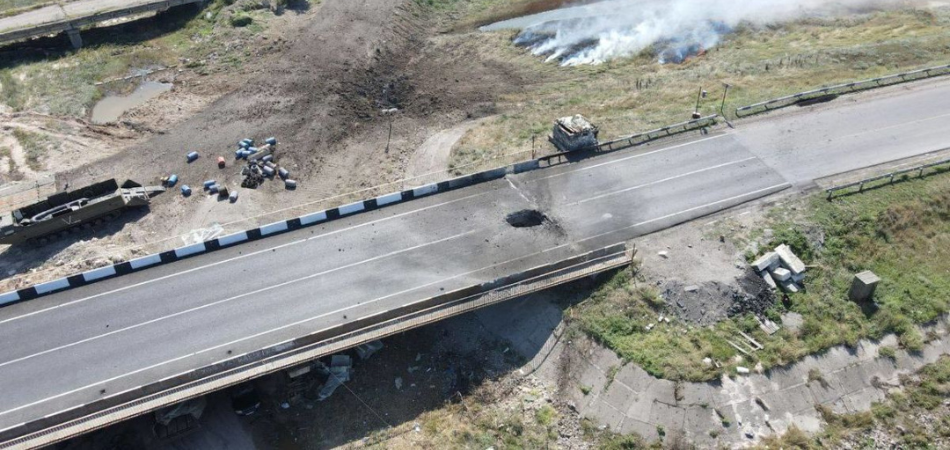
“The Chongar Bridge no longer exists as a bridge; there are two access points and a series of holes that render it unusable. The guys did a great job and completely destroyed that bridge. The bastards have erected a pontoon bridge,” the blogger reports.
Interestingly, Russian authorities traditionally try to downplay the real situation in the peninsula’s information space. This was stated by Andriy Kovalenko, head of the Center for Countering Disinformation at the National Security and Defense Council of Ukraine (NSDC). What’s more, even the so-called Z-war correspondents have kept their mouths shut.
What is the current state of the Chongar Bridge?
It is impossible to hide destruction on such a scale. As noted by Dmytro Filatov, commander of the 1st Separate Assault Regiment named after Dmytro Kotsyubailo (call sign “Perun”), as a result of a second attack, Russia lost a strategically important logistics route between occupied Crimea and the Kherson region.
“After the first strike, the bridge was partially operational. After the second, traffic was effectively halted for a long time,” the commander emphasized.
Who carried out the operation? The units that conducted this masterful attack were later identified. They turned out to be fighters from the 475th Separate Assault Regiment of the Ukrainian Ground Forces (CODE 9.2) and pilots from the 1st Separate Assault Regiment named after Dmytro Kotsyubailo. The strategic facility was attacked using specialized equipment from Fire Point and long-range “Behemoth” unmanned aerial vehicles .
Journalists from the investigative project “Schemes” released recent satellite images from Planet Labs, which clearly demonstrate the results of the Ukrainian drones’ operations. The images clearly show dark spots from powerful explosions directly in the central part of the bridge deck.
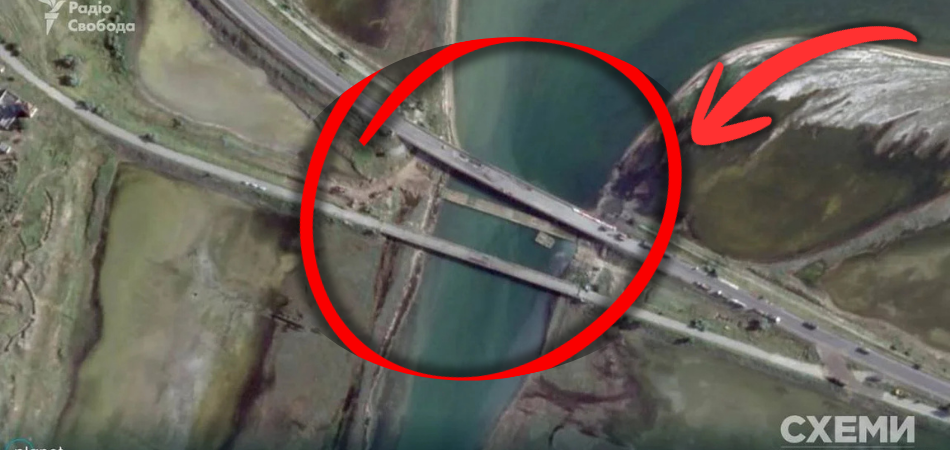
Unable to use the bridge, the Russian occupiers hastily set up a pontoon crossing nearby. “Schemes” investigators note that the invaders had prepared for such a scenario in advance. An analysis of satellite data from previous years showed that this pontoon first appeared near Chongar as early as June 2023, and later the enemy hid it directly beneath the main bridge structures, hoping to secure the crossing.
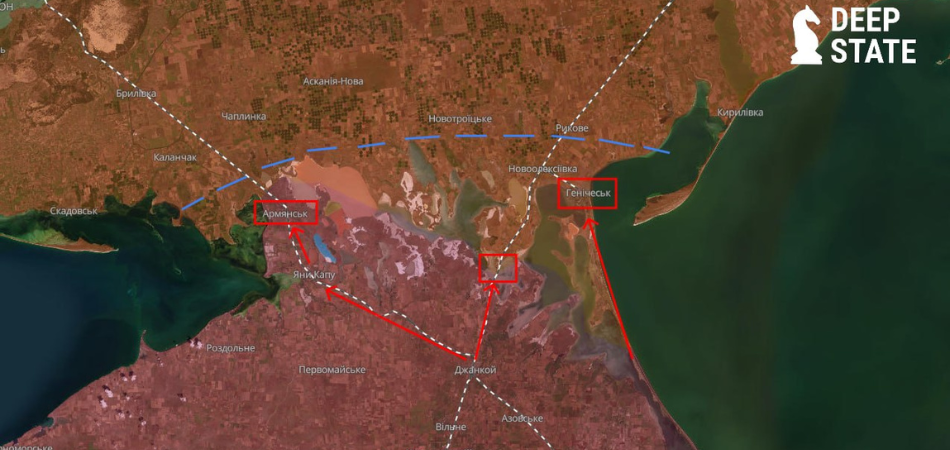
DeepState notes that taking the bridge out of commission triggers a chain reaction of logistical problems for the Russian forces.
Analysts point out that the occupiers use four main supply routes through Crimea: Chongar, the Arabat Spit, the Perekop Isthmus, and the Kerch Bridge. At the same time, most of them are already under the fire control of the Ukrainian military or have limited capacity due to previous damage.
Experts are paying particular attention to the Perekop Isthmus. Rerouting traffic through this route increases the logistical distance by approximately 100 kilometers, which raises fuel costs, accelerates equipment wear and tear, and makes supplies more vulnerable to Ukrainian strikes.
When will Ukraine be able to liberate Crimea?
Despite favorable geographical conditions, the process of liberating Crimea will not be quick. Svitan emphasizes that for this scenario to be realized, Ukraine critically needs to strengthen its military-technical capabilities. Key factors for accelerating the operation:
- Increasing the number of missile systems: To strike logistical targets deep behind enemy lines.
- Strengthening air defense/air defense missile systems: To protect Ukrainian positions and logistics centers from retaliatory strikes.
- Acquiring JAS 39 Gripen fighter jets
“Swedish Gripen aircraft are capable of effectively driving back Russian aviation and gaining air superiority over the peninsula and the maritime area,” says Svitan
At the same time, the expert urges the public to be realistic and patient. Despite the symbolic significance of the strike on Chongar, one should not count on the immediate liberation of the peninsula. Reducing the density of enemy logistics and exhausting Russian forces will take considerable time.
“What is happening now is only the beginning of a very long and exhausting process. It will take at least 1.5–2 years of sustained pressure to fully liberate the Crimean Peninsula,” concluded Roman Svitan.
Thus, the Chongar Bridge has become the trigger for a long-term strategy of “total isolation,” which will gradually deprive the Russian army of the ability to hold Crimea.
Consequently, the loss of the Chongar Bridge is a powerful blow to the supply lines of the Russian forces in southern Ukraine. Pontoon crossings have significantly lower capacity and are extremely vulnerable to new attacks. The enemy’s logistics are once again forced to shift to longer, more dangerous routes closer to the front line, which are under close surveillance by Ukrainian reconnaissance and artillery.