Gas, investments, technology: Kyiv and Ankara are preparing a major energy project
24 April 15:07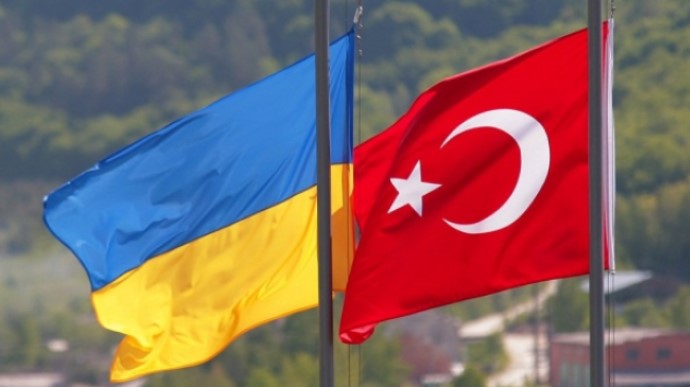 ANALYSIS FROM
Kyiv and Ankara have agreed on a shared interest in implementing a large-scale energy project. Ukrainian President Volodymyr Zelenskyy made this announcement during his visit to Turkey in early April, according to "Komersant Ukrainian".
According to him, the relevant agreement was reached during a meeting with Turkish President Recep Tayyip Erdogan.
The Ukrainian leader also noted that following the talks , Serhiy Koretskyi, head of Naftogaz of Ukraine, held a separate meeting with Turkish Energy Minister Alparslan Bayraktar.
Although the details of this “major project” are not being disclosed at this time, energy cooperation between Ukraine and Turkey is generally one of the most promising and strategically important areas of bilateral relations.
It is based on a mutual interest in diversifying supply sources, restoring damaged infrastructure, and jointly developing Black Sea resources.
Energy in Need of Support
Following the start of Russia’s full-scale invasion, this cooperation gained new momentum. Ukraine faced massive attacks on its energy infrastructure, and Turkey, as one of the region’s key players, offered its expertise and investments to rebuild the sector.
In particular, Ankara is ready to supply equipment for distributed generation—mobile boiler houses, generators, and heat supply systems. Turkish companies are already participating in projects to reconstruct critical infrastructure, with a focus on its resilience and protection against new attacks.
At the same time, Turkey, which is actively developing its own hydrocarbon production in the Black Sea, views Ukraine as a partner with experience in offshore production. This opens up opportunities for joint investments in gas transmission infrastructure, LNG terminals, and the creation of a regional gas hub for supplying energy resources to Europe.
This interest is no coincidence. Ukraine has significant resource potential and many years of experience in oil and gas production.
At the same time, following the annexation of Crimea, the country lost access to part of the Black Sea shelf, leading to a significant drop in natural gas production.
The main hydrocarbon deposits are concentrated in three regions: the Black Sea-Azov, Carpathian, and Dnipro-Donetsk regions. The latter remains key for gas production, though a significant portion of it lies within the zone of active hostilities.
It is telling that these very territories are today the epicenter of the war. Control over resources is not necessarily Russia’s sole objective, but it certainly enhances the strategic importance of these regions.
What can Turkey do?
Turkish expert Mustafa Metin Kaslılar believes that in this context, Turkey can play an important role in restoring Ukraine’s energy security.
According to him, following the outbreak of full-scale war, Ankara is capable of offering a wide range of options in the energy supply sector.
“A particularly critical area of cooperation is the supply and storage of natural gas. Expanding the capacity of the Trans-Balkan gas transport corridor with Turkey’s participation could directly impact energy security across all of Eastern Europe,” the expert notes.
Currently, Turkish investments in Ukraine’s energy sector amount to approximately $600 million.
The renewable energy sector is no less important. In the future, over 10% of this sector in Ukraine could be supplied with the participation of Turkish companies.
In addition, Turkey already supplies Ukraine with a significant number of generators, which is critical for the stability of energy supply to Ukrainian cities.
Watch us on YouTube: important topics – without censorship
Alternative Energy
Ankara is also one of the region’s leaders in the development of solar and wind energy. Ukraine, in turn, is actively engaging Turkish businesses in “clean” energy projects—the construction of new capacity, infrastructure modernization, and the implementation of modern technologies.
The parties are already considering the possibility of signing memorandums in the areas of energy efficiency and renewable energy sources.
Turkish companies that implement similar projects at home can bring not only capital but also technology and management expertise to Ukraine.
The economic benefits of such cooperation are mutually beneficial. For Ukraine, this means faster restoration of energy capacity, reduced dependence on Russian energy resources, and accelerated integration into the European market.
For Turkey, it means access to resources and technologies, diversification of supplies, and strengthening its status as a regional energy hub.
At the same time, the energy partnership is closely linked to security considerations. Both countries are interested in stability in the Black Sea region, safe navigation, and the protection of critical infrastructure.
Kaslılar also recalled that during the war, Ukraine approached Turkey with a request to provide so-called “energy ships” that could serve as mobile power plants.
According to him, Kyiv considered this option, in particular, due to the difficulty of the Russian Federation targeting such facilities.
The project involved the Turkish company Karpowership and envisaged the supply of electricity via ports in Moldova and Romania. However, due to a lack of external funding, its implementation was suspended.
According to the expert’s estimates, if the project were launched, the annual cost of electricity for Ukraine could amount to approximately $250 million.
Implications for Ukraine
For Ukraine, developing an energy partnership with Turkey has several key implications. First and foremost, it involves finding new points of support for a country whose energy sector remains under constant attack.
Additionally, Kyiv is already seeking to secure its place in the future post-war system of energy ties.
And finally, it is an attempt to transform Turkey from a political partner into an economically interested player. After all, when deep economic interdependence forms between states, political agreements become significantly more stable.
Thus, even without revealing the details of the “grand project,” it is already clear: energy cooperation between Ukraine and Turkey is reaching a new level.
This is not just about overcoming the current crisis, but about forming a long-term alliance that could shift the balance of energy power in the region.
Author: Asif Aliyev
Read us on Telegram: important topics – without censorship