The Main Condition Set by Investors in Gdańsk: What Global Giants Won’t Start Building Factories Without
29 June 18:09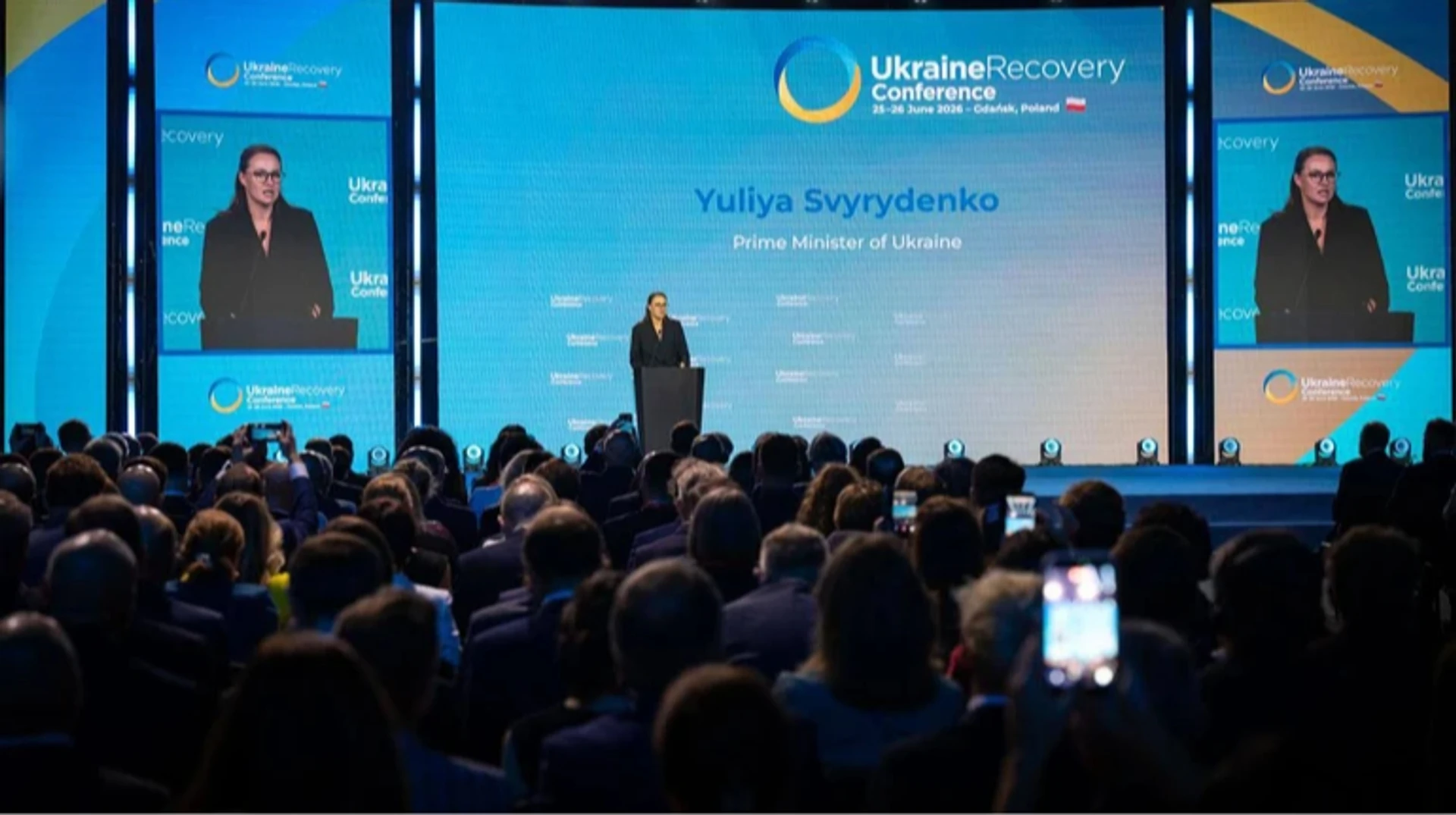 ANALYSIS FROM
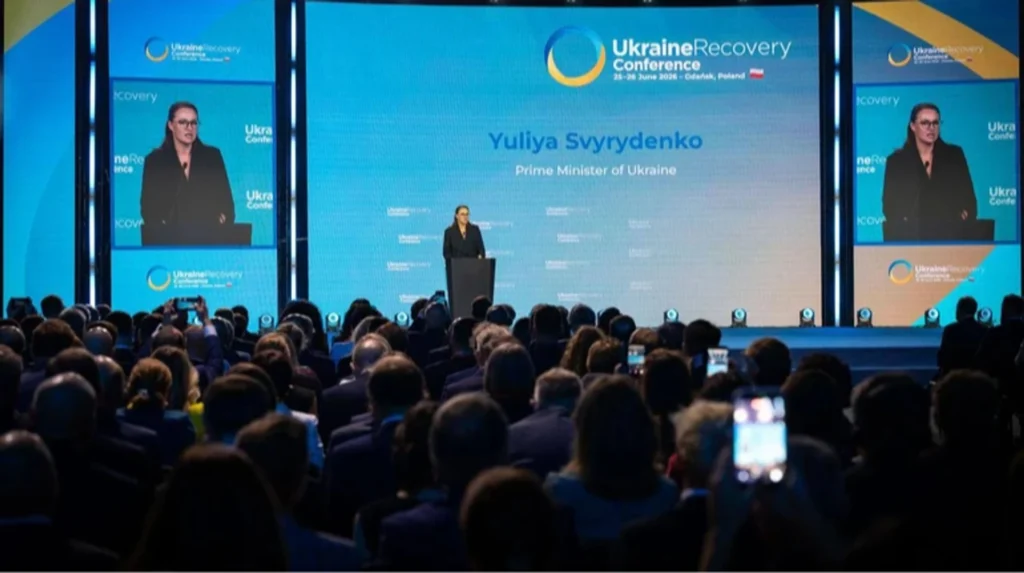
The Conference on the Reconstruction of Ukraine (URC 2026) in Gdańsk, Poland, marked a turning point in relations between international capital and the Ukrainian economy. The main practical outcome of this large-scale event, led by Prime Minister Yulia Sviridenko, is impressive: 160 signed agreements totaling more than 10 billion euros. However, the main shift occurred not only in the numbers but also in the mood. Foreign businesses are beginning to move from declarations to concrete legal steps: opening offices and registering companies in Ukraine. Although security risks remain a key barrier, global players—from neighboring Poland to the U.S., Japan, and South Korea—are actively seeking ways to enter the Ukrainian market. In what formats are foreign companies ready to operate in Ukraine right now? What indicators should be monitored in the coming years to understand whether the country’s true modernization has begun, and what reforms and conditions businesses require in exchange for capital investments—in this article "Komersant Ukrainian".
How Foreign Business Interest in Ukraine’s Recovery Is Changing
Despite the ongoing war, international investors’ sentiment toward Ukraine is beginning to shift. Last year’s skepticism is giving way to cautious but well-founded optimism. For insights into the actual state of affairs, the main barriers, and indicators of genuine recovery, see the commentary in "Komersant Ukrainian" Anna Derevyanko, Executive Director of the European Business Association (EBA), discussed the current state of affairs, the main barriers, and indicators of genuine recovery.
According to the EBA head, this year’s Ukraine Recovery Conference (URC) demonstrated a qualitatively different level of business engagement than in previous years.
“Last year, I think there was a more skeptical atmosphere, but this year at the URC there was more optimism and a greater willingness on the part of businesses to, after all, take a more substantive look at the terms of cooperation with Ukrainians or Ukrainian companies and the conditions for doing business in Ukraine,” — notes Anna Derevyanko.
She emphasizes that businesses are gradually moving from discussions to concrete legal steps—opening offices and registering companies—which hardly ever happened before. At the same time, the process of actual investment continues to progress slowly.
“Of course, given that the number of such projects is growing, the conversion rate is still not exceptionally high. I’d estimate it at around 15–20% of the total volume of initiatives. For now. But, nevertheless, it’s definitely better than it used to be,” the expert states.
Security remains the main obstacle for foreign capital, but Ukraine’s chronic domestic problems remain just as acute.
“First, there are security risks—of course, the lack of security guarantees… Many are actually holding back precisely because of this. But, on the other hand, I wouldn’t downplay the factors related to the rule of law, the judicial system, or corruption,” notes Derevyanko.
Supply or localization: which is of greatest interest?
On the willingness of Polish and other international companies to enter the Ukrainian market, financing models, and the main challenges for investors, in a commentary "Komersant Ukrainian" Sergey Tsivkach, CEO of Capital 482, discussed the willingness of Polish and other international companies to enter the Ukrainian market, financing models, and the main challenges for investors. According to him, despite obvious security risks, foreign businesses are demonstrating flexibility and seeking optimal models of cooperation.
At this stage, most foreign companies are opting for less risky strategies, focusing on exports. However, a trend toward deeper integration into the Ukrainian economy is already emerging.
“In the vast majority of cases, this primarily involves the supply of goods and services. But there are also companies interested in localizing their production in Ukraine or making full-scale investments, although there are fewer of them,” notes Sergey Tsivkach.
He emphasizes that even projects involving partial localization of production are extremely promising for Ukraine. They serve as a kind of “test drive” and represent the first step toward implementing larger-scale investment projects in the future. Moreover, this trend is not limited to Polish companies.
“This applies not only to Polish companies but also to other international companies that attended the event and are interested in similar localization projects to expand their access to Ukrainian markets,” adds the head of Capital 482.
The financing structure for such projects depends directly on their specific nature and the amount of capital expenditures (CAPEX). At the same time, regardless of the chosen financial model, the protection of their investments remains a key condition for foreign investors to enter the market.
“Undoubtedly, companies are interested in obtaining low-interest insurance against military and political risks, regardless of whether they use their own funds or mixed financing,” emphasizes Tsivkach.
Thus, Polish companies are currently among the most active in the reconstruction efforts. According to the EBA’s executive director, this is due to a combination of factors: geographical proximity, cultural similarities (“they are simply inextricably linked to us”), and powerful financial support instruments provided through their own export agency. However, there is no monopoly on the Ukrainian market—other countries are actively catching up to the leaders. Today, the EBA’s membership includes a wide range of European, American, and Korean companies.
“If you look at the membership of the European Business Association, you’ll find a large number of German, Swiss, British, French, Italian, and, of course, Polish companies. Moreover, there are American, Japanese, and Korean companies as well. So I wouldn’t say that any one group has an absolute advantage. They’re all doing their best,” notes Anna Derevyanko.
Results of the Ukraine Recovery Conference
The Ukrainian delegation, led by Prime Minister Yulia Sviridenko, concluded its participation inthe Ukraine Recovery Conference (URC 2026), which took place this year in Gdańsk, Poland.
The main outcome of this large-scale international event was the signing of 160 agreements totaling more than 10 billion euros. According to the official, this large-scale financial and investment package is the result of the daily, systematic efforts of President Volodymyr Zelenskyy, the government, and the entire Ukrainian team.
“This day has once again confirmed that Ukraine and Europe share a common path, common values, and a common future,” emphasized Yulia Sviridenko.
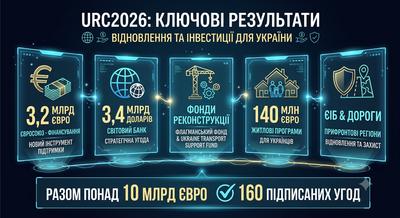
Another important focus of the conference was the establishment of new defense and energy partnerships, which are intended to increase the resilience of Ukraine’s energy system and strengthen the capabilities of the domestic defense industry.
When can we expect the first results of the summit?
To understand whether the recovery has moved beyond the stage of declarations and memorandums, Anna Derevyanko advises closely monitoring the inflow of private foreign capital that had not previously operated in Ukraine. Currently, the economy is being supported by domestic investments and funds from foreign companies that are “locked up” in accounts within the country and are forced to operate here.
“On the one hand, Ukrainian investments continue to flow in. Funds from foreign companies that are currently unable to withdraw from their accounts in Ukraine are also contributing to the economy. At the same time, there isn’t much new foreign capital yet that wasn’t previously present in our market. Therefore, I would say that one of the key indicators of recovery is precisely the influx of new private businesses and private capital into the Ukrainian economy,” notes Anna Derevyanko.
Therefore, the arrival of entirely new businesses will be the true litmus test for the next two years. And if a sufficiently large number—hundreds of different foreign investors—begin to arrive, this will be a good indicator that we are truly moving into a phase of actively implementing reconstruction. From plans to execution.
The fact that international institutions have already systematically launched the process of financing the Ukrainian sector inspires a certain degree of optimism, says Sergey Tsivkach. The recent signing of a number of agreements on project financing with international financial organizations is a consistent and positive step. At present, the energy and defense technology sectors are leading in terms of the volume of support. However, for a full-scale economic recovery, the country needs to diversify its capital.
“I would like to see more investment activity in agricultural processing, industrial projects, as well as in the healthcare and rehabilitation sectors,” Sergey Tsivkach concluded.
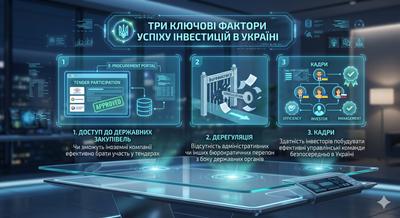
But for foreign business interest to translate into actual plants, factories, and jobs, Ukraine must do its “homework.” Sergey Tsivkach highlights three key factors on which the success of investments depends.
Meanwhile , Maciej Kowalski, a Polish civic activist and expert on Eastern European integration, spoke about the atmosphere of closed-door business discussions at the Recovery Conference in Gdańsk.
“While lengthy political debates continue at the ministerial level in the capitals, here in Gdańsk we saw a completely different picture. Businesses in both countries have long since found common ground. Polish investors and Ukrainian entrepreneurs think in terms of specific projects, supply chains, and joint production. The conference clearly demonstrated that pragmatic capital has no time for political grievances. “We are ready to build joint infrastructure right now, because economic integration is the foundation that will ultimately compel politicians to achieve full normalization.”
In other words, the URC 2026 conference in Gdańsk demonstrated the shift in the international business community from skepticism to cautious optimism and concrete legal steps, as evidenced by the signing of 160 agreements worth more than 10 billion euros. However, in order for this interest to translate into actual factories and jobs, Ukraine needs to diversify investments into other sectors and do its “homework”—ensuring the rule of law, combating corruption, and providing effective tools for insuring military risks.