PrivatBank Is Still Set to Be Sold: What Are the Scenarios for the Privatization of the Country’s Largest Bank?
29 June 17:57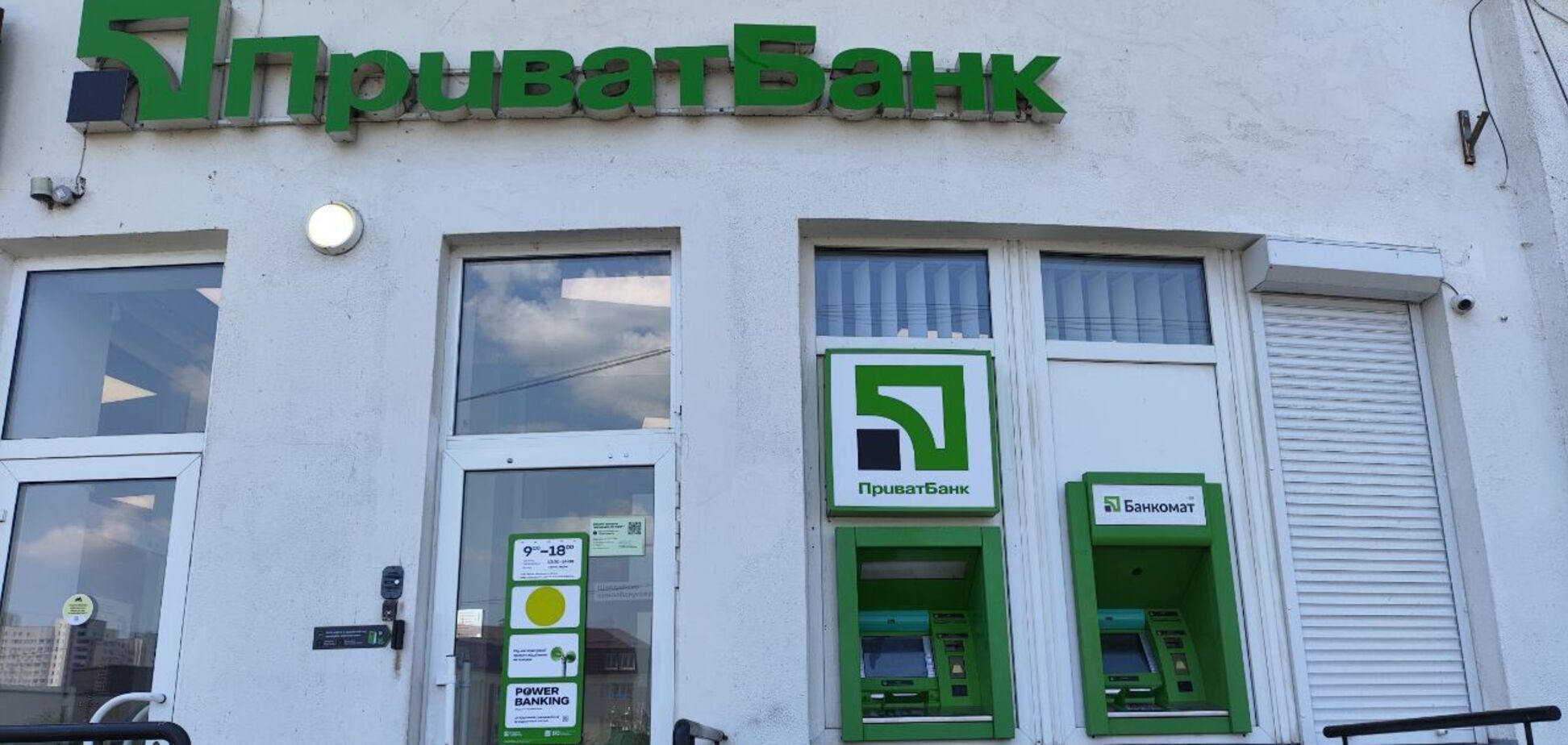 ANALYSIS FROM
The Ukrainian government is showing a willingness to sell the state-owned PrivatBank. At least in part, this would involve the sale of shares in the financial institution. But there are several possible scenarios here as well. "Komersant Ukrainian" investigated exactly how these plans are intended to be carried out.
The state’s share in the banking system, measured by net assets, has exceeded 50% for several years now. In the first quarter of this year, for example, it stood at 51.7%. The question of whether it makes sense to sell state-owned banks has been on the agenda for a long time, and not just at the urging of international creditors. Reducing the state’s share in the banking sector is identified in the current government’s action plan as one of the Ministry of Finance’s eight priority goals.
The state-owned Sens Bank and Ukrgasbank are, as is well known, at the top of the list for privatization. The plan is to sell them later this year. And the process has already begun. On March 31, 2026, the Ministry of Finance announced a tender to select an advisor for the sale of stakes in Sens Bank and Ukrgasbank. The deadline for submitting documents to participate in the tender was June 15.
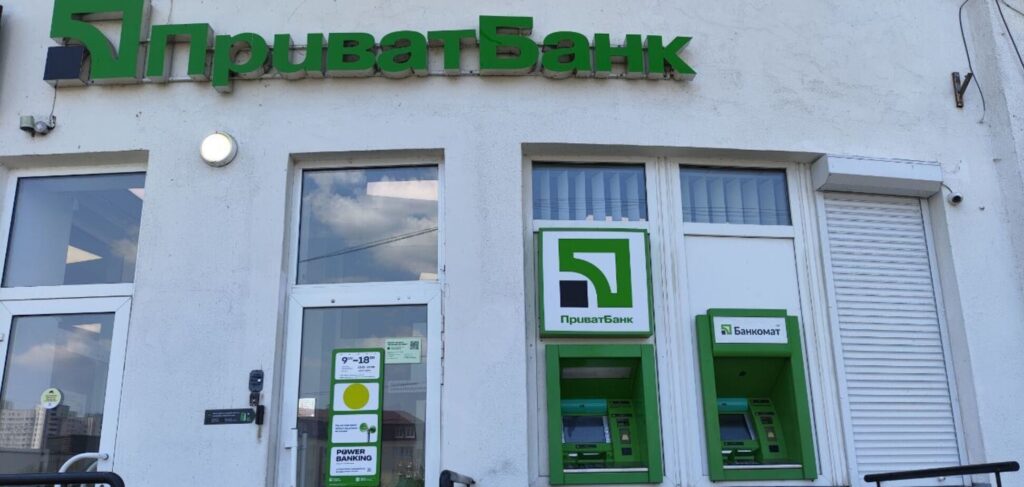
Finding a buyer for these banks will be easier, given their smaller size compared to other state-owned banks. Sens Bank ranks among the top ten largest banks in Ukraine, while Ukrgazbank is in seventh place. PrivatBank, on the other hand, tops the list of the largest banks. And its sale, especially under current conditions, appears to be the most problematic. This is likely why partial privatization is being discussed. Dmytro Oliinyk, deputy head of the National Bank of Ukraine (NBU), confirmed in a recent interview with Business Insider Polska that such plans are being discussed.
“We would like to try, perhaps as early as next year, to conduct an IPO (initial public offering) for some banks. We are even considering the possibility of using the infrastructure of the Ukrainian or Polish stock market to sell shares of the most profitable institutions, such as PrivatBank,” the official stated.
It is worth recalling that PrivatBank was already mentioned several months ago in the context of testing an IPO. At that time, the experiment took a slightly different form.
“People’s IPO”
For large banks, the goal is usually to find major buyers—preferably reputable international financial groups. In the case of PrivatBank, however—likely due to the challenges of selling it to a single buyer—they decided to experiment.
“People’s IPO” (Initial Public Offering) is the name given to the first version of the experiment. This is when the public sale of shares is aimed at ordinary citizens rather than large funds.
The idea of a “people’s IPO” was presented back in October of last year by Ruslan Magomedov, then-head of the National Securities and Stock Market Commission. The proposal was to sell 7% of state-owned companies’ shares through the stock exchange. PrivatBank and Naftogaz of Ukraine were mentioned among the first candidates for such a “people’s IPO.”
The new chairman of the National Securities and Stock Market Commission, Oleksiy Semenyuk, expressed his support for the “people’s IPO” as early as February of this year. However, he did not specifically mention PrivatBank. Presenting the commission’s priorities for 2026–2027 at a meeting with representatives of the European Business Association, he stated:
“Currently, the market is focused primarily on government bonds, and our task is to expand the range of instruments to launch a fully-fledged market with exchange-traded instruments, liquidity, and new issuers.”
Among these instruments, he mentioned a “people’s IPO,” with a launch planned for this year.
Economist Boris Kushniruk likes the idea of maximizing citizen participation in the purchase of state-owned companies.
“I see value in fostering what is known as ‘people’s capitalism,’ that is, encouraging citizens to become co-owners. This is when you say that we’ll sell this bank gradually, over the course of 5–7 years, and there won’t be a single majority owner—instead, hundreds of thousands of people will own it. And you’re not selling to some foreign investors on some stock exchange; you’re selling exclusively on the domestic market. The logic is that there won’t be any group of individuals capable of taking control of the company and then profiting from it. And, again, this isn’t something that should be done right now,” the expert believes.
According to him, the war must first be brought to an end, and only then should a mechanism be determined for how to shape this “people’s capitalism” with the participation of hundreds of thousands of people.
Another question: how do the plans to organize a “people’s IPO” for PrivatBank align with the plans to list the bank’s shares on the Warsaw Stock Exchange? Oleksandr Bondarenko, director and co-founder of the Bureau of Investment Programs, has some reservations on this matter.
“If a large investor is offered a certain block of shares, while another portion can be purchased through Diya or another similar platform by, say, 100,000 Ukrainians, this could scare the investor away. For a large private investor, corporate governance is crucial—how the bank will be managed, who will appoint the supervisory board, who will appoint the CEO, how decisions will be made, and what influence these 100,000 minority investors will have on the bank. In other words, various risks arise for a large investor. And that is why they want either full control or a majority stake, either in partnership with certain institutional players or with the state,” the expert notes.
Watch us on YouTube: important topics – without censorship
An Attractive Asset
PrivatBank is not only Ukraine’s largest bank in terms of total assets; it is also the most profitable bank. This is confirmed by the financial results for the first quarter of this year. For example, pre-tax profit for January–March 2026 reached 25.9 billion UAH, which is 17% more than during the same period in 2025. Net profit in the first quarter amounted to 12.8 billion UAH. This accounts for 49% of the total profit of Ukraine’s entire banking system for the same period. And this is something that potential investors should properly evaluate when the opportunity arises. Oleksandr Bondarenko, director and co-founder of the Bureau of Investment Programs, continues:
“This is a good, profitable business. And it’s not a bad idea to privatize it through the Warsaw Stock Exchange. I was there recently, by the way, for business meetings. In Warsaw, they view the prospect of raising capital very positively. Obviously, we need to conduct a roadshow and prepare for the arrival of foreign investors. Why foreign? Because they have more money. And, in principle, Polish banks are traditionally quite active. They understand the Ukrainian economy. They like the margins on business loans. In Ukraine, it’s almost twice as high as in Poland. That’s why PrivatBank is a very attractive asset for foreign investors. It just needs to be properly prepared for privatization, and then it’s entirely realistic to attract significant funds,” the expert notes.
At the same time, according to Oleksandr Parashchiy, head of the analytical department at the investment company Concorde Capital, it is very important that the share offering be accessible to Ukrainians as well. This, he says, will help create a normal Ukrainian stock market.
“It is important that these securities be listed or quoted not only on the Warsaw Stock Exchange but also on Ukrainian exchanges. Also, when shares are traded on a stock exchange or exchanges, the government can see how investors value them. And, accordingly, if the offering was successful, then it’s already possible to develop a strategy for increasing the asset’s value in order to plan for a full sale,” the expert notes.
At PrivatBank itself, as the financial institution’s management explained at a press conference some time ago, they see their task as “making the bank as attractive as possible”: so that when the government decides to sell the shares, they can fetch the highest possible price.
Read us on Telegram: important topics – without censorship