Coffee Prices Are Rising Again: What’s Happening on the Global Market
24 April 12:27
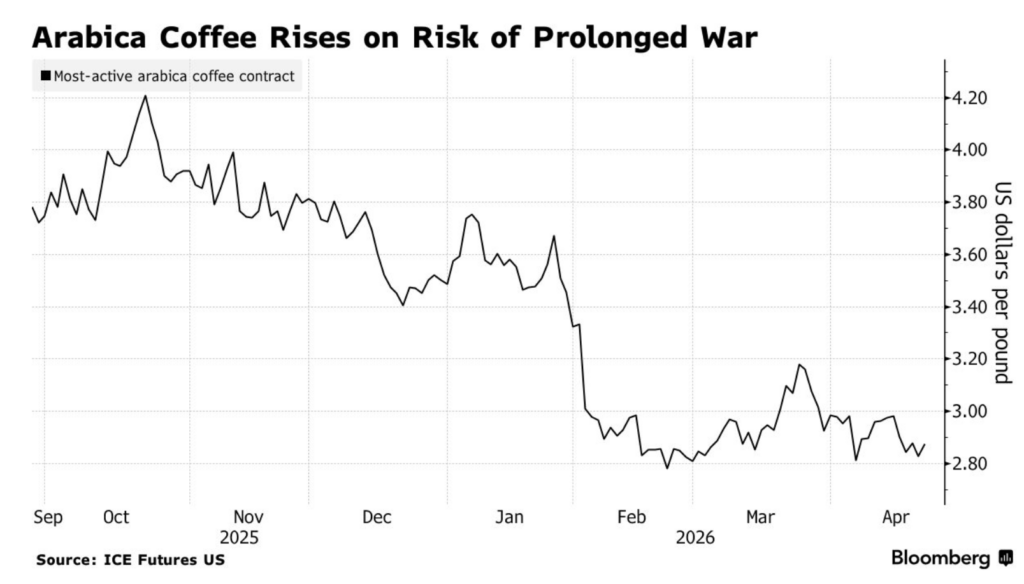
Global coffee prices have risen again amid the war in the Middle East, risks to maritime logistics, and low exchange inventories. Bloomberg reports that Arabica in New York saw “the sharpest rise in two weeks,” according to "Komersant Ukrainian"
Why is coffee getting more expensive?
On the New York exchange, Arabica prices surged amid fears that the conflict in the Middle East will keep shipping costs high for a long time.
The Bloomberg article states that Arabica prices showed their biggest gain in two weeks. During the day, futures rose by as much as 4.7%.
Other commodities, such as cocoa and sugar, also rose.
Carlos Mera, head of agricultural commodity research at Rabobank, notes that the risk of a protracted conflict is affecting several agricultural commodities at once, and coffee is one of the most sensitive.
“Higher oil prices will lead to increased shipping and logistics costs for agricultural products,” Mera said.
According to him, the problem is exacerbated by a decline in certified stocks of both Arabica and Robusta.
Watch us on YouTube: important topics – without censorship
How the conflict with Iran affects coffee
Although the ceasefire in Iran reduces the risk of new fighting, the key problem has not yet disappeared: the market does not foresee a quick return to normal operations in the Strait of Hormuz. And this is a critical route for global oil and gas trade. When energy prices rise, so do transportation costs, and consequently—the cost of production for many goods, including coffee.
Coffee beans travel a long way from farms to consumers. They must be transported by truck from inland regions to ports, then shipped by sea, and finally delivered to roasting facilities and retail chains. This is precisely why coffee is highly dependent on fuel costs.
“Coffee prices are likely to rise due to the high dependence of bean logistics on fuel: coffee beans are first transported by truck from inland regions to ports, and only then shipped by sea,” noted the senior vice president of StoneX Group in the agricultural commodities segment in Asia.
Why Brazil Matters
Brazil is the world’s largest exporter of Arabica coffee, so anything that happens with the Brazilian harvest and exports immediately impacts the global market.
As early as next month, the country is set to begin harvesting the new crop, which could potentially increase supply. However, two factors are currently hindering this: reduced grain availability and the strengthening of the Brazilian real, which reduces incentives for exports.
Earlier, Reuters, citing Rabobank estimates, reported that coffee production in Brazil during the 2025/26 season could decline by 3–6.4%, and Arabica production even more sharply, by approximately 13.6%, due to dry weather that affected flowering.
Bloomberg also cited dry weather in Brazil as one of the factors behind the current rise in coffee prices. In other words, the market is reacting not only to the war and freight costs, but also to real risks to the future harvest in the world’s largest coffee-producing country.
Read us on Telegram: important topics – without censorship