The End of the Western Alliance: How Washington’s Business Diplomacy Is Turning Allies into Clients
10 June 11:03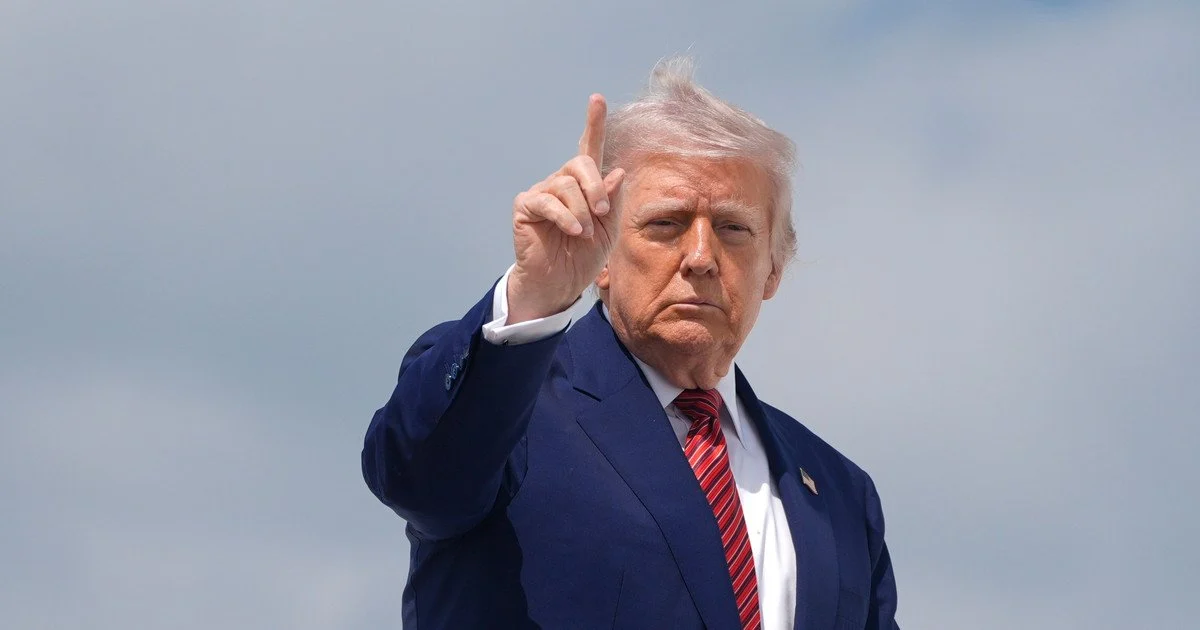 ANALYSIS
Washington’s diplomacy is rapidly reshaping the world’s political landscape, turning military aid into cynical business deals. According to experts, Ukraine and Israel have now found themselves as “pawns, not players” in Donald Trump’s geopolitical game. Western analysts at Chatham House openly refer to the “peace plan” for Ukraine not as negotiations, but as a broadcast of demands for surrender from the Kremlin. Why hasn’t Israel’s unique defense-industrial complex saved the country from dependence on the White House’s whims? How can Ukraine break free from Donald Trump’s geopolitical trap?
IDF reserve officer and military analyst Grigory Tamar, in an exclusive commentary for "Komersant Ukrainian", offered a harsh but realistic assessment of the current situation: countries such as Israel and Ukraine are effectively hostages to Donald Trump’s game, where they play the roles of “pieces, not players.”
However, the analyst is confident that a way out of this geopolitical trap exists, and it lies in the synergy between the two states in the face of mortal threats.
The Israeli Experience
Despite its colossal military achievements, unique defense philosophy, and its own high-tech weapons production, Israel has demonstrated serious vulnerability. According to Grigory Tamar, the country is catastrophically dependent on the political will of the White House.
“We pay for our existence with our sovereignty, and we are hostages to American goodwill. We have only one ally,” says Tamar.
The current situation in the Middle East vividly illustrates these words. Against the backdrop of intense pressure from the White House to cease hostilities with Iran and Lebanon, analysts are increasingly suggesting that Prime Minister Benjamin Netanyahu is forced to adjust military plans under Trump’s direct dictates, as the latter seeks to “end at least one war” for the sake of his own approval ratings.
Ukraine: More Room for Maneuver Thanks to Diplomatic Pluralism
In contrast to Israel, Ukraine, despite having a significantly weaker defense-industrial complex at the start of the full-scale invasion, has proven more flexible on the international stage.
“Ukraine has diversified support—in addition to the U.S., it has the backing of the United Kingdom, EU countries, and other global partners. This gives Kyiv a wider scope for political maneuvering,” Tamar notes.
Tamar characterizes President Volodymyr Zelenskyy’s recent diplomatic moves and statements as a conscious effort: “This is an attempt to transform from a pawn into a player.”
This struggle for agency is taking place as the U.S. attempts to impose its own peace plan. Experts at the Chatham House think tank are highly critical of American peace initiatives regarding Ukraine. In particular, this is highlighted by Kir Giles, Senior Advisor for the Russia and Eurasia Program.
“There is no peace process here. These are not peace negotiations: this is the delivery of demands for Russia’s surrender with the active assistance of the United States,” says Kir Giles.
Western analysts note that Trump views geopolitics not as a system of alliances and values, but as a business deal where the strong dictate terms to the weak.
“The End of the Western Alliance” and the Dismantling of Rules
Bronwen Maddox, Director of Chatham House , emphasizedin her annual lecture that current U.S. policy is radically changing the world order.
“What we are seeing from President Trump is, in fact, a revolution. He has given the U.S. a radically new role in the world—a role that rejects the principles upon which the U.S. was founded… Most profound is the rejection of the principles of international law that the U.S. itself once helped to create. This marks the end of the Western Alliance.”
The center’s reports note that the U.S. administration adheres to the “might makes right” doctrine, turning traditional allies into clients. According to the Center for Strategic and International Studies (CSIS), Trump has deliberately inverted the relationship: instead of ensuring collective security, he imposes “conditions, demands, and fees for services” on allies. For example, analysts note U.S. attempts to link military aid to Ukraine with future exclusive agreements on the extraction of Ukrainian minerals.
The Phenomenon of Mismatch: Why Do Kyiv and Jerusalem Need an Alliance?
The most paradoxical aspect of Ukraine-Israel relations is that their strengths and weaknesses complement each other almost perfectly. Grigory Tamar points to a historical mistake in the diplomacy of both countries.
“If we had united and presented a united front, it would have been much easier for us to jointly defend our national interests. Unfortunately, traditional politicians in our country [ed. — Israel] have failed to grasp this issue,” Tamar notes.
Thus, the way out of the geopolitical trap lies in recognizing a simple truth: to stop being pawns sacrificed in a grand game, we must forge our own alliances. A united front between Ukraine and Israel on the international stage is no longer just a matter of mutually beneficial cooperation; it is the only real way to protect our sovereignty and compel the world to respect our national interests. It is time for the political elites of both countries to correct the historical mistakes of diplomacy, for the price of delay today is the very right of these states to exist.
.