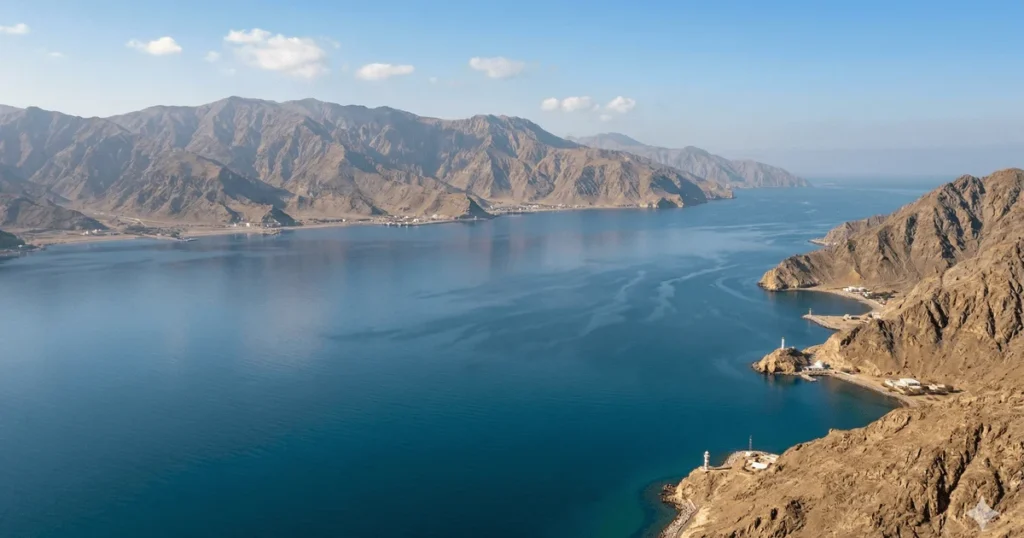
The Strait of Hormuz Deadlock: Why Destroying the Iranian Navy Doesn’t Mean Victory for the U.S.—and What Does China Have to Do With It?
15 April 10:28 ANALYSIS FROM
The world is on the brink of a major conflict at a strategic global hotspot. U.S. President Donald Trump has officially announced the start of a naval blockade of the Strait of Hormuz and the complete destruction of the Iranian navy. While Washington reports “158 ships sunk,” experts warn: Tehran’s land-based and nuclear capabilities remain a real threat, and the war could enter a protracted “underwater” phase. Is it technically possible to destroy Iran’s army without a ground operation? How will blocking 20% of the world’s oil flow hit people’s wallets, and why is China’s shadow clearly visible behind Iran? –
The situation around the Strait of Hormuz—the main “artery” of the global energy market—has reached a boiling point. U.S. President Donald Trump announced via his Truth Social network that American forces have moved to the active phase of the blockade. According to him, any Iranian vessel attempting to approach American positions will be destroyed without warning.
“The Iranian Navy is at the bottom of the sea—158 ships destroyed. If any of their speedboats approach our blockade, it will be immediately destroyed using the same system we use against drug traffickers. It’s fast and brutal,” Trump stated.
The U.S. president also emphasized that his administration no longer considers Iranian small vessels a “minor threat,” promising a total sweep of the waters. The main cause of the conflict is control over shipping: Tehran insists on the exclusive right to collect tolls for passage through the strait, which Washington views as piracy and a threat to global stability.
Has Iran’s potential truly been eliminated?
Despite the White House’s triumphant reports, military experts are calling for restraint. Grigory Tamar, a reserve officer in the IDF, in an exclusive comment for
- The ground forces have not been defeated: Although Iran has suffered losses (over 10,000 soldiers), its ground forces remain massive.
“If the army had been destroyed, the Americans would have already landed a single division and taken over the country. That is not happening,” Tamar notes.
- Missile and nuclear threats: Iran’s missile capabilities have suffered colossal losses, but they still exist.
“And in terms of missile capabilities, it [Iran—ed.] has suffered colossal losses. However, it still exists. It still exists. And in Israel, they understand this very well… As for whether they have nuclear weapons or not… the level of uranium enrichment that exists today—just over 400 kilograms—allows them to build a nuclear device even now. But it would be enormous in size; it wouldn’t be transportable. Consequently, it needs to be refined so that it can be exported,” says Tamar.
Tehran as a Critical Partner for Beijing
The relationship between Iran and China is fundamental. China views Iran as a key element of its global strategy, where the economy and military-political containment of the West are intertwined into a single knot.
“We must not forget that China truly stands behind Iran. For China, Iran is its most important ally and partner. And not only for compelling reasons: geopolitical, ideological, economic, military-political, or any others,” says Tamar.
The expert explains why control over this strategic point is so critical for Beijing, which is heavily dependent on the stability of supplies through this region.
“The Strait of Hormuz is a valve. A valve that allows 20% of oil to flow—or not flow—into the global market. And 20% is a lot… China also depends heavily on the navigability of this strait,” says Higoriy Tamar.
The “Samson” Plan and Lessons for Ukraine
In the context of global tensions, Hryhoriy Tamar draws parallels between Israel’s security strategy and Ukraine’s future. He recalls the Israeli concept of the “Samson Plan” —a system of nuclear deterrence that guarantees a retaliatory strike even in the event of the state’s complete destruction.
“Nuclear weapons are not a panacea if they are not accompanied by a well-equipped army. The example of South Korea, which possesses the ‘mother of all bombs’ (10 tons of explosives), shows that it is possible to be invulnerable even without nuclear status,” emphasized the IDF officer.
Regarding Ukraine, Tamar is confident: over the past four years, the country has proven its status as a “major military power.”
Thus, the situation surrounding the Strait of Hormuz demonstrates that despite the U.S. military advantage at sea, the conflict is far from over due to the complex interplay of China’s energy security, Tehran’s missile and nuclear ambitions, and the resilience of its ground forces. The destruction of Iran’s fleet is a painful blow, yet it does not eliminate the threat of asymmetric warfare and a global economic shock; rather, it shifts the confrontation into a format of strategic attrition, where Iran serves as a pawn in Beijing’s grand game against Washington.