No VAT for sole proprietors for now: what Svyrydenko said and how this will affect businesses
20 April 09:49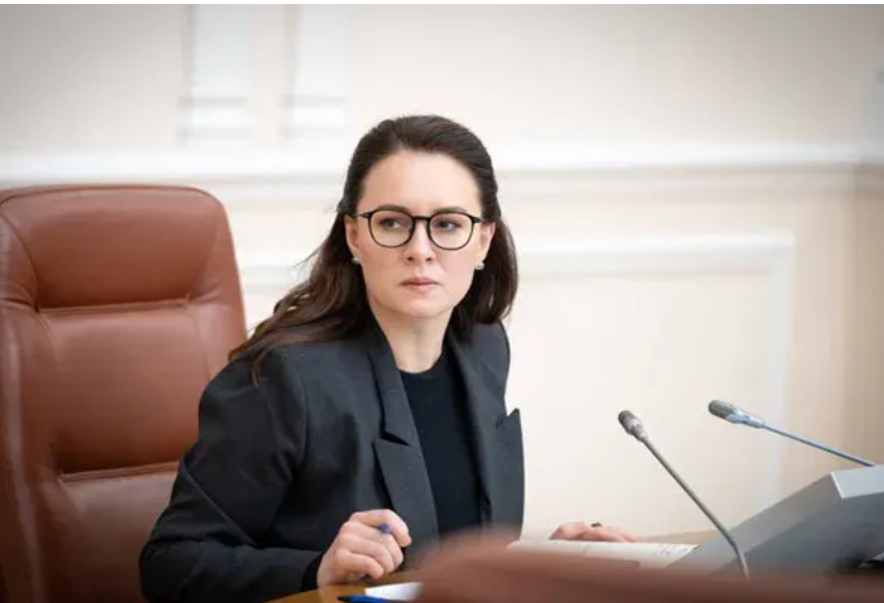
Ukrainian Prime Minister Yulia Svyrydenko stated that the International Monetary Fund will not yet require Ukraine to introduce a value-added tax for individual entrepreneurs. Svyrydenko announced this on Telegram, noting that IMF representatives were understanding of the sensitivity of the VAT issue for individual entrepreneurs—both for society and for parliament, reports "Komersant Ukrainian"
According to her, during a trip to Washington, the Ukrainian delegation, together with IMF representatives and European partners, held a series of consultations on how to secure revenue for the 2027 state budget without exacerbating the situation for small businesses.
Why the issue of VAT for sole proprietors has become so controversial
The idea of introducing VAT for individual entrepreneurs sparked a sharp reaction even during the discussion phase. When the government proposed requiring some individual entrepreneurs to pay value-added tax, it caused a conflict between the government, parliament, and the business community.
For small and medium-sized businesses, such an initiative would mean not only an additional tax burden but also more complicated administrative procedures. That is why the issue quickly became politically sensitive and sparked widespread public debate.
Read us on Telegram: important topics – without censorship
What exactly did Yulia Svyrydenko say?
The Prime Minister stated that during negotiations in Washington, the Ukrainian side saw that IMF representatives understood that the VAT issue for sole proprietors is a sensitive one.
According to Svyrydenko, the parties primarily discussed ways to secure budget revenues for 2027. In other words, the key task remains finding compensatory measures that will allow the budget to be filled without imposing a new tax burden on entrepreneurs.
In effect, the government has gained a reprieve on one of the most pressing tax issues, but has not been relieved of its obligation to propose alternative sources of revenue.
Has VAT for sole proprietors been permanently abolished?
Despite the Prime Minister’s statement, the issue cannot be considered definitively closed. MP Yaroslav Zheleznyak stated that the topic of VAT for sole proprietors has not been completely removed, but merely postponed.
According to him, the final wording may appear in the updated text of the memorandum with the IMF, which is expected in July. It will be then that it becomes clear what the future approach to this issue will be and what measures to compensate for budget revenue shortfalls the government will propose.
He also urges people to “wait and see exactly what the government will propose as a measure to offset budget revenue for 2027.
“The question is for the government officials and the president: why did they sign the memorandum in the first place? More precisely, they promised to adopt it in November, signed it in February, and are now heroically trying to fix it,” Zheleznyak emphasized.
How this relates to the $8.1 billion IMF program
The VAT issue for sole proprietors was considered in the context of the new four-year Extended Fund Facility (EFF) program, which Ukraine agreed upon with the International Monetary Fund.
This is an $8.1 billion support program intended to partially cover the projected state budget deficit. According to IMF estimates, Ukraine’s fiscal gap in 2026–2029 will amount to approximately $136.5 billion. Of this amount, $63 billion falls specifically on 2026–2027, even taking into account already confirmed international aid.
On February 26, the IMF Executive Board approved a new four-year EFF program for Ukraine, and on March 3, the country received the first tranche of $1.5 billion.
What does the cancellation of prior actions mean?
Another significant development was the news that the IMF had canceled the prior actions required for the approval of Ukraine’s new $8.1 billion loan program.
Among these requirements were the introduction of VAT for sole proprietors and customs duties on international parcels. Following a review of the approach, these initiatives are no longer prior actions for program approval.
However, this does not mean that the issue has completely disappeared from the negotiating agenda. All tax and customs changes that have been removed from the category of prior actions will now serve as structural benchmarks for the next review of the program. In other words, partners will continue to expect Ukraine to make decisions regarding budget revenue.
What’s Next
Ukraine is awaiting a visit by the IMF mission to Kyiv in May. The parties also agreed to maintain flexibility in implementing the program’s structural benchmarks amid the war.
The first review of the IMF program is scheduled for June 2026. If it is successful, Ukraine will receive an additional $686 million.
That is why it is now critically important for the government to propose realistic mechanisms to compensate for budget revenue shortfalls without resorting to drastic and politically sensitive decisions that could provoke resistance from the business community and parliament.
What this means for sole proprietors
For sole proprietors, Svyrydenko’s statement means that a new VAT obligation will not be introduced in the near future. This is an important signal for small businesses, which had feared an increase in tax pressure.
At the same time, entrepreneurs should monitor the government’s ongoing negotiations with the IMF, as the final configuration of tax decisions has not yet been determined. If the government fails to find other compensatory measures, the issue of VAT for sole proprietors may come up for discussion again.
Read us on Telegram: important topics – without censorship