Still at risk: how strawberries, raspberries, and other berry crops fared over the winter in Ukrainian fields
21 April 15:02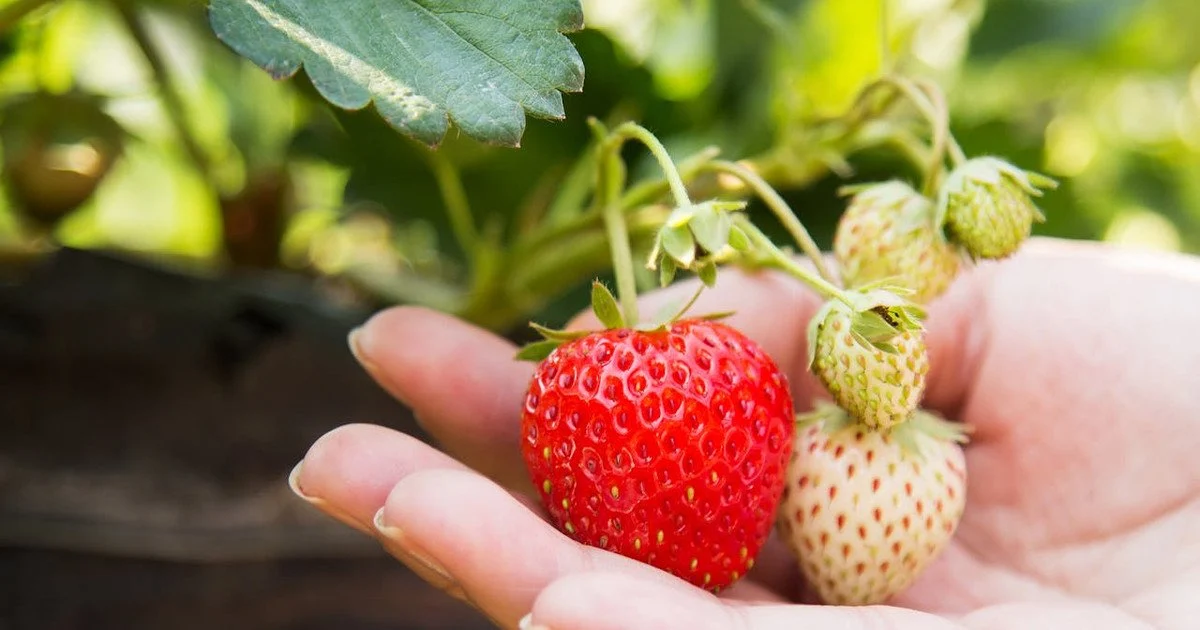 ANALYSIS FROM
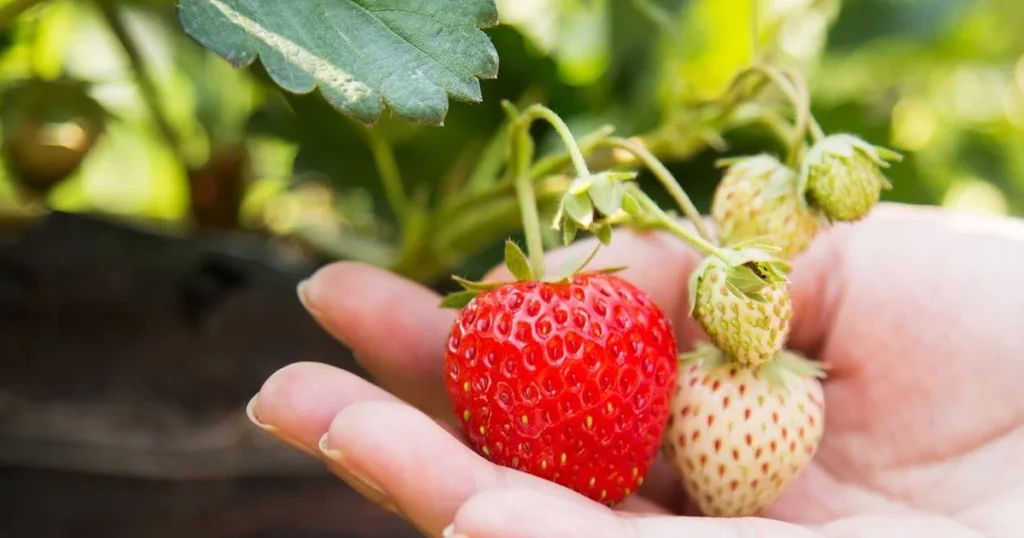
This year’s first Transcarpathian strawberries have reportedly already appeared in local markets. These are strawberries grown in greenhouses. As a result, they were largely spared the cold of the April frosts. However, not all strawberries and other berry crops can be grown under such conditions. How they survived the winter and then weathered the first April frosts— "Komersant Ukrainian" investigated.
April and, unfortunately, May frosts are becoming the norm for our climate and occur regularly. This year was no exception. This is confirmed by Tetiana Adamenko, head of the agrometeorology department at the Ukrainian Hydrometeorological Center.
“This year in April, it wasn’t just that there were frosts—they were everywhere. And they weren’t minor. Air temperatures dropped to -1.4°C, and in the western regions even to -5.7°C. In Zakarpattia, the frost was the most intense—down to minus 8 degrees. But I should note that the impact of frost is a rather slow-acting phenomenon, and it’s too early to talk about any crop losses today,” the expert notes.
Moreover, the weather in Ukraine is such that frosts can occur not only in April but also in May. Therefore, farmers, bearing in mind last year’s experience in particular—when April and May frosts struck fields, orchards, and vegetable gardens in several cold spells—are hoping that this year will pass without any weather surprises. At least, berry growers are in luck. For now.
Still in the risk zone
Sub-freezing temperatures affect everything that blooms. That is, the most problematic period in terms of threats to berry crops, as well as to fruit crops, is the flowering period. This is confirmed by Iryna Kukhtina, president of the “Berry Farming of Ukraine” Association.
“What matters is what stage of development the plant is in at the time of the frost. None of the berry crops have started blooming yet. So right now, it’s not that critical. But nevertheless, in Zakarpattia and throughout Western Ukraine, there were frosts and sub-zero temperatures in April, so farmers are treating their fields. Some use smoke screens, while others use glycerin cannons for treatment. Strawberries are covered with agrotextile during frosts to prevent damage to the buds. Then comes flowering, which is another critical stage. Depending on the region, strawberries in open fields begin to bloom, roughly speaking, as early as late April, but mainly in May. So by mid-May, we’ll already know how many strawberries have set,” the expert notes.
According to Iryna Kukhtina, berry crops generally overwintered normally, but they are not yet out of the danger zone, as frosts are still possible and the situation could change.
“We still have to get through April and May, because last year, for example, everything froze in May. So this is our new reality. But as of now, the strawberries, raspberries, and blueberries have all overwintered well. Raspberries wake up a little later. That’s why there are usually fewer problems with raspberries. The most sensitive are strawberries and early blueberry varieties. Overall, we can say they overwintered well. And since the winter was frosty, there was even a positive aspect to it, because the pests in the soil froze to death. Plus, there was a lot of snow, so the berries were covered—in other words, the winter itself wasn’t bad for berry crops,” the expert explained.
By the way, without snow cover, strawberry bushes—which are considered a relatively frost-resistant crop—can withstand temperatures down to 15–17 degrees below zero, but under snow, they can withstand temperatures as low as minus 25 degrees. As they say, feel the difference. The most frost-resistant berry crops are currants and gooseberries, which can withstand temperatures as low as 28 degrees below zero. Raspberries can withstand temperatures down to minus 22 degrees, and tall blueberries even slightly more—minus 24°C—but they require protection from prolonged frosts and early spring frosts.
And it is blueberries, according to Irina Kukhtina, head of the “Berry Growing of Ukraine” Association, that deserve a special mention.
“Blueberries can be trickier because there are more sensitive varieties and less sensitive ones. For example, in some regions, certain varieties have been damaged by frost—‘Chandler,’ for instance, and ‘BlueCrop.’ Although, if there are losses because of this, they won’t be very significant—around plus or minus 10%. Moreover, these losses may be offset by the fact that the berries will be larger, since the plants were partially frozen at the top. But overall, there are plenty of buds, and flowering will also be an indicator here. “And then we’ll keep an eye on the weather in terms of heavy rain and hail. Because last year, in addition to three waves of late frosts in May, there were also very heavy downpours with hail that knocked the berries off the bushes. If everything goes well with that, then our harvest will be fine,” the expert notes.
Strawberry Harvest
This year’s first Transcarpathian strawberries, which have already appeared in local markets, were grown by farmers from the villages of Vynogradiv and Berehove districts—the two warmest regions in the oblast. As reported by the publication “Novyny Zakarpattia,” local farmers use combined growing methods: greenhouse conditions with additional agrotextile covering. This allows them to get a two- to three-week head start on nature. The fact that Transcarpathian strawberries traditionally lead the way is also confirmed by Iryna Kukhtina, president of the “Berry Farming of Ukraine” Association.
“The first strawberries come from Transcarpathia and its greenhouses. They’ve already appeared, and there will be more every week. Around mid-May, open-field cultivation begins. And that’s when mass harvesting starts. All early strawberries are, in principle, expensive berries because there aren’t that many of them, and plus, greenhouse cultivation is more expensive than open-field cultivation. As for the later harvest, that’s when the mass production from the fields begins: depending on the year and the outdoor temperature, this could be the second half of May, or it might shift into June. Last year, it was mostly in June because the cold weather lingered. “Now, if the warm weather holds, strawberries will be available en masse earlier than last year,” says the expert.
According to “Novyny Zakarpattya,” the price of early Transcarpathian strawberries was set at 300 hryvnias. However, prices are traditionally expected to drop later on. The relationship is simple: more strawberries on the market means lower prices. This will continue until mid-May and the start of the open-field harvest—provided the weather holds and the harvest is successful. Then the price could drop to 80–100 hryvnias per kilogram. Iryna Kukhtina explains what will determine the price this year.
“There is a positive factor in terms of potential impact on the price—the plants came through the winter well, and, in principle, harvest expectations are normal today. That is, barring frosts, the harvest should be larger than last year. This is a positive development that works in favor of lower prices. But there’s a negative factor, because fuel and fertilizers have doubled in price. That means production costs have risen. So I’d expect prices to be at last year’s level, maybe a little cheaper, but that’s not a given. Last year, strawberries were quite expensive and cost about 100 hryvnias per kilogram during the season. This year, I think the price might even be a little lower,” the expert notes.
Although other factors could come into play on the market. It may be that one week strawberries will be cheaper because they’ve flooded the market, and then it rains, making them impossible to harvest, so prices go up. In other words, the weather could interfere again.
Those who want to grow strawberries in their own garden rather than buying them at the market should also keep the weather’s whims in mind. The second half of April through early May is precisely the time to start spring strawberry planting. In this challenging endeavor, of course, it’s important to choose the right variety, prepare the soil properly, select the right plot, apply fertilizer, and follow the correct planting pattern. But what’s even more important in the spring is choosing the right time to plant. The right time means ensuring there are no night frosts and the soil isn’t cold. The soil must warm up to 10 degrees Celsius. Tetyana Adamenko, head of the agrometeorology department at the Ukrainian Hydrometeorological Center, continues.
“Every crop has its own requirements in terms of temperature, and you need to monitor this based on what you want to plant and whether the conditions are already suitable for it, whether the temperature conditions are favorable, or whether it’s still worth waiting. In general, I’m in favor of people planting early, but not too early. Planting early allows you to take advantage of the moisture already in the soil. But you also need to consider information about the risk of frost for each region. While not every region has one, a significant number do have meteorological stations where you can find out the date of the last spring frost recorded in that specific area over the course of observations. And you should base your timing on that date. In other words, don’t plant before the date of the last frost, because there’s always a chance it could happen again,” the expert notes.
The Ukrainian Hydrometeorological Center can also help you determine whether the soil has warmed to 10 degrees Celsius and whether it is already safe to plant strawberries. As Tetyana Adamenko explained, information on soil temperature is posted every other day on the center’s website, www.meteo.gov.ua. It can be found in the “Agrometeorology” section under “Current Conditions.”
Author: Serhiy Vasylovych