What are Beijing and Moscow up to? Key details of the Xi-Putin meeting
20 May 13:33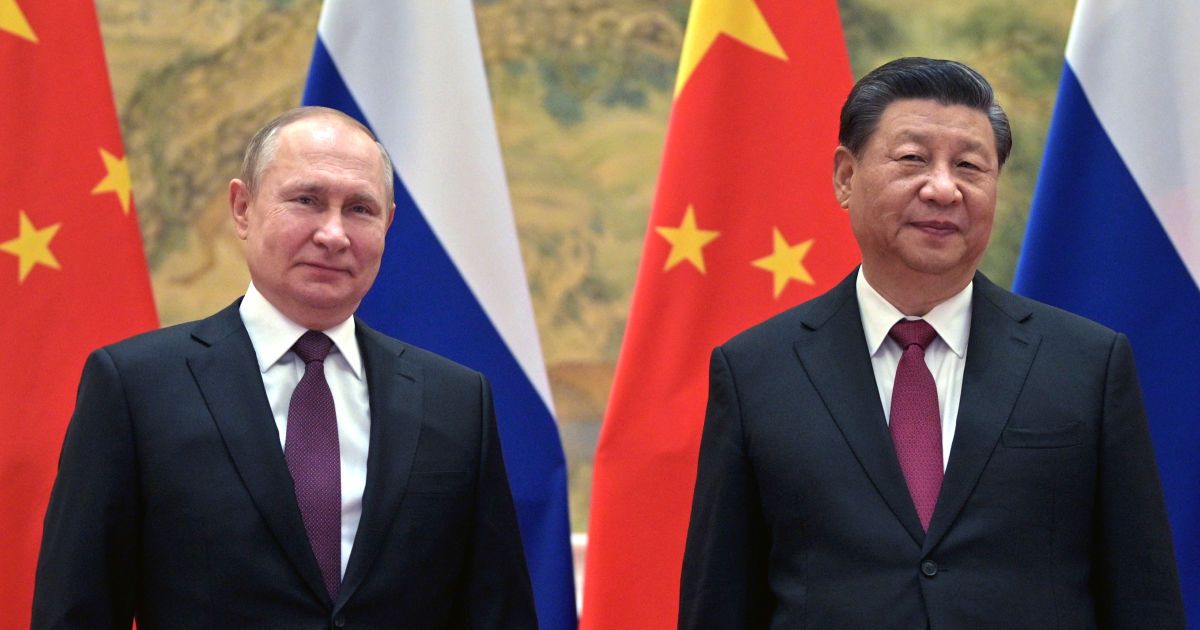 ANALYSIS
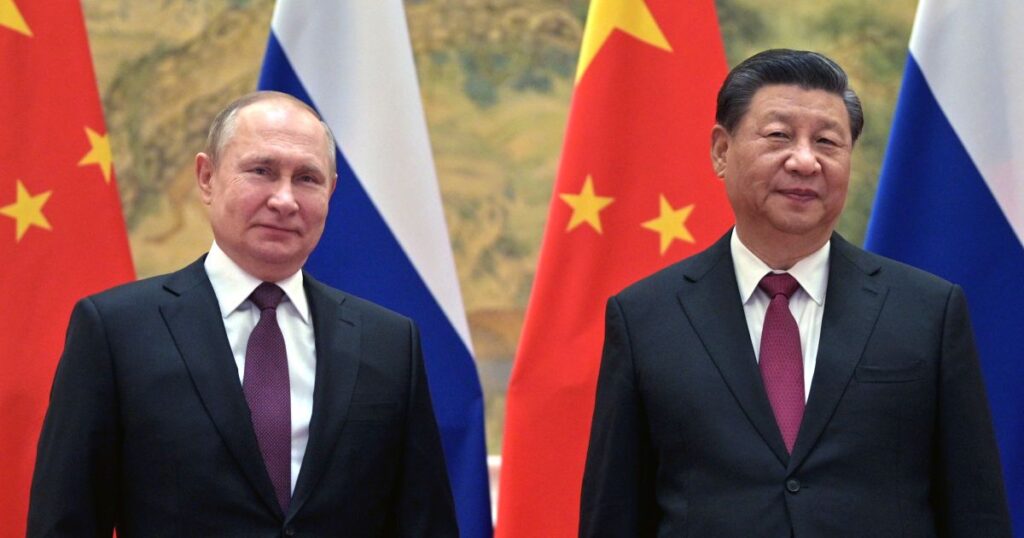
Chinese leader Xi Jinping and Russian leader Vladimir Putin held a meeting in China, during which Xi Jinping emphasized the need to strengthen strategic coordination. Against the backdrop of global instability, Beijing is seeking to demonstrate the strength of its ties with Moscow. This is reported by
According to CNN, during his meeting with Putin, Xi described relations with Russia as “an island of calm amid chaos.”
“The international situation is characterized by a mix of turbulence and transformation, while unilateral hegemonic tendencies are on the rise,” Xi said.
He added that in this regard, China and Russia must strengthen their “comprehensive strategic coordination.”
The Chinese leader directly addressed the topic of the U.S.-Israeli war against Iran, stating that its “swift conclusion” would help reduce disruptions in energy supplies, supply chains, and trade.
“We cannot delay bringing the war to a complete end; a resumption of hostilities is even less desirable, and continuing negotiations is particularly important,” Xi said.
Putin also spoke about “tensions” in the world and the importance of “cooperation” between Russia and China.
“In the current tense situation on the international stage, close ties between Russia and China are particularly in demand… Our cooperation in foreign policy matters is one of the main stabilizing factors on the international stage,” the Kremlin leader stated.
Putin, who has waged and continues to wage a war against Ukraine that has lasted more than 10 years, also traditionally lied, claiming that he allegedly upholds respect for sovereignty and democracy.
“Together with our Chinese friends, we uphold cultural and civilizational diversity and respect for the sovereign development of states, and we strive to build a more just and democratic world order,” the Russian leader stated.
He also asked to be invited to the Asia-Pacific Economic Cooperation (APEC) summit, scheduled for November.
“We are strengthening coordination within the UN, BRICS, the G20, and other platforms. We will continue active cooperation with the Shanghai Cooperation Organization. I am confident that together we will fittingly mark the 25th anniversary of the SCO this year, which has become an excellent example of the fair resolution of problems and the promotion of integration in our vast shared region. We fully support the activities of the Chinese chairmanship of the Asia-Pacific Economic Cooperation forum this year. And for my part, I would like to confirm our readiness to participate in the summit of this format in Shenzhen in November of this year,” Putin stated.
Media reports also indicate that Russia and China have agreed to extend the Treaty on Good-Neighborliness, Friendship, and Cooperation.
CNN notes that Putin and Xi have met more than 40 times during their time in office.
“For Xi, hosting the leaders of the U.S. and Russia—two countries mired in conflict—over the course of several days is a real gift, as he seeks to bolster China’s reputation as a global power player,” CNN emphasizes.
Following the talks, the parties will sign about 40 documents.
Energy at the center of the agenda
In 2025, Russia remained the largest supplier of energy resources to China—it supplied the PRC with 101 million tons of oil, as well as 49 billion cubic meters of pipeline and liquefied natural gas.
According to Vladimir Putin, Russia continues to reliably supply energy resources despite the crisis in the Middle East, while China remains a responsible buyer. Moscow is seeking to further expand the energy partnership, particularly through the construction of the “Power of Siberia 2” gas pipeline, which is set to pass through Mongolian territory.
Putin also noted that economic cooperation between the two countries remains highly dynamic, despite unfavorable external factors. According to him, trade between the countries has grown 30-fold over the past 25 years and has remained steadily above $200 billion for several years. Putin identified industry, agriculture, transportation, and high technology as priority areas for cooperation.
One of the main issues is the price of Russian gas for China
On the eve of his visit to Xi Jinping, Vladimir Putin lowered the price of gas for China to a six-year low. According to the Russian Ministry of Economic Development’s macroeconomic forecast through 2029, cited by Reuters, gas supplies to China via the “Power of Siberia” pipeline will be priced at $223.9 per 1,000 cubic meters in 2027—the lowest price since 2021. Compared to the Ministry of Economic Development’s previous macroeconomic forecast, the price of gas for China over the three-year period has fallen by approximately 7%, Reuters notes.
In turn, Bloomberg, citing a source close to the state-owned Gazprom, reported that the Russian monopoly has made China a very favorable offer on gas prices, but the Chinese side has not expressed a willingness to move forward with the “Power of Siberia-2” pipeline project. Progress in the negotiations depends entirely on Xi, and so far there are no signs that Russia will be able to easily reach an agreement, the Bloomberg source noted.
A source familiar with the situation, speaking to the British newspaper Financial Times (FT), expressed doubt that China and Russia would be able to reach an agreement, as China still wants to purchase gas at a price comparable to the level on the Russian domestic market, that is, five times lower than what China currently pays—$250. According to the FT’s source, Beijing also believes that gas consumption has most likely peaked and is unwilling to take on such long-term commitments.
Russia and China: A Course Toward Deeper Integration
Recent years have shown a noticeable rapprochement between Russia and China—both politically and economically. Political analyst Ruslan Bortnik believes that the world is witnessing “further synchronization of Russian and Chinese policies,” which is gradually shaping a new model of international relations. In a comment
As the political analyst emphasized, Moscow and Beijing are increasingly deepening their cooperation in various spheres. This involves not only diplomatic support but also strengthening economic interdependence.
“We’re talking about visa-free travel, boosting tourism, and increasing the mutual dependence of the Chinese economy on Russian energy resources and the Russian economy on Chinese machinery and technology. And there is ongoing synchronization, a gradual merging of China and Russia into a more organic, unified political and social system. Of course, if this process continues, it will take another decade,” Bortnik noted.
The expert emphasizes that Russia is also interested in using China as a “trade window” to access global markets.
“And we are gradually observing this further merger. In general, if we look at the specifics, Russia is currently trying to secure long-term contracts to supply energy resources to China, taking advantage of the moment when prices for Russian energy resources are at their highest. It is trying to secure contracts for an additional 10–20 years, as well as attract Chinese investment in the development of energy infrastructure, for example, in the construction of the ‘Power of Siberia-2’ pipeline,” said Bortnik.
Despite this, Beijing is trying to avoid directly offending the Kremlin’s ally. China does not want to bear the consequences of Russian aggression against Ukraine or risk its own reputation or economic ties with the West. That is why official Beijing is carefully phrasing its position on the war and sanctions. However, the actual rapprochement between the two countries continues.
According to the expert, ideological and social integration is a key component of this process. Both countries are actively shaping a positive image of each other within their own societies. A telling example was the Chinese authorities’ permission for Putin to address the citizens of the PRC on Chinese state television. Bortnik calls this “an element of deepening social integration.”
“And the fact that the Chinese, for example, allowed Putin to appear on Chinese state television to address the Chinese people is not even an element of negotiations; it is precisely an element of this very extension and deepening of social integration, and an effort by both Russia and China to create the most positive image of each other within their own societies,” the political scientist believes.
For Putin, China’s support is of particular importance. It allows him to demonstrate strength both to the international community and to Russia’s domestic political elites. The Kremlin seeks to show that it is precisely through Putin that the strategic link with Beijing is maintained.
China, for its part, derives its own benefits from cooperation with Russia. Whereas Moscow was previously viewed primarily as a source of raw materials, Beijing now sees it as a geopolitical tool as well. According to Bortnik, China is using Russia as “the most aggressive, radical-minded part of the Global South,” which is ready to openly confront the West.
“China is already using Russia not only as a source of raw materials, but also as the most aggressive, radical part of the Global South, which is ready to wage war against the West if China supports it in doing so,” the expert concluded.
Trump’s Visit to China
Less than a week ago, on May 14, Xi Jinping held talks in Beijing with U.S. President Donald Trump. Donald Trump’s trip to China marked the first visit by a U.S. president to the country since 2017. The American side had hoped for tangible agreements that could strengthen the White House leader’s position amid the domestic political agenda. However, as the negotiators note, no significant progress was made.
During the meetings in Beijing, trade relations and potential economic agreements were discussed, but the parties’ approaches differed markedly.
Trump emphasized quick results and concrete agreements, while Xi Jinping spoke of long-term stabilization of relations between the countries.
According to sources speaking to Reuters, the Chinese leader proposed a new definition of bilateral ties as “constructive strategic stability,” moving away from previous rhetoric about strategic competition.
Special attention during the talks was given to the situation surrounding Iran. Despite the discussions, the U.S. did not receive any additional commitments from China regarding its influence on Tehran.
The American side stated a similar view on the need to stabilize the situation, but no specific steps were agreed upon.
The issue of Taiwan became a key element of the talks. According to Trump, Xi Jinping stated his opposition to the island’s independence and warned of possible consequences in the event of an escalation.
Xi and Putin are increasingly positioning themselves as the vanguard of a new international order amid concerns about the current world order during Trump’s second presidential term.