Exclusive Orban calls to prevent Ukrainian agricultural products from entering EU market
19 February 2024 19:15
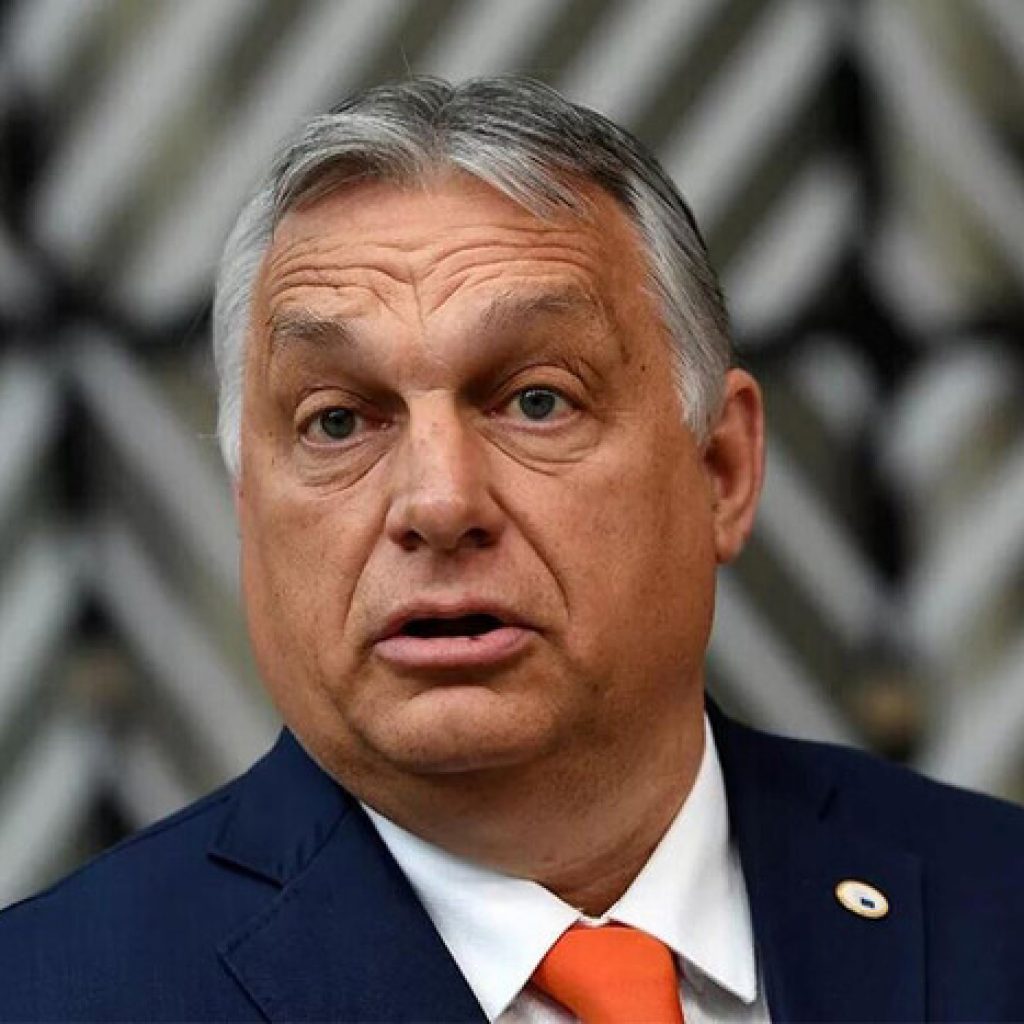
Hungarian Prime Minister Viktor Orban has called for closing the European market to Ukrainian agricultural products. Orban’s words are quoted in a video of the ruling Hungarian party Fidesz posted on Facebook, the  with reference to the Magyar Nemzet newspaper.
“The problem of European farmers is that Brussels sets rules that make production more and more expensive for them. The same is happening in Hungary, but at the same time, they allow agricultural products to be imported into Europe from countries where the same rules do not apply,” Orban said,
– Orban said.
According to him, the rules need to be changed because no one listens to farmers who feel a gap between them and the decision-makers in Brussels.
“This is impossible. The rules need to be changed. Ukrainian agricultural products should not enter the European market,”
– Orban added.
Gennadiy Novikov, the head of the Agrarian Union of Ukraine, said in a commentary noted that the statements of the Hungarian Prime Minister should be perceived as political.
“Everything is obvious here. Especially from Orban’s lips – nothing new at all. The Poles are surprising, but Orban is not. There is no economy, no common sense – there is nothing but politics here. After all, if you look at Poland and its budget, in terms of the economy, Ukrainian grain is only a plus. More revenues – and they are fixed,”
– he said.
According to him, Poland benefits from the fact that our cheaper grain is processed in Poland.
“This is equivalent to the way we once banned the export of round timber, and then the EU stood up on its feet and said we should allow it. Because we built wood processing plants on the borders, processed wood, and returned it to us in the form of furniture,”
– Novikov explained.
The expert stressed that Poland benefits from Ukraine’s supply of products from an economic point of view, but it is not beneficial to their farmers because they are afraid of competition.
“It is beneficial for the state. Farmers are on strike because they are not used to competition. I mean, not at all. The small-scale farming model has been imposed on Ukraine all along, and now it is demonstrating its viability. We haven’t even started competing with them yet, and they are already afraid. Both Poles and Hungarians. There, farmers take out loans at 1-1.5% for 10 years, while ours are at 5-7-9%, and now they are at 13% per year, maybe two, if three, it’s already a wow,”
– Novikov added.
The chairman of theAgrarian Union of Ukraine calculated the losses we have suffered due to the actions of the Poles.
“It’s not that hard to calculate. Let’s take 2021 – back then, our grain, let’s say wheat, cost UAH 8200-8400 per tonne. At domestic elevators. In 2022, the price was UAH 6,600 per tonne. It should be noted that in 2021, the hryvnia was 25 to the dollar, and then it became 40. That is, in dollar terms, these are incomparable things: it was more than $200, and now it’s $150-160.
In April 2023, the Poles began to block the supply. In 2023, the price of wheat was 3800-4000-4200 UAH per tonne at harvest. Now, on New Year’s Eve, it has risen to 5000. In 2022, it was 6600. That is, it has fallen further. At that time, let’s say in 2022, when we first transported grain through the land corridors, the price of grain in Polish ports was 300 euros per tonne, and then the price dropped to 270 euros. At that time, ours was 135 USD. That is, more than half as much – because there are euros and dollars here, and they still have the conscience to say something,”– Novikov summed up.
Leonid Kozachenko, President of the Ukrainian Agrarian Confederation, said earlier in a comment
“They see the fact that we have increased the supply of these products to the EU as a threat to them, which is quite justified. But the first place there is not grain, but poultry meat, sugar, chicken eggs, and honey. And then there are other products. Therefore, this issue remains complicated and will continue to be complicated. And when we win this war, we will have to make a lot of efforts to find an understanding in the future, when we are members of the EU,”
– he said.
According to him, the situation requires difficult decisions, but in general it does not threaten Ukraine’s prospects of joining the EU.
Border blockade
Ukraine’s exports are being affected by the blockade of the most important border for this country, the Ukrainian-Polish border. on 9 February 2024, Polish farmers launched a new nationwide strike and blockade of the border with Ukraine, which will last until 10 March. It was initiated by the independent farmers’ trade union Solidarity. Since 12 February, they have blocked all road checkpoints, and from 20 February they plan to block access roads to railway transshipment stations and seaports. The main demand of the protesters is to cancel the preferential trade regime with Ukraine and to return the permit system for importing goods into Poland.
Problems at the border began on 6 November 2023, when Polish transport companies began blocking truck traffic at three major checkpoints on the Ukrainian border: “Korczowa-Krakowiec, Hrebenne-Rava-Ruska, and Dorohusk-Yagodyn. One of the requirements was to reinstate the permits for Ukrainian carriers that had been cancelled under the agreement with the EU by 30 June 2024.
On6 January, truck traffic to the Medyka-Shehyni border crossingin Poland resumed. Three other border crossing points were opened on 17 January, namely Dorohusk – Yagodyn, Hrebenne – Rava-Ruska, and Korczowa – Krakivets.
In Romania, on 13 and 14 January, local farmers blocked the movement of Ukrainian trucks through the Siret checkpoint, and on 15 January, they began blocking the Vicovu de Sus checkpoint. on 18 January, Romanian farmers began blocking the Dyakove-Halmeu checkpoint. However, as of 20 January, these checkpoints were reopened.
The preferential trade regime and its opponents
Many EU members did not like the quota-free imports of Ukrainian products to the EU, which was in effect in 2022-2023. In particular, a number of Eastern European countries demanded that the EU impose import duties on Ukrainian goods, citing unfair competition. The ministers of agriculture of Bulgaria, Poland, Hungary, Romania, and Slovakia sent a letter to the European Commission asking for action, stating that cheaper agricultural products from Ukraine were eating into their export markets.
At the end of January 2024, the European Commission actually reintroduced quotas for some Ukrainian goods. It extended the special preferential regime with Ukraine for a year, but set special conditions and safeguards for some goods.
In particular, in order to “stabilise imports at the level of average volumes in 2022-2023”, the EU has come up with an “emergency braking” mechanism for three products: poultry, eggs and sugar.
In practice, this means setting a quota at the level of the average export volume in 2022-2023, exceeding which will automatically result in an import tariff being applied to the products.
This decision must then be approved by the European Parliament and the Council of the EU.
Thus, the EC’s decision virtually reintroduces quotas for some Ukrainian products, even if at the average level of Ukrainian exports. However, even this compromise solution does not suit the Polish farmers’ union Solidarity.