Syria: a patchwork quilt that could end in bloodshed again
15 January 2025 15:43 OPINION
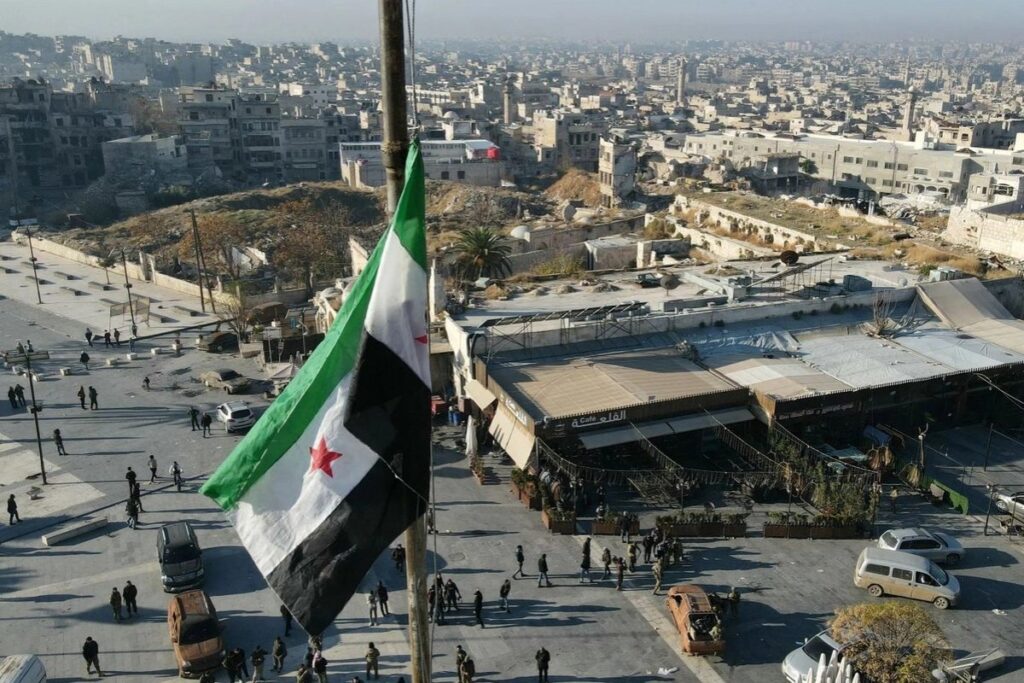
The end of 2024 brought epoch-making changes to the Syrian Arab Republic. on December 8, the ruling regime fell there – the brutal authoritarian dictatorship of the Assad clan, which had been in power for almost 60 years.
It was overthrown by a group called Hayat Tahrir al-Sham, the Levant Liberation Organization, headed by Ahmed al-Sharaa, a former member of the world’s leading terrorist group, al-Qaeda, and a figure on the US list of global terrorists. Today, he wears a respectable suit and tie, declares his commitment to liberal values (what a remarkable transformation!), and promises to protect ethnic and religious minorities in the country. This is a very timely and relevant statement, because without an understanding with the numerous minorities, peace in Syria is out of the question.
Syria is a quilt whimsically stitched together from colorful patches. Each patch represents an ethnic and religious region of the country. Its borders were formed after the First World War and reflected the division of the Ottoman Empire’s lands by the European colonial powers.
The main population of Syria is Arabs belonging to various religious communities. The largest religious group among them are Sunni Muslims. A minority of the Arab population is made up of Shiite Muslims, who live mainly on the Mediterranean coast, in the west of the country. The family of Bashar al-Assad, the ousted president of Syria, also belongs to the Alawites, one of the sects of Shiite Islam. Alawites in Syria make up 10 to 15% of the total population.
Sunni Arabs and Shiite Arabs in Syria look in different directions, and this is one of the fault lines of the geopolitical and tectonic plates on the map of the country. While Sunnis are oriented toward the leading states of their co-religionists – Turkey and Saudi Arabia – the Alawites are seeking patronage from Iran, which is close to them in religion. It was the Assad regime that was Iran’s loyal ally. The current government of this country, on the other hand, represents the Sunni majority.
Another influential group of Syrian Arabs are Christians. They, in turn, belong to several denominations: Orthodox, Greek Catholic (Malkite), Maronite, and Protestant. Christians live mainly in the north of Syria, but there are also many in the west of the country.
The second largest ethnic group is the Kurds; their lands are located in northeastern Syria. They have long dreamed of their own independent state and of uniting with the Kurds of Iraq, Turkey, and Iran. This is a nation of millions, once divided by colonizers between several neighboring countries. It shouldn’t be this way, of course, but the Kurds’ desire for independence and unification is a huge regional problem, and the ways to solve it could cause a lot of trouble and clashes in the entire region. Neighboring Turkey has long been cutting its teeth on the Kurds of Syria because they set a bad separatist example for Turkish Kurds, so the Turks would be happy to send their troops into the area to pacify those Syrian Kurds in full force, but there is a nuance: they have a powerful patron in the United States. In the same region as the Kurds, the ancient Assyrians have historically been present.
In the north of Syria, there are Turkmens who, of course, are oriented toward their brotherly Turkey and may want to join this powerful country if the opportunity arises, which, of course, will not contribute to peace in Syria. Syrian Armenians also live in the north, and they, on the contrary, are not at all enthusiastic about the prospect of getting to know Turkish troops and authorities. In addition to them, Yazidis live in northern Syria, a people who profess their own religion, combining features of Zoroastrianism, Judaism, Christianity, and Islam. The Yazidis are very concerned about the prospect of being subjected to a harsh Islamist regime in the style of ISIS: they have already suffered from the terror of Islamic radicals, and they do not want to know any more.
Finally, the population of the Golan Heights, divided between Syria and Israel, is the Druze, an ethno-religious group whose beliefs combine elements of Christianity and Islam. Some of the Syrian Druze (3% of Syrians in total) have already declared that they would like to become part of Israel with their lands.
How did all these peoples and religious groups, so different from each other, find themselves within the borders of a common state? Syrians have two gentlemen who lived more than a hundred years ago to thank for this. One of them was Mark Sykes, a British writer, traveler, and diplomat. From a young age, he was known for his creativity and flowed with various ideas, one of which later appeared on the world map and became a headache for Syrians. His colleague, the French lawyer and diplomat François Georges-Picot, was a friend of Lebanese Maronite Christians and a supporter of a Greater Syria, dependent on France, stretching from Damascus to Erbil. In short, he was a schemer. In 1916, at the height of the First World War, they concluded a secret agreement between Great Britain and France against one of their rivals in the war, the Ottoman Empire. The agreement provided for its division into territories that would become British and French possessions and new Arab states. The British, according to this document, were to receive the lands of modern Iraq (most of it), Jordan, the port of Haifa, and the southern part of Israel, and the center of this country was to become an international possession (whatever that meant). Italy was to be given the south of Turkey, and the Russian Empire was to get its northeast and Istanbul with the straits leading to the Black Sea. France would become the ruler of southeastern Turkey, Syria, Lebanon, and Kurdistan. Saxe and Pico were least of all concerned with the opinion of the native population about the borders within which they had to live. The main thing was that the new division would suit the leadership of the World War I allies.
The Sykes-Picot Agreement became the basis for delimiting the new states that emerged in the Middle East after the fall of the Ottoman Empire, and these borders, with minor differences, exist to this day. In 1920, Syria became a mandated territory of France, which it remained until 1946. For some time, the French tossed around plans to create Druze, Alawite, and Maronite autonomies or even states, but abandoned these endeavors.
Since Syria’s independence, the longest rule of the Arab Socialist Renaissance Party (Baath), led by Hafez al-Assad and later by his son Bashar al-Assad, was from 1963 to 2024. Since 2011, the country has been in a civil war in which several forces have been fighting each other. Sunni groups supported by Turkey fought pro-government forces and Kurds. The Iranian-backed Shiite Hezbollah fought for the government in Damascus. All of them were at odds with ISIS. During the war, 9 million refugees fled Syria. Entire cities were destroyed, including Aleppo, the oldest city in the world. Now, with the change of government, there is at least a glimmer of hope.
The conflict can now end either with peace or enter a new phase, turning into a war between Syrian ethno-religious groups and each other with the intervention of troops from neighboring states. It all depends on the wisdom of the new government.
If handled carelessly, Syria – this once hastily sewn quilt – may come apart at the seams, through which blood will continue to pour for a long time. In the worst case scenario, the entire region could explode. None of the world’s sane leaders is interested in this, and only the rulers of Mordor, firmly starred by the Kremlin, would not mind if an endlessly fighting Syria created problems for the United States, Israel, and Turkey. Today, Syrians of all religions and nationalities can only be wished peace, wisdom, and prudence.
Author – Oleksandr Olesiv