The launch of “Druzhba”: a victory for Kyiv or a dangerous concession to the Kremlin
22 April 18:26 ANALYSIS FROM
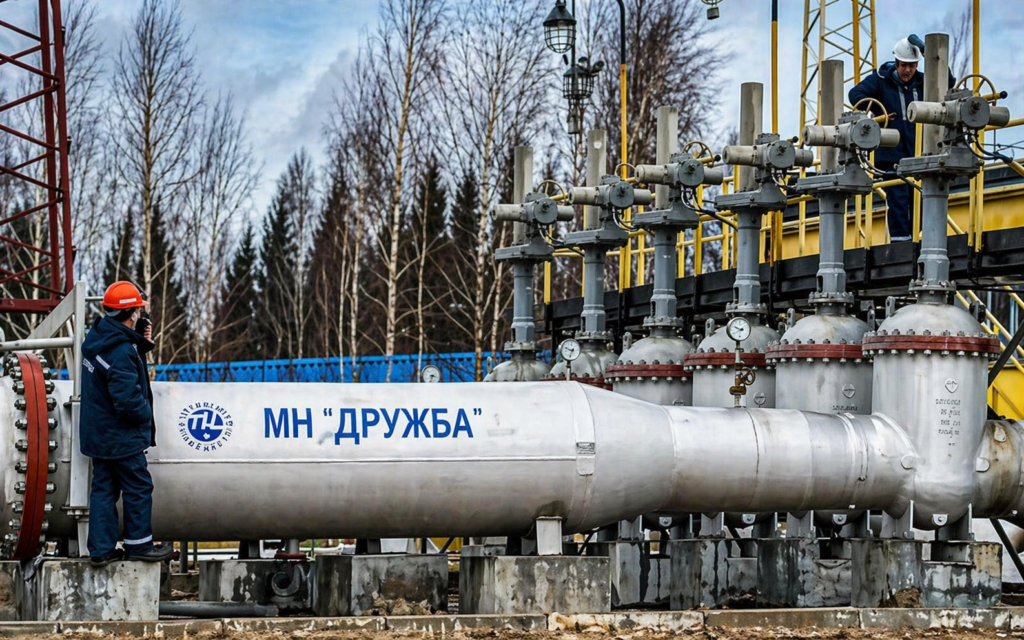
After weeks of intense negotiations and technical work, Ukraine and the European Union have entered the home stretch in resolving the critical issues of financing and sanctions. On April 22, it was reported that Hungary and Slovakia had tentatively lifted their vetoes on a massive €90 billion loan package for Ukraine and had also agreed to the 20th package of sanctions against Russia. This was reported by media outlets citing diplomatic sources in Brussels. The main driver of progress was the completion of repair work on the Ukrainian section of the Druzhba oil pipeline, which had previously been damaged by Russian shelling. However, has the threat of new Russian strikes on energy infrastructure disappeared? And has this move primarily benefited the Kremlin? Could the launch of “Druzhba” weaken Russia’s position, or conversely—will it return billions to fund the war? "Komersant Ukrainian" investigated.
Ukrainian President Volodymyr Zelenskyy officially confirmed the system’s readiness for operation.
“Ukraine has completed repair work on the Druzhba oil pipeline section. Our specialists have ensured the basic conditions for resuming the system’s operation. We link this to the unblocking of the European support package, which has already been approved by the European Council,” the head of state stated.
Zelenskyy also emphasized that Ukraine is awaiting action from its partners regarding the negotiation clusters on EU accession, since “Kyiv has already done its part.” It is known that at 11:35 a.m. (Kyiv time), Budapest confirmed the start of oil pumping. The first shipments of crude are expected to arrive in Hungary in the coming days. The technical procedure for adopting the EU’s long-term budget is currently underway.
Meanwhile, Slovak Prime Minister Robert Fico hinted that Slovakia would not object to the release of €90 billion for Ukraine, but would support the 20th package of sanctions against Russia only after the resumption of Russian oil transit via the Druzhba pipeline
“I don’t know how the EU will react if the loan is released and oil supplies via the Druzhba pipeline stop again in a few days. I really don’t know what we’ll do then, but we have to be prepared for such a turn of events,” Fico said.
What does this mean for Ukraine?
The main benefit for Kyiv in this situation is purely pragmatic. The resumption of oil pumping has become the key to “unfreezing” the European Union’s €90 billion aid package. Stanislav Zhelikhovsky, a candidate of political sciences and international relations expert, analyzed the situation in detail in an exclusive commentary.
“We are winning in this situation, in terms of unlocking the loan for Ukraine. This is one of the reasons why Ukraine is taking this step. In reality, the technical capability has only just become available, as the repair work took quite a long time,” Zhelikhovsky notes.
Additionally, with new forces coming to power in Hungary, particularly Péter Magyar, there is a chance to reset relations. Zhelikhovsky believes that Kyiv’s move to resume transit could serve as the foundation for a normal dialogue.
“The ‘service for service’ principle is the most likely model for our cooperation in the post-election reality. We are waiting for Budapest to take steps toward us,” says international relations expert Zhelikhovsky.
Particular attention is focused on whether Hungary’s new government will dare to pursue real diversification. Péter Magyar has already signaled a willingness to review energy cooperation with Russia, including not only oil but also Rosatom projects.
Will Russia benefit from the launch of “Druzhba”?
Short-term benefits could turn into long-term losses in the security sphere, warns the political science candidate and international relations expert.
“And I would like official Budapest—both the current administration and the new one that will replace it—to understand that, in reality, even despite certain economic benefits, there could be geopolitical losses, given that Russia will be able to continue its aggression, and this applies not only to Ukraine but to all of Europe. And although there are no global benefits, Russia still stands to gain from this,” warns Zhelikhovsky
Despite official statements about the restoration of the Ukrainian section of the Druzhba oil pipeline, the actual launch of transit remains highly uncertain. Economist Oleg Pendzin explains in an exclusive comment to "Komersant Ukrainian": the ball is now in Russia’s court, but its options are limited by successful attacks by Ukrainian drones.
Yes, Ukraine has fulfilled its part of the obligations to its partners by repairing the damaged sections. However, according to Oleg Pendzin, this is only one side of the coin. The problem now lies in the critical state of the infrastructure on Russian territory itself.
“Ukraine’s formal ability to transport oil does not yet mean that the Russians will be willing to do so. Yesterday’s news confirms this: Ukrainian drones struck a production and dispatch station in Samara—a transshipment complex on the Druzhba oil pipeline. The infrastructure there has been severely damaged, and the Russians still need to restore it,” emphasizes economist Pendzin.
Hungary and Slovakia remain the parties most interested in resuming transit. The reason is simple—money. Pendzin highlights the massive price gap between Russian oil and alternative offerings on the European market.
Key economic factors:
- Price: The price difference between Russian oil and alternatives is as much as threefold.
- Availability: There are spare oil volumes in Europe, but their cost for the domestic markets of Hungary and Slovakia is “crazy.”
“Today there are available oil volumes in Europe, but they are insanely expensive. That is precisely why Hungary and Slovakia are the most interested in ‘Druzhba.’ No alternatives have been found for them yet, precisely because of the economic factor,” explains Pendzin.
Thus, Ukraine’s agreement to resume transit is a shrewd diplomatic move. Ukraine is demonstrating to its partners its willingness to honor agreements, while leaving Russia face-to-face with its broken logistics.
A Trap for Budapest and Slovakia
Despite the economic benefits of Russian discounts, Hungary and Slovakia are taking a geopolitical risk. For years, Russia has used energy resources as a tool for blackmail and to keep countries tied to its orbit.
An international relations expert notes that the previous pipeline rupture was not an accident but a deliberate attack by Moscow:
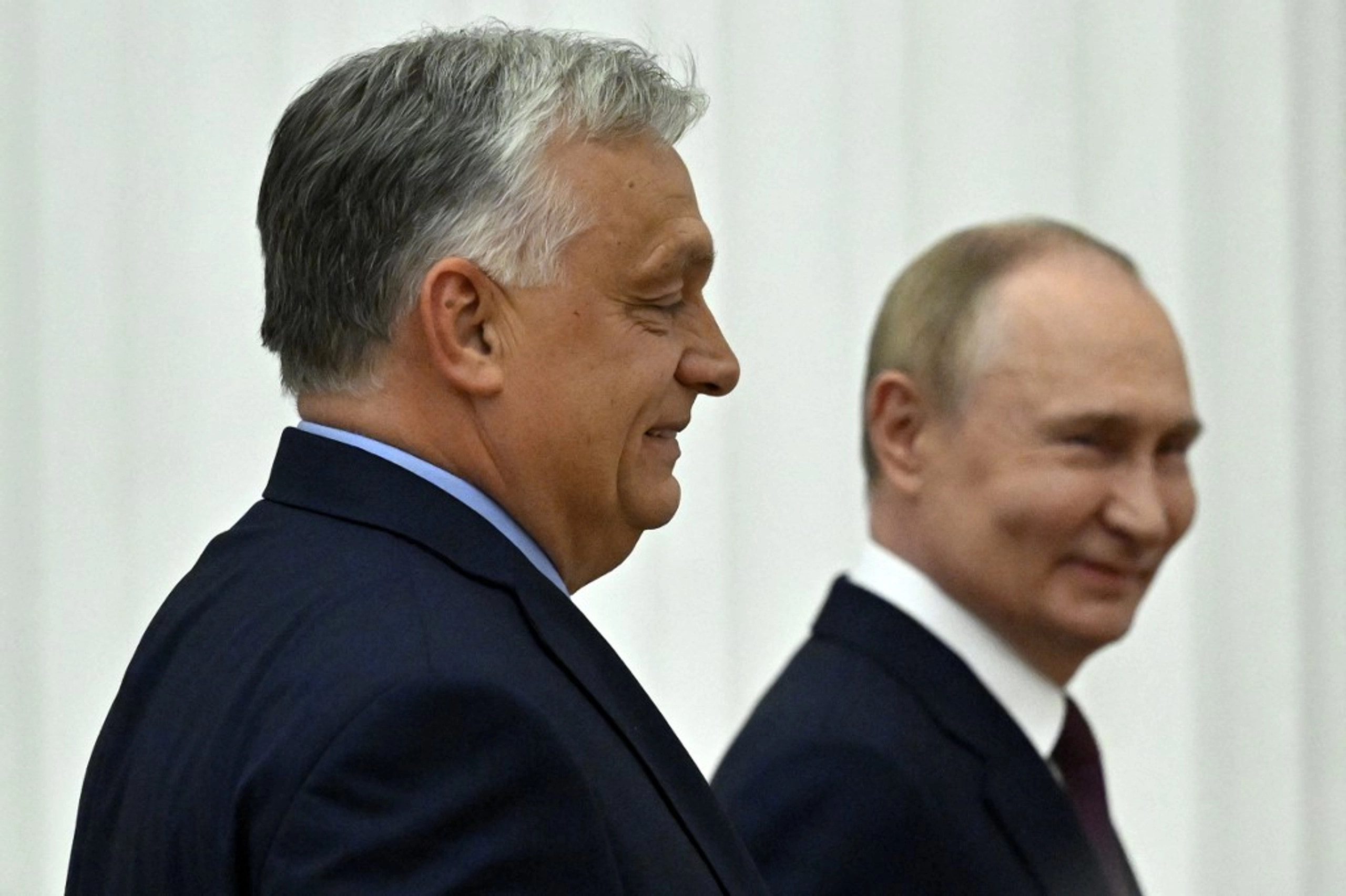
“Russia could have deliberately attacked the facility to worsen relations between Ukraine and Hungary, especially during the election campaign. The plan was for Viktor Orbán to gain political capital from this conflict and remain Putin’s ‘Trojan horse’ in Europe. As we can see, the plan didn’t work—Orbán lost the election,” Zhelikhovsky notes.
Moreover, the issue of the “oil pipeline’s” security remains unresolved. If Russia strikes the infrastructure again, it will no longer be possible to conceal it.
“It will be crystal clear what Moscow has done. Ukraine is providing the world with all the necessary information. Previously, Orbán and Fico tried to pretend that it was Kyiv that was interested in stopping transit, but now that rhetoric won’t work,” — Stanislav Zhelikhovsky.
Stanislav Zhelikhovsky noted that for decades, the Kremlin’s strategy has been built on creating artificial dependence through price manipulation. Ukraine has gone down this path and managed to break free from these chains, which is now the main challenge for Budapest and Bratislava.
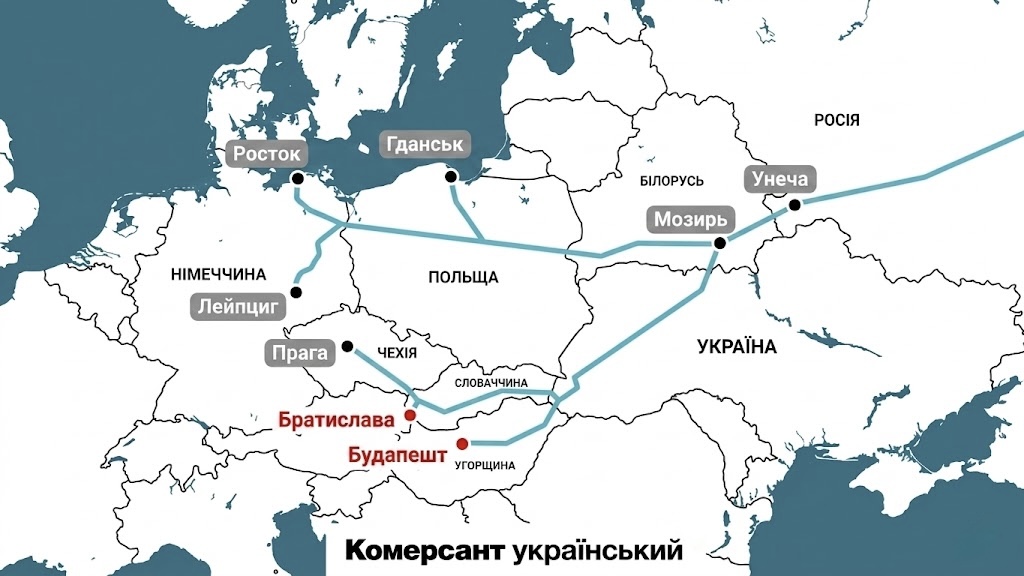
“Putin deliberately offered discounts to tie certain countries to him, and Ukraine was no exception. Fortunately, we were able to switch to alternative sources. Other countries did the same, notably Poland and the Czech Republic,” Zhelikhovsky concluded.
But whether Hungary and Slovakia will be able to follow this path and break free from the influence of “cheap” Russian resources for the sake of European security remains to be seen in the near future.