Three Targets in Moscow: Which Sites in Russia Must Be Destroyed to Turn the Tide of the War
5 August 19:04 FORECAST
Russia’s 40-day campaign to force peace is gradually turning into 100 days—and possibly into an indefinite regime of systematic pressure. As Kyrylo Budanov, head of the Office of the President of Ukraine, noted, the situation should be assessed solely based on actual results. The Ukrainian Defense Forces’ precision strikes aimed at destroying the aggressor’s military-logistical and economic infrastructure are synchronized with efforts to destabilize its domestic markets, increasingly exposing the systemic vulnerabilities of the Kremlin and its overseas financial networks.
However, military analysts point to even more vulnerable targets that could directly impact the Russian dictator himself. What will truly deal a painful blow to Putin—and how much Russia has already lost—is covered in this article "Komersant Ukrainian".
Precision Strikes on Enemy Logistics and Command Posts
On the night of August 5 and over the past 24 hours, the Ukrainian military carried out a series of high-precision strikes on key enemy targets. Ukrainian defense forces successfully struck drone control centers in the areas of Maly Shcherbakiv in Zaporizhzhia Oblast, as well as Kostiantynivka, Chasovyi Yar, and Zelenoye Pole in Donetsk Oblast. In addition, a UAV command post in the Kursk region of the Russian Federation and an enemy command post in the Bakhmut area were targeted.
Of particular significance was the destruction of a crossing over the Mokri Yaly River near the village of Vesele in the Donetsk region, which the invaders had been intensively using to regroup and redeploy personnel and heavy weapons. At the same time, a logistics depot belonging to the occupiers in the temporarily occupied town of Ishun in Crimea was destroyed, significantly complicating the supply of enemy units in the southern sector.
The Economic Collapse of Russian Retailers and the Wildberries Crisis
A telling result of the systematic impact on Russia’s infrastructure has been the increasing scale of damage to the enemy’s civil-military logistics. A sarcastic online trend has even spread among Russians—filming videos with burning facilities of Russia’s largest marketplace, Wildberries, in the background. Another large-scale fire at the company’s warehouses was reported in Aleksin, Tula Oblast. Against the backdrop of these events, the internet has been flooded with ironic messages from citizens addressed to the Russian dictator, expressing “gratitude” for “improving” life in Russia.
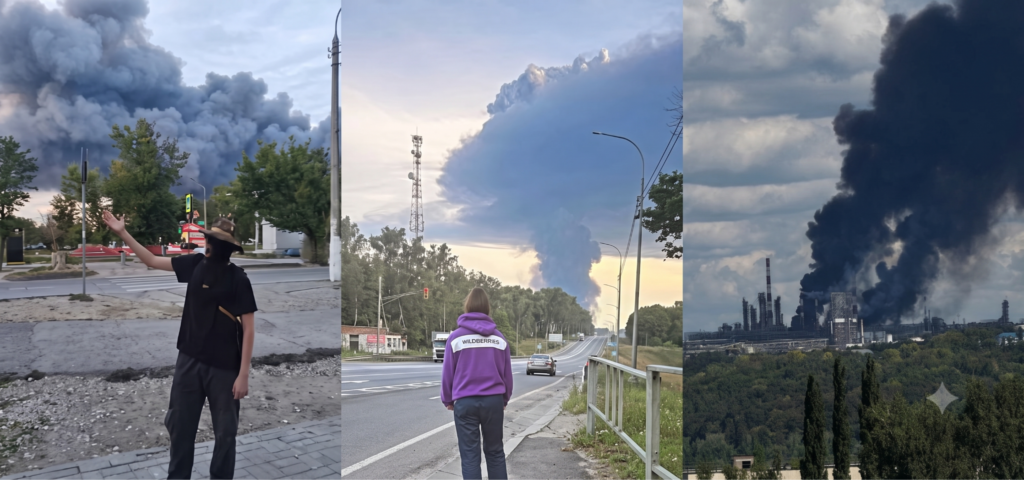
According to analysts at The Bell, Wildberries’ direct losses from Ukrainian drone attacks may already exceed 100 billion rubles and, in the worst-case scenario, could reach 200 billion. A drop in the marketplace’s revenue by at least a quarter threatens the very existence of the company’s entire business model, making it unprofitable for years to come. To survive, the giant is forced to urgently seek alternative platforms—in particular, to accelerate the construction of the largest logistics center, costing 11 billion rubles, near Minsk in Belarus.
Despite the marketplace’s powerful lobby and the Kremlin’s desire to avoid a reputational collapse for the company, bailing out such entities will cost the Russian budget an exorbitant amount, depleting its already limited resources.
Political Illusions of “Red Lines” and the Aggressor’s Mafia-Like Structure
The question of exactly where the Russian leadership’s patience ends—and whether such economic losses could force the Kremlin to stop the war—remains the subject of heated debate. Grigory Tamar, a military historian and IDF reserve officer, is convinced that public appeals or losses suffered by private businesses have no influence whatsoever on decision-making in Moscow.
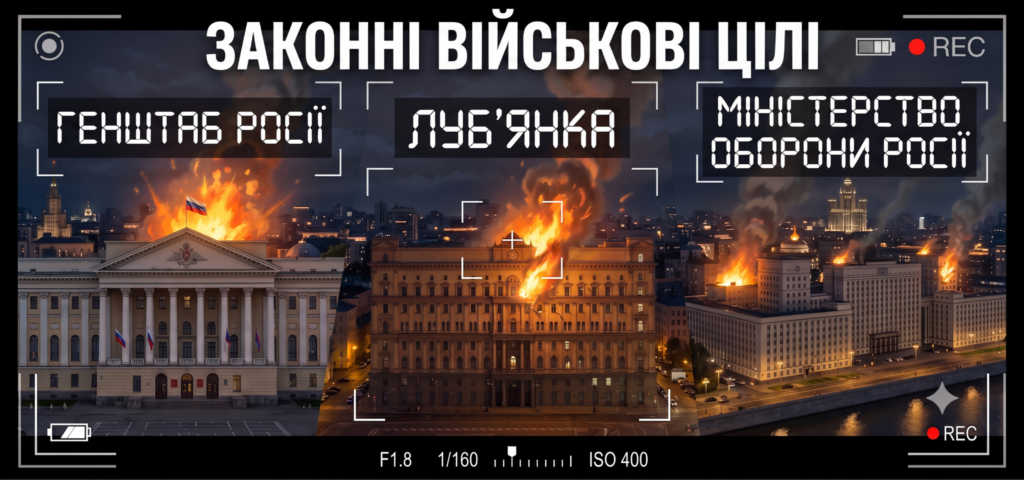
“I think that, first of all, these appeals don’t even reach him, and second, Putin’s red line runs right through his own ass. There’s no dilemma here. Leave three channels open to Moscow—the General Staff, the Lubyanka, and the Ministry of Defense—and that’s what will be reported to Putin,” notes Grigory Tamar.
The expert emphasizes that the Russian regime and its allies do not operate according to the laws of the civilized world, but rather as a single mafia-like structure, where the aggressor’s financial flows are closely intertwined with the international shadow economy. As an example, he cites the situation in Venezuela, which for a long time served as a hub for money laundering by Hamas and Hezbollah, as well as Russian capital.
“Don’t think that just because you’ve heard about money laundering by Hamas or Hezbollah somewhere, Russian money isn’t being laundered there too. It all goes hand in hand. These are states that do not operate according to the law or the norms of civilized society, but rather as mafia-like entities. And only if the West realizes that it must view them as a single evil that must be fought together will it be possible to truly crush them through economic means, without firing a single shot,” the military analyst emphasizes.
A Systemic Threat to the West and Ukraine’s Civilizational Choice
According to experts, the key obstacle to effective sanctions pressure remains the infiltration of capital from authoritarian regimes into Western institutions and the influence of China, whose role in the current global security architecture is considered critical. The infiltration of representatives and relatives of the leadership of totalitarian countries into leading financial institutions in Europe and around the world demonstrates the depth of the problem.
Grigory Tamar draws an analogy between the current geopolitical confrontation and a large-scale epidemic, which requires democratic countries to adopt a comprehensive approach: from strict sanitary standards to direct treatment and prevention.
“An epidemic of this plague is spreading, one that seeks to destroy Western civilization in the form we have come to know. And what Russia cannot forgive you for is that at a certain point you said, ‘But we want to be part of Western civilization.’ That’s it. And Russia cannot forgive this, because it simply rubs salt into their favorite wound and exposes their inadequacy as a civilization,” concludes Grigory Tamar.
Watch us on YouTube: important topics – without censorship