The EU has approved a plan to phase out Russian gas imports: experts explain how it will work
27 January 18:31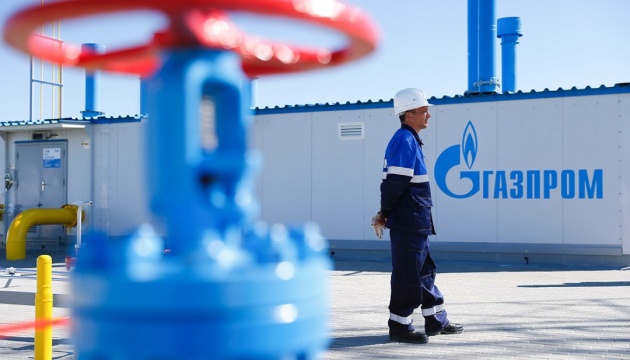 РОЗБІР ВІД
European Union member states have officially approved a regulation that provides for a gradual phase-out of Russian gas supplies—both pipeline and liquefied—to EU countries.
The Council of the EU announced this on January 26.
The document also introduces tools to monitor supplies and encourages the diversification of energy sources. The Council of the European Union emphasizes that the adopted regulation is an important step in implementing the REPowerEU strategy, which aims to completely eliminate the EU’s dependence on Russian energy resources.
“Starting today, the European Union’s energy sector becomes more reliable, resilient, and diverse. We are leaving behind our harmful dependence on Russian gas and taking a decisive step—in the spirit of solidarity and cooperation—toward creating an autonomous Energy Union,” stated Michael Damianos, Cyprus’s Minister of Energy, Trade, and Industry.
Under the new rules, imports of Russian pipeline gas and liquefied natural gas into the EU will be banned. The restrictions will take effect six weeks after the regulation enters into force.
Existing gas contracts will be granted a transition period to minimize the negative impact on markets and prices. A complete halt to LNG imports from Russia is scheduled for early 2027, while pipeline gas supplies will be fully halted starting in the fall of that year.
Before allowing gas onto the European market, member states are required to verify its country of origin. Violations of the regulation’s requirements will result in significant financial penalties: at least €2.5 million for individuals and starting at €40 million for companies—or no less than 3.5% of their total global annual turnover, or 300% of the estimated turnover of the relevant transaction.
By March 1, EU member states must develop national plans to diversify gas supplies and identify potential risks associated with replacing Russian fuel. To this end, companies will be required to notify national authorities and the European Commission of all current or remaining contracts with Russia. Countries that still purchase Russian oil must also submit corresponding diversification plans.
In the event of extraordinary circumstances, the import ban may be temporarily suspended for up to four weeks.
The next step will be the publication of the regulation in the Official Journal of the EU. It will enter into force the day after its publication and will be directly applicable in all member states. Additionally, the European Commission plans to propose separate legislation regarding the phased cessation of Russian oil imports by the end of 2027.
“Less money — less war”
Experts warn: without real sanctions and penalties, the document may remain nothing more than a declaration. Maksym Gardus, a communications specialist for the Razom We Stand initiative, noted in a comment to "Komersant Ukrainian" that the adoption of the plan was preceded by lengthy and tense discussions.
“There was a great deal of discussion, bargaining, differing opinions, and fierce opposition from the current leadership of the European Commission. Nevertheless, the plan was adopted, and it appears to be moving forward quite quickly.”
According to him, the key argument is financial.
“Russia was earning approximately $100 billion a year in Europe from energy exports. This is a significant portion of the Russian federal budget, 30–40% of which goes toward financing the war. The fewer these funds, the fewer resources for the war.”
Gardus emphasizes that Russian energy resources are not just a commodity. According to him, the consequences of this influence have already become evident:
“We’ve seen where this has led in Hungary. But not only there: networks of influence have been exposed in Germany, high-profile scandals have erupted in France and Belgium, and there are constant scandals in Bulgaria, Romania, and Moldova.”
What the EU plan entails
Under the new approach, the phase-out of Russian energy resources will take place in stages:
- first, short-term (spot) contracts will be terminated, primarily in the liquefied natural gas market;
- subsequently, restrictions and termination of long-term contracts;
- a ban on signing new agreements.
“Europe has long since turned away from Russian oil. The gas market is more complex, but after spot contracts, it will be the turn of long-term ones,” explains Gardus.
Separately, the expert emphasizes the fundamental difference between sanctions and the new regulation.
“Sanctions are temporary; they must be regularly reaffirmed. A regulation is a change in EU legislation. It does not require constant renewal. This is already a fundamental shift in European Union policy.”
“Fine words without consequences”
In contrast, Taras Zagorodniy, managing partner of the National Anti-Crisis Group, is far more skeptical about the plan’s prospects.
“So far, these are just fine words. In 2022, Hungary and Slovakia were granted exemptions—they were supposed to gradually phase out Russian energy sources. They didn’t do it. And what happened? Nothing.”
According to him, the document won’t work without real sanctions. Zagorodniy also draws attention to indirect forms of dependence on Russian gas.
“Fertilizers are essentially the same gas, just processed. That’s why we need to keep a very close eye on those ‘bigwigs’ who claim they aren’t buying anything.”
The expert cites external pressure as the only real driving force for change. In Zagorodniy’s view, the EU’s rejection of Russian energy resources is possible only in the context of a tough U.S. policy.
“This may happen not because Europe doesn’t want to fund the aggressor, but because the U.S. wants to sell its oil and gas. That’s the kind of diversification I believe in. Everything else is just talk for now.”
Thus, the EU Council’s adoption of a regulation on the phased cessation of Russian gas imports is, without exaggeration, one of the most important decisions by the European Union since the start of Russia’s full-scale war against Ukraine. Formally, this is not just another package of sanctions, but a systematic attempt to change the very architecture of European energy policy—enshrining in law a course toward a complete rejection of Russian energy sources. It is precisely this distinction that makes the document a potentially much stronger and longer-lasting tool for pressuring Russia.
The key test for the new regulation will be its practical implementation—the ability of the European Commission and member states not only to adopt rules but also to enforce them, particularly against large corporations and “problematic” countries. Fines, gas origin checks, contract transparency requirements, and national diversification plans—all of this must work not on paper, but in real-world policy.