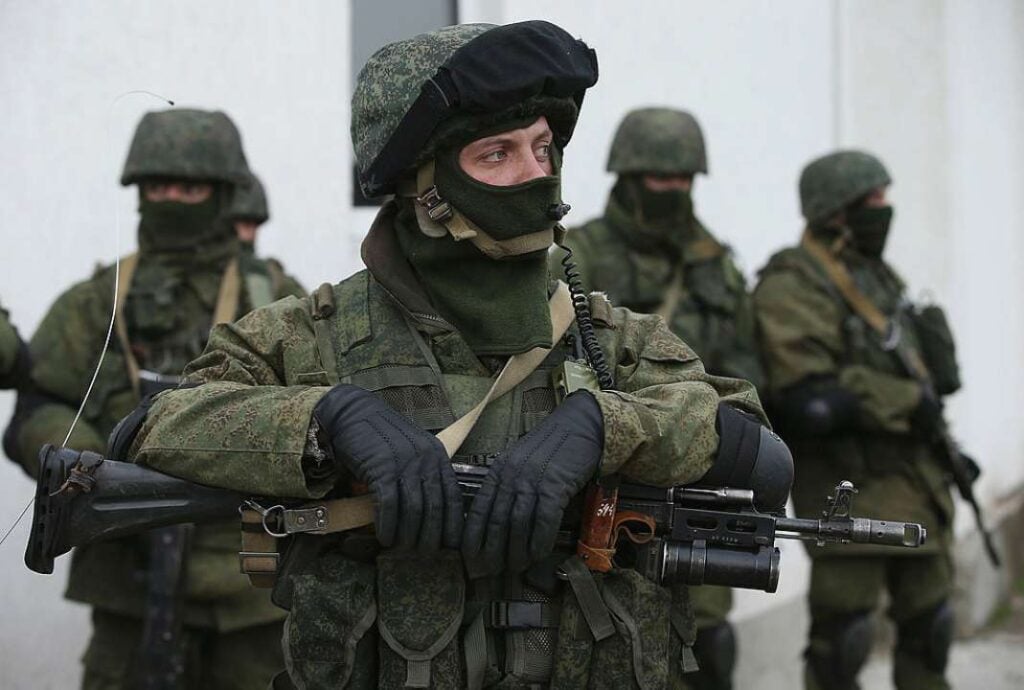
The war will not end within the next three years: the international analytics platform Metaculus has released its forecast
3 August 14:12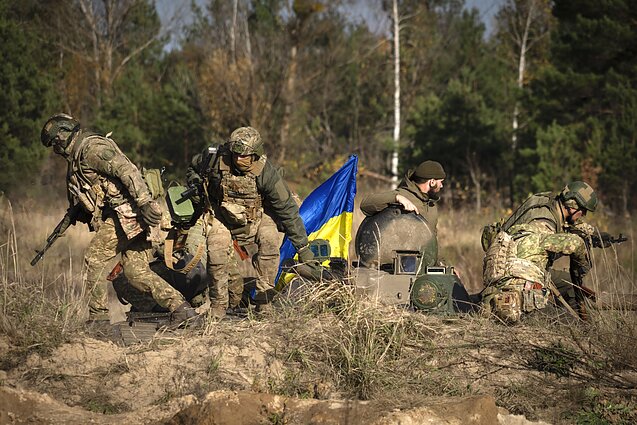 Forecast
While discussions continue in political circles and the media regarding the possible timeline for an end to hostilities, the professional analytical community is demonstrating a measured and frankly pessimistic pragmatism. According to data from the international forecasting platform Metaculus, the overwhelming majority of global experts do not see any preconditions for the war to end within the next year. Details are available in the article "Komersant Ukrainian".
What is Metaculus, and why are these figures trusted?
Metaculus is one of the world’s best-known collective forecasting platforms (a so-called “prediction market” or crowdsourced analytics platform). Unlike conventional opinion polls or political talk shows, predictions here are generated by a closed community of hundreds of professional analysts, mathematicians, and geopolitical experts. They constantly assess the probability of key global events—from central bank decisions and elections to military conflicts. The main factor here is reputation: the platform’s algorithms strictly weigh each forecast, so analysts risk their own ratings and portfolios with every mistake.
Watch us on YouTube: important topics – without censorship
What the Numbers Say: Timelines and Probabilities
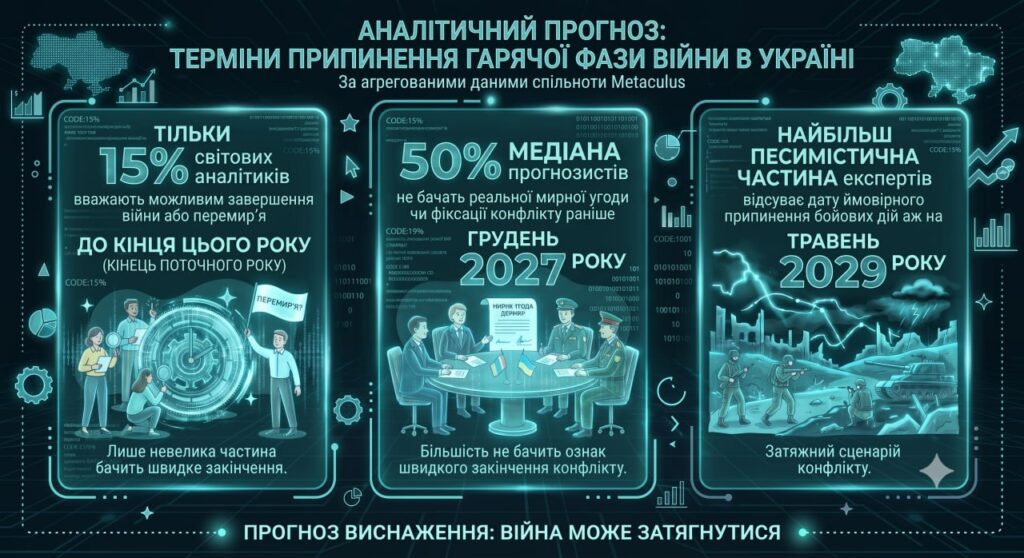
The latest aggregated forecast from the Metaculus community regarding the timeline for the end of the active phase of the war in Ukraine shows that only 15% of global analysts believe it is possible for the war to end or for a lasting ceasefire to be signed by the end of this year. 50% (the median) of forecasters do not see a realistic peace agreement or a resolution of the conflict before December 2027. The most pessimistic experts push the date of the likely cessation of hostilities all the way to May 2029.
However, analysts emphasize that Metaculus relies on cold mathematical logic and current trends, whereas war is rarely described by linear equations. The situation on the battlefield and the timeline for its conclusion are likely to be influenced by factors that are difficult to model mathematically—in particular, the pace of systemic transformations within the Ukrainian military and the extent of real international pressure on the aggressor.
Read us on Telegram: important topics – without censorship