Condom manufacturer Durex is discontinuing its main brands on the Russian market: what is the reason?
22 April 14:43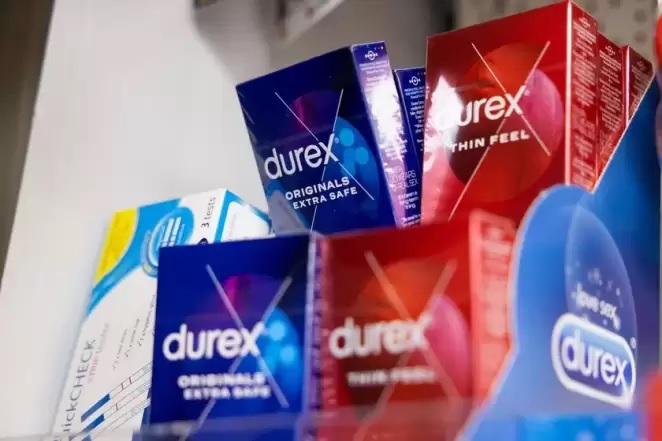
British consumer goods manufacturer Reckitt announced that its Russian division is being forced to change its business approach due to EU sanctions. The company is effectively shifting to developing new products locally and registering its own intellectual property to replace part of its hygiene product lineup, which can no longer be supplied or sold under global brands. This is reported by Reuters, as cited by "Komersant Ukrainian".
Sanctions complicate the use of global brands
Sanctions restrict access to certain product categories and complicate the use of global brands if the rights to them belong to companies in the EU. In response, Reckitt’s Russian division has begun creating local equivalents of its products.
This work is being carried out without the involvement of the head office, which effectively means partial autonomy for the business in Russia. This model appears to be a compromise between a complete exit from the market and an attempt to maintain a presence.
The company is already feeling the financial impact of the sanctions. Reckitt’s revenue in Russia has declined by double digits, and its overall performance in emerging markets has also deteriorated.
After the start of the full-scale war, Reckitt announced its intention to divest its Russian business. However, this process has not yet been completed and remains in limbo.
The company is balancing between exit and adaptation, trying to minimize losses.
Who Left the Russian Market After 2022
Following the start of Russia’s full-scale invasion of Ukraine, many international companies scaled back or completely ceased operations in Russia. Specifically, McDonald’s sold its business and exited the market, IKEA wound down its retail operations, Shell and BP divested their energy assets, and H&M closed its stores. Volkswagen also sold its production facilities.
At the same time, some companies are not leaving entirely but are adapting to the new conditions by scaling back their operations or localizing their business.
The situation is similar in the financial sector
For example, UniCredit is considering a full exit through business liquidation and surrendering its license, as it is becoming increasingly difficult to sell assets.