The EU may begin accession talks with Ukraine as early as this summer: a statement by the European Commissioner
12 May 01:36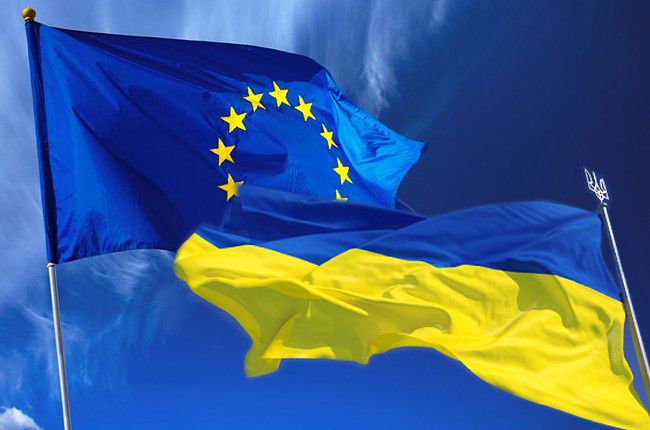
The European Union could make significant progress in Ukraine’s accession negotiations as early as this summer. European Commissioner for Enlargement Marta Kos has called on EU member states to officially open all negotiation chapters for Ukraine and Moldova by July. This was reported by [Komersant], citing her post on the social media platform X.
According to her, the first cluster could be opened by the end of June, and the remaining five in July 2026.
What Marta Kos said
The European Commissioner for Enlargement emphasized that the EU must seize the political window of opportunity and accelerate the accession negotiation process with Ukraine and Moldova.
“The first cluster could be opened during Cyprus’s presidency, and as for the remaining five clusters, we hope to be able to do so in July,” Marta Kos stated.
Cyprus holds the EU Council presidency in the first half of 2026. That is why opening the first negotiation cluster by the end of June could send an important political signal to Ukraine.
Cyprus officially assumed the EU Council presidency in January 2026, and President Volodymyr Zelenskyy expressed hope at the time that this presidency would help Ukraine move closer to EU membership.
What are negotiation clusters?
Negotiation clusters are broad thematic areas in which a candidate country aligns its legislation, institutions, and practices with European Union rules.
In the EU accession process, negotiations are divided into six clusters. They cover key areas—from the rule of law, democracy, and public administration to the economy, the internal market, the environment, agriculture, foreign policy, and other sectors.
The actual opening of the clusters signifies a transition from political statements to substantive negotiations on membership.
Why this is important for Ukraine
The opening of the negotiation clusters will be one of the most important steps on Ukraine’s path to the EU. This does not mean automatic accession, but it launches the practical phase of negotiations: Ukraine must demonstrate progress in reforms, compliance with European standards, and the alignment of its legislation with EU norms.
For Kyiv, this is also an important political signal amid the war, as EU accession remains one of the state’s strategic goals.
President Volodymyr Zelenskyy previously stated that Ukraine is ready to open all six negotiation clusters with the EU. At the same time, Brussels emphasizes that Kyiv must fulfill all necessary conditions for full membership.
When negotiations might open
According to Marta Kos, the first negotiation cluster could be officially opened by June 30, 2026. The European Commission hopes to open the remaining five clusters in July.
This means that as early as this summer, Ukraine could move to a new stage in the European integration process. At the same time, the decision to open the clusters requires the consent of EU member states, so the final outcome will depend on the political stance of all member states.
Watch us on YouTube: important topics – without censorship Watch us on YouTube: important topics – without censorship
Ukraine and Moldova are moving in parallel
Marta Kos’s statement referred not only to Ukraine but also to Moldova. The European Union views both countries as part of the current wave of expansion.
Reuters reported that the EU wants to move faster on negotiations with Moldova, and the head of European diplomacy, Kaja Kallas, emphasized the importance of seizing the favorable political moment to advance the accession process.
This is important for Ukraine, as Kyiv and Chisinau are often considered as part of the same enlargement package, although each country is following its own path of reforms and assessments.
The issue of Ukrainian children was also on the agenda
Marta Kos also reported that a high-level meeting of the International Coalition for the Return of Ukrainian Children, whom Russia illegally took from the occupied territories, took place in Brussels.
According to her, the meeting was organized jointly with Canada and Ukraine, and representatives from nearly 60 countries are participating.
The parties planned to discuss three key issues:
- the return of Ukrainian children;
- support for the children and their families after their return;
- mechanisms for holding Russia accountable.
The European Commissioner emphasized that the abduction of children is one of the most horrific manifestations of war, and Russia must be held accountable.
What obstacles remain
Despite Brussels’ optimistic statements, Ukraine’s path to EU membership remains difficult. The consent of all EU member states is required to open and advance negotiations.
In addition, Ukraine must continue reforms in the areas of the rule of law, the fight against corruption, the protection of minority rights, public administration, the economy, and the alignment of legislation with EU standards.
A number of EU countries remain cautious about rapid expansion. That is why the opening of clusters will be an important, but not the final, step on the path to membership.
Read us on Telegram: important topics – without censorship