After 50 days of war in Iran: the global oil market has lost $50 billion
20 April 16:18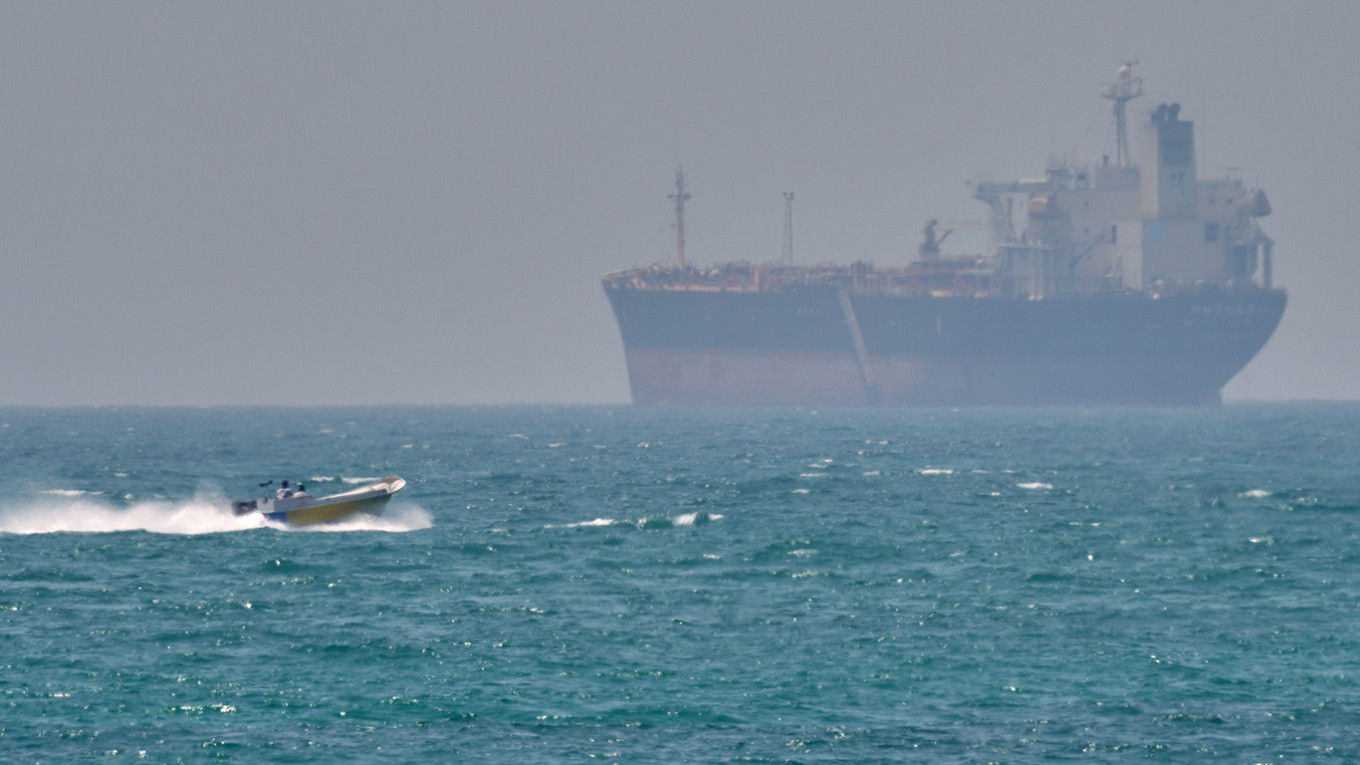
It is no coincidence that the International Energy Agency (IEA) has called the current crisis in the Middle East “the largest supply disruption in the history of the global oil market.” Almost immediately after the war began on February 28, Iran blocked the Strait of Hormuz, and the world has since been deprived of more than 500 million barrels of oil and condensate, Reuters reports, citing data from Kpler, as reported by "Komersant Ukrainian".
Although oil prices have since fluctuated between $80 and $120 per barrel of Brent, the average price since the start of the conflict has been around $100, says Johannes Rauboll, Kpler’s senior crude oil market analyst.
Thus, the total value of oil not delivered from the Persian Gulf countries during the 50 days of the war exceeded $50 billion. And although prospects for an end to the conflict have emerged in recent days, its consequences will be felt for many months and even years to come, analysts say.
Although Saudi Arabia has rerouted nearly all of its oil exports via a pipeline that crosses the entire country to a port on the Red Sea, a total of 13 million barrels of oil and 300 million cubic meters of LNG per day have been blocked from the Persian Gulf, Reuters notes.
This forced the suspension of operations at oil fields, oil refineries, and gas liquefaction plants, causing serious damage to the economies of Asian countries in particular. But other regions, including Europe, Africa, and the United States, also felt the consequences in the form of rising energy prices and shortages of certain types of fuel and fertilizers.
A loss of 500 million barrels for the market is equivalent to:
- a five-day absence of oil from the global economy,
- a halt in all road traffic worldwide for 11 days,
- a 10-week halt to air travel worldwide,
- a four-month halt in the international shipping industry,
- nearly a month’s worth of oil demand in the U.S. or more than a month’s worth of demand across all of Europe.
The pace of resuming supplies will depend not only on agreements between Washington and Tehran, but also on logistics, the availability of tankers (many are currently engaged in transporting oil and LNG from America to Asia, where voyages take up to 40 days), insurance costs, freight rates, and the willingness of shipowners to send their vessels out again.
If shipping resumes and no new obstacles arise, approximately 260 tankers currently blocked there will remain, loaded with roughly 170 million barrels of oil and 1.2 million tons (1.7 billion cubic meters) of LNG.
According to IEA estimates, about half of the oil and gas fields in the Persian Gulf will be able to restore pre-war production levels within two weeks, 30% within six weeks, and another 20% will take months.
Repairs to major damaged energy facilities, including the giant LNG hub in Qatar, where about 17% of capacity was affected, could take up to five years.