Analysis of the agricultural machinery market: What tractors are being purchased in Ukraine today, and who actually manufactures them?
22 May 13:19 ANALYSIS FROM
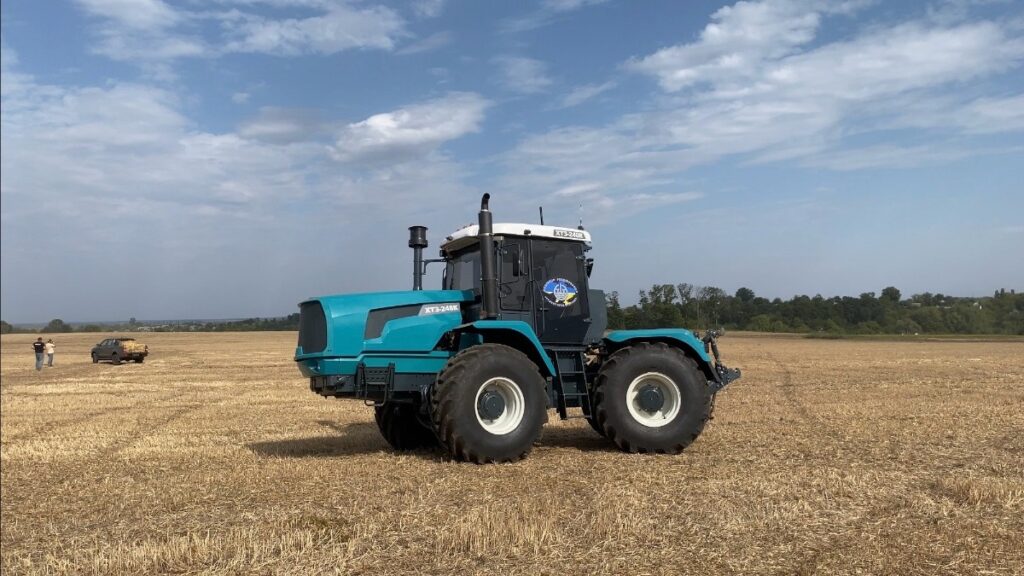
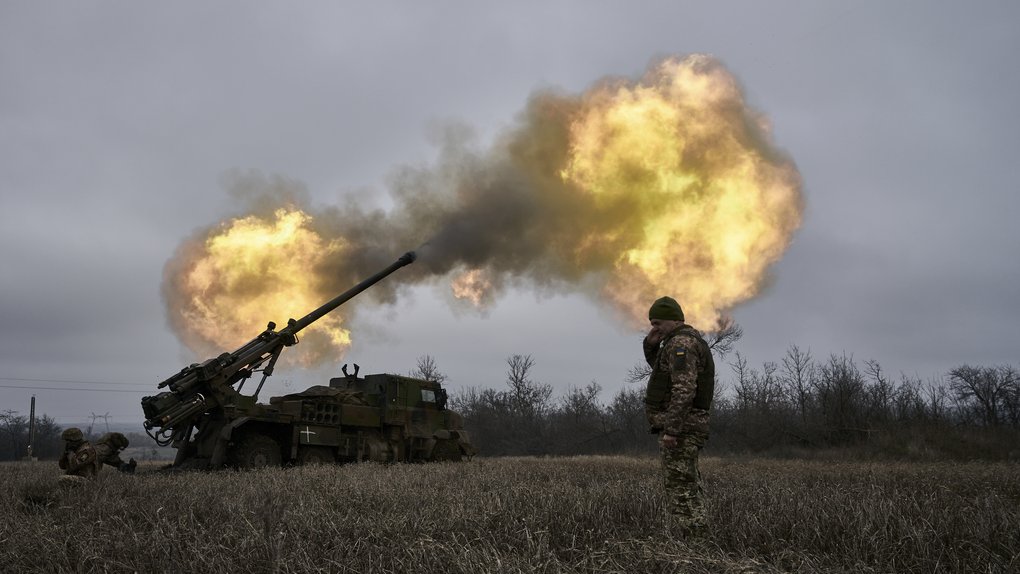
Despite enemy shelling, the Kharkiv Tractor Plant continues to produce tractors that successfully compete with foreign equipment. There are other Ukrainian manufacturers that can boast the same. "Komersant Ukrainian" investigated what they have to offer domestic farmers
In the list of the most in-demand tractors, compiled by the Automotive Market Research Institute in collaboration with the Agriline portal, there is, unfortunately, no domestic equipment—only foreign. But Ukrainian tractors do exist, and they are successfully working in the country’s fields. The thing is, there aren’t many new Ukrainian tractors. Which is not surprising—especially given the conditions under which Ukrainian companies are currently operating. But these tractors can compete with foreign models. At the very least, there are manufacturers in Ukraine who can boast that there is even a waiting list for their equipment.
What’s Working in Ukraine’s Fields
The aforementioned list of wheeled tractors that are attracting increased interest from farmers includes five models from the German company CLAAS, two from another German company, Deutz-Fahr, two models from the American tractor manufacturer John Deere, and one more model from the American company Case IH. And all of them compete, at least in terms of price, with Chinese equipment. There are also plenty of tractors manufactured in Ukraine in the fields. The thing is, these are mostly older models that have been helping farmers for years. Publication
“The farm has both domestic and imported tractors. There is a Czech-made Zetor tractor, as well as one John Deere and one New Holland.” As for the domestic ones, we have equipment from the Kharkiv Tractor Plant—the T-25, T-170, and T-150. But they’ve pretty much run their course. We also have three MTZ-80s and a few other machines,” explains Ruslan Khomych.
As for new Ukrainian tractors, the farmer has heard of them but has not seen them in operation. His colleague from the Kyiv region, Oleksandr Chubuk, head of the “Chaika-2” peasant farm, responded to the question, “Do you have any Ukrainian-made tractors on your farm?” with a question of his own: “Where have you seen Ukrainian tractors?” Although he later recalled seeing a SPIKE tractor—either on someone’s farm or at an exhibition. As is well known, this tractor is manufactured by the company “Agro Kar” from Kropyvnytskyi. Here is what the farmer said:
“Beginning farmers often opt for Chinese tractors. But those who’ve already tried the good stuff find it hard to give it up—whether it’s John Deere or New Holland. But I don’t see any Ukrainian tractors as such right now. Unfortunately. And I don’t know if they’ll be able to compete even with those same Chinese tractors, which aren’t very comfortable but are reliable enough. Personally, I’m currently taking a close look at, for example, the electric tractor market,” the farmer noted.
Indeed, Ukrainian farmers do have a choice, and it’s quite extensive. The aforementioned Agriline portal features over 15,500 listings, nearly 1,200 of which are new tractors. Most of them are manufactured in Germany, the U.S., and China. Models from Ukrainian manufacturers are also available. Dmytro Kysilevsky, Deputy Chairman of the Verkhovna Rada Committee on Economic Development, explained which products can be considered “Made in Ukraine.” In recent years, he has been actively promoting the “Made in Ukraine” program.
“Tractors used to be produced in large numbers in Ukraine, but for objective reasons, production is currently small. Although it is gradually reviving. There are tractors produced by KhTZ—the Kharkiv Tractor Plant. There is a tractor manufactured by a company from Dnipro—it’s called Farmer. There’s also the company “Agro Kar” from Kropyvnytskyi. I’ve also heard about plans by a company in the Vinnytsia region to launch similar production,” the deputy notes.
This likely refers to the project presented in March by the Bratslav Group of Companies to manufacture tractors in the Vinnytsia region with 40% local content. By the end of the year, they plan to introduce a line of machines with varying power ratings there.
What and how is produced in Ukraine
On the website of the Kharkiv Tractor Plant, you can find four models of its own wheeled tractors. The Kropyvnytskyi-based company “AgroKar” offers three models of the Spike tractor. And listings for most of these models can be found quite easily on various marketplaces. The tractor portfolio of AgroMashInvest, a company based in Dnipro, includes only one universal wheeled tractor, the Farmer 10286 model. And purchasing it—given the limited availability—seems to be quite a difficult task. Why is that? And to what extent does supply meet demand? Answers to these and other questions from the publication
“The Farmer tractor is the only tractor in Ukraine with a waiting list. And even buying our used tractor is, you could say, a stroke of luck.” That’s how Serhiy Sergeyev, founder of AgroMashInvest, answered the first question, and continued:
“We just put a dozen tractors on order, and they’re already sold out. Unfortunately, we can’t increase production because so many of our guys have been mobilized. I currently have only three people left in the assembly shop. Actually, with this workforce, we could produce up to 15 machines every month, but we also have issues with suppliers. For example, the bodywork, which is also made for us by a company in Dnipro. But they were also idle for a month and a half because all their mechanics were drafted, and they had to train new staff from scratch. The same problem exists at the company that makes fuel tanks for us. It’s the same with electronics. And this year, we were practically idle for the first three months waiting for transmissions from Turkey.”
A shortage of skilled workers and logistical difficulties are what directly affect the scale and stability of production. Constant enemy attacks on the plant’s infrastructure and power outages further complicate the production process. One need only recall Kharkiv and the Kharkiv Tractor Plant, which continues to produce machinery even amid constant bombardment and attacks on energy and industrial infrastructure. Dnipro is also under constant shelling. Sergey Sergeyev, founder of AgroMashInvest, recalled how three years ago, on April 27, a downed rocket struck the company’s main building and destroyed everything inside. But this did not deter him from continuing the work to which he has dedicated decades of his life.
Sergey Sergeyev explained that his company has been specializing in tractors since 1993. He himself has been involved with tractors since 1985, when he began working as an assistant foreman at the YUMZ tractor plant. The founder of AgroMashInvest also explained why, in his opinion, there is a line of buyers for Farmer tractors.
“We developed a tractor from scratch specifically to meet Ukraine’s requirements. Because European machines—not to mention Chinese ones—aren’t suitable for Ukraine. They’re designed to work on light soils, sandy soils. But we have heavy soils, black soils. That’s why, when selecting an engine, we specifically chose the Perkins engine, which is supplied exclusively to us, directly from England, from the factory. Why did we choose Perkins? Two tractor parameters are critical in the field: engine torque and tractor weight. If you look at Chinese engines, their torque is 330–340 Nm. But for our engine, this figure is 406,” the specialist explained.
In fact, these aren’t the only advantages mentioned by the founder of AgroMashInvest. At the same time, he constantly compared his own tractor with equipment from foreign competitors.
“We’re constantly modernizing our machine. Try asking the Chinese or the Europeans to do something—some kind of tractor upgrade for the Ukrainian market. It’s clear what the answer will be. For example, at first we used an Austrian rear suspension, the kind found on European and Turkish tractors. But people came and said, ‘Guys, it doesn’t work; it doesn’t fit.’ Because today, there are still a lot of Soviet-made trailers in the villages. So we redesigned it for the Ukrainian market,” the manufacturer emphasized.
Adaptation to Ukrainian conditions, proximity of service centers, and often a more affordable price—these are the main advantages that can attract buyers of Ukrainian equipment. As reported to the publication "Komersant Ukrainian" at the Kharkiv Tractor Plant, KhTZ tractors are now capable of competing with foreign counterparts, including Chinese ones, primarily due to their adaptability to Ukrainian operating conditions, the availability of spare parts and service, lower cost, and versatility—the tractors are used for plowing, sowing, transportation, and other field work.
What and how is being supported in Ukraine
Recently, there has been a growing movement in the country to localize foreign tractors, primarily Chinese ones. Commenting on this trend to the publication
To clarify: under the Law “On Public Procurement,” the degree of production localization is defined as the proportion of the local component in the cost of raw materials, materials, and other domestically produced components within the total cost of the goods being procured. For example, the level of localization in the production of KhTZ tractors is about 80%. Serhiy Sergeyev, founder of “AgroMashInvest”—the manufacturer of Farmer tractors—said that thanks to a large number of Ukrainian suppliers, his company easily achieves 40 percent localization.
So what do buyers of Ukrainian tractors get? For instance, as part of the “Made in Ukraine” state policy, there is a compensation program for farmers purchasing Ukrainian-made machinery and equipment. Dmytro Kysilevsky, Deputy Chairman of the Verkhovna Rada Committee on Economic Development, explained the specifics of its implementation.
“Agricultural machinery, vehicles, or equipment for agricultural processing with a localization level above 40% are eligible for this program. This means the following: if a consumer—say, a farmer—purchases such equipment, they can receive up to 25% of the cost of that equipment as compensation from the state. This, in turn, makes the purchase of new Ukrainian equipment more profitable for the buyer than, for example, the purchase of imported equipment, even used equipment,” the parliamentarian notes.
He also explained why the state is so concerned about the level of localization.
“When the consumer is reimbursed 25% of the cost, the state intends to collect taxes from the manufacturing activities of the company that produced this tractor. Moreover, this company purchases various spare parts, hydraulics, tires, electrical products, cab components, and electronics from other Ukrainian manufacturers. In other words, the state assumes that the money it provides as compensation to the buyer will be recouped through taxes,” the deputy explained.
There are other programs where the localization rate is a determining factor. For example, manufacturers with a localization rate of at least 40% can participate in the Program offering 15% compensation (excluding VAT) for the purchase of Ukrainian-made energy, construction, wheeled, and special-purpose equipment. The localization requirement in public procurement has also recently been extended to tractors. As of January 1, 2026, the minimum localization level there has increased to 30%. Accordingly, goods with this level of localization can be purchased with public funds, i.e., state funds or local government funds.