The White House is being criticized for its silence following Russia’s attacks on U.S. businesses in Ukraine
13 May 11:56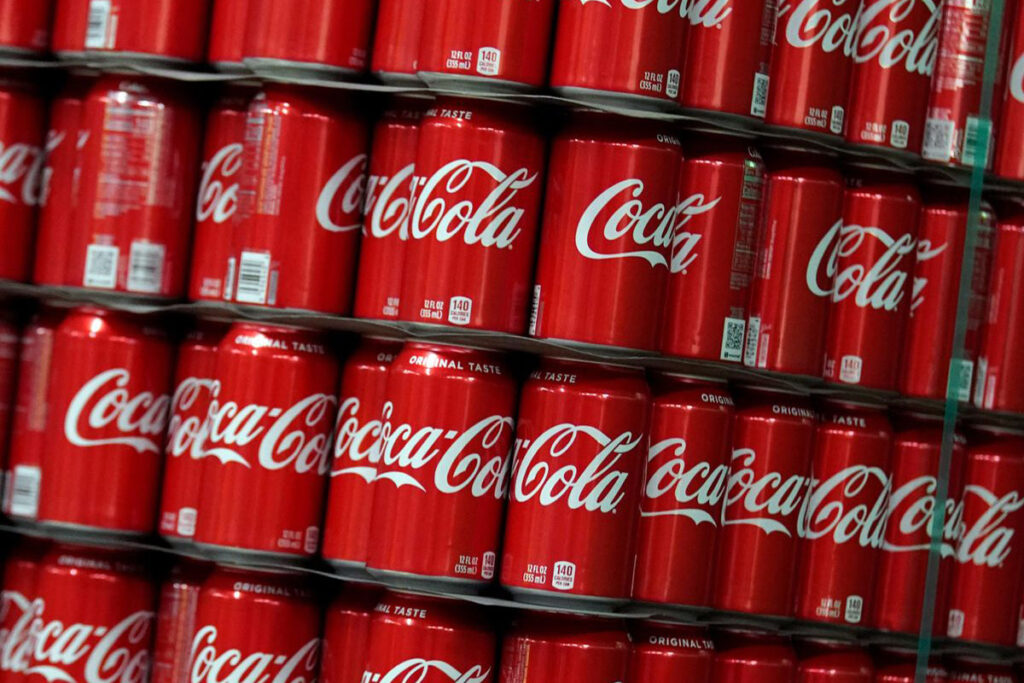
Russian forces are increasingly targeting facilities linked to American businesses in Ukraine. According to The New York Times, facilities and warehouses linked to Coca-Cola, Cargill, Mondelez, Boeing, Philip Morris, Bunge, and other companies have come under Russian fire, yet the Trump administration has so far effectively failed to respond to these attacks, reports "Komersant Ukrainian"
Ukrainian and American business representatives believe that such attacks may be an attempt to deter U.S. investors from doing business in Ukraine.
Which American companies has Russia attacked?
According to The New York Times, since last summer, Russia has carried out a series of strikes on facilities linked to major American companies in Ukraine. Among them:
- Cargill — an agricultural giant linked to a grain terminal in southern Ukraine;
- Coca-Cola — a beverage bottling plant near Kyiv;
- Boeing — a facility in Kyiv;
- Flex Ltd. —an American electronics manufacturer whose plant was damaged in western Ukraine;
- Bunge — a major agricultural company;
- Philip Morris — a tobacco manufacturer whose factory was attacked in Kharkiv;
- Mondelez — a manufacturer of snacks and confectionery products.
Strike on Cargill: seven drones in three minutes
One of the most high-profile cases described in the article is the attack on a facility linked to Cargill. According to the NYT, Russian drones struck American warehouses at a large grain terminal in southern Ukraine one after another.
Seven drones struck the facility within three minutes. The publication cites a video recorded by a truck driver, which was obtained and verified by journalists.
Coca-Cola was also targeted
The New York Times reports that Russia attacked a beverage bottling plant, partially affiliated with Coca-Cola, in Velyka Dymerka near Kyiv.
After the full-scale invasion began, Russian troops had already looted this plant. According to local mayor Oleksandr Borsuk, among other things, they took bottles of Jack Daniel’s whiskey.
After the area was liberated, the plant resumed operations in May 2022, but was later hit by Russian attacks again.
According to Borsuk, a Russian drone struck the plant late last year; later, another drone was shot down nearby, and a third attacked a solar power plant next door. He believes Coca-Cola may have been the target.
Surrounded by farmland, the plant is hard to miss. The two water towers at its entrance are painted red and feature the company name embossed in its signature white font.
Boeing, Flex, Philip Morris, and Mondelez: Strikes Across Different Regions
In mid-June, a Russian strike damaged a Boeing facility in Kyiv. Two months later, cruise missiles struck the Flex Ltd. plant in Mukachevo in western Ukraine—hundreds of kilometers from the front lines.
The attack on Flex shocked the American business community in Ukraine. Andy Gunder, president of the American Chamber of Commerce in Ukraine, called on Trump to “support American business in Ukraine” and “show Putin that the United States stands by its own.” Trump told reporters that he was “not happy” about the attack.
In early 2026, the attacks intensified.
Over the course of four weeks, facilities linked to Bunge, Philip Morris, and Mondelez were targeted.
Why Russia might be targeting American businesses specifically
Russia’s motives have not been definitively established. Some Ukrainian business representatives believe that Russia is simply targeting the Ukrainian economy as a whole, regardless of the companies’ origins.
At the same time, others see a more specific goal in these attacks—to scare off American investment at the very moment when Kyiv is trying to deepen economic ties with the U.S.
Andy Gunder, President of the American Chamber of Commerce in Ukraine, stated that Russia is launching missiles and drones in the hope of stopping American businesses from entering Ukraine.
Why companies aren’t speaking publicly about the attacks
Many corporations avoid making public statements about the strikes. The reason is a reluctance to scare off investors, shareholders, and insurance companies.
Some companies still have complex international business structures, and some continue to operate in the Russian market, which makes the situation even more delicate. Ukraine also does not always focus specifically on attacks on American assets, so as not to reinforce the country’s image as an overly risky place for investment.
Watch us on YouTube: important topics – without censorship
How the U.S. is reacting
According to the NYT, American companies have quietly raised the issue of the attacks in their contacts with U.S. officials. Representatives of several companies, including Coca-Cola, Cargill, and Bunge, also discussed this with a bipartisan group of U.S. senators who visited Ukraine in February.
Senator Jean Shaheen stated that business representatives believe their facilities may have been targeted intentionally. She later supported a Senate resolution condemning the deliberate targeting of American companies operating in Ukraine.
At the same time, according to the publication, the Donald Trump administration has not publicly condemned a series of such attacks. A State Department spokesperson merely stated that Washington had called on both sides to refrain from targeting American business interests.
Why this sparked accusations of double standards
The New York Times highlights the contrast: Washington asked Kyiv to refrain from striking a Russian oil terminal in the Black Sea, through which oil is exported from Kazakh fields where American companies have interests. At the same time, the U.S. reaction to Russian strikes on American businesses in Ukraine was significantly more restrained.
This has sparked accusations of double standards in the Trump administration’s approach to the war.
“I don’t recall Russia specifically targeting American businesses in Ukraine prior to 2025,” said Jim O’Brien, who served as U.S. Assistant Secretary of State for European and Eurasian Affairs from late 2023 until January 2025, when Mr. Trump returned to power.
That changed last summer.
Why this matters for Ukraine
For Ukraine, the arrival of American business is not just about the economy, but also a political signal. U.S. investment can mean a longer Western presence in the country, additional jobs, new technologies, and greater interest from Washington in Ukraine’s stability.
That is why attacks on American companies can have a broader effect than simply destroying specific warehouses or factories. They can create the impression that Ukraine is too risky for investors.
The presence of American companies in Ukraine is modest, numbering about 120. Nevertheless, major consumer brands such as McDonald’s and Coca-Cola operate there, as do all the major American grain traders.
Many companies suffered losses in the first weeks of Russia’s invasion in 2022.
Read us on Telegram: important topics – without censorship