Explosions, nuclear reactors, and North Korea: Russian ship sinks under mysterious circumstances
13 May 10:15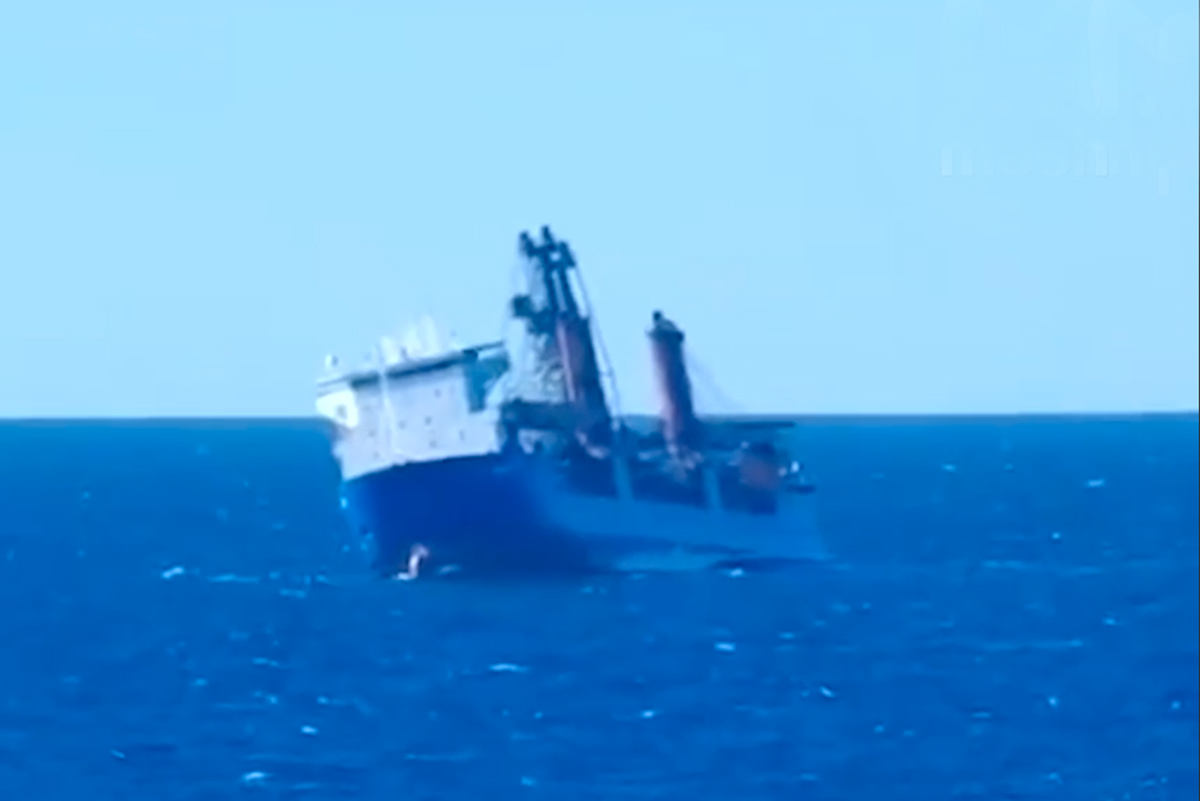
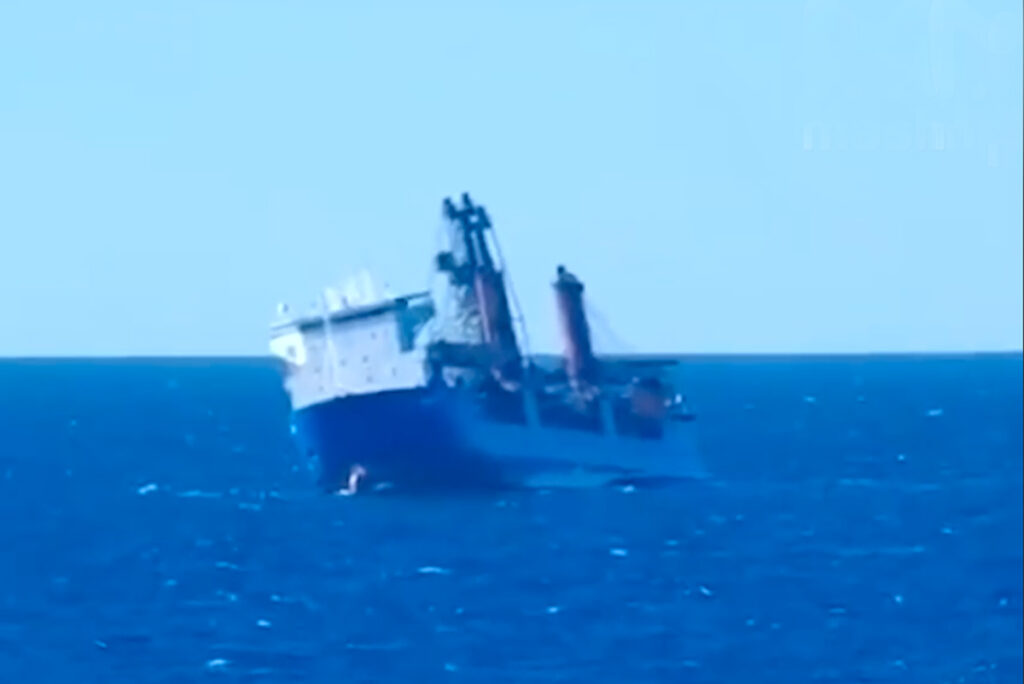
The Russian cargo ship Ursa Major, which sank in the Mediterranean Sea off the coast of Spain in December 2024, may have been carrying components for two nuclear reactors intended for submarines. According to a CNN investigation, the incident may have been a rare and highly risky intervention by Western military forces to prevent Russia from transferring sensitive nuclear technology to North Korea. However, there is no official confirmation of this theory, reports "Komersant Ukrainian"
What happened to the Russian ship Ursa Major
According to CNN, the circumstances surrounding its sinking remain a mystery, and a Spanish investigation points to a series of explosions on board the vessel.
The Russian cargo ship Ursa Major sank on December 23, 2024, off the coast of Spain. Prior to this, it suffered a series of explosions, which, according to the investigation, occurred on the starboard side, likely near the engine room.
Two crew members died as a result of the incident. Another 14 sailors were evacuated in a lifeboat and subsequently picked up by the Spanish rescue vessel Salvamar Draco.
The ship departed from Russia in December 2024. It was officially reported that it was carrying large-scale equipment, including cranes, container cargo, and hatch covers for icebreakers.
However, CNN reports that the circumstances surrounding the route and cargo raised suspicions among investigators.
What could have been on board
According to CNN, following inquiries from opposition lawmakers, the Spanish government confirmed that the ship’s captain told investigators about the special cargo. It consisted of components for two nuclear reactors, similar to those used in submarines.
Initially, the cargo was described in documents as large “hatch covers.” However, after further questioning, the captain, according to the Spanish side, stated that they were indeed reactor components.
At the same time, he could not confirm whether they contained nuclear fuel.
Why North Korea is being mentioned
CNN reports that the captain allegedly believed the ship could be rerouted to the North Korean port of Rason. According to the investigation, it was there that Russia could have transferred the sensitive cargo to North Korea.
This version has drawn particular attention due to the military-political context.
The ship set sail two months after Kim Jong Un sent troops to assist Russia in the war against Ukraine. Additionally, North Korea has actively demonstrated interest in developing a nuclear submarine fleet.
Why the ship’s route raised suspicions
Officially, the Ursa Major was headed to Vladivostok. The ship’s public manifest listed two large “hatch covers,” 129 empty containers, and two large Liebherr cranes.
However, a Spanish investigation drew attention to the peculiarity of this route. The ship would effectively have to sail around a significant portion of the globe, even though Russia has an extensive railway network that could have facilitated the transport of cargo from one Russian port to another.
Investigators speculated that the cranes might have been needed to unload sensitive cargo in North Korea.
Watch us on YouTube: important topics – without censorship
Explosions, Russian Warships, and a New Mystery
Before the accident, the Ursa Major was escorted by two Russian warships—the Ivan Gren and the Aleksandr Otrakovsky. After the first series of explosions, the ship remained afloat and, according to a CNN source, was not expected to sink quickly.
However, later the Russian ship Ivan Gren fired red flares, after which four more explosions were heard.
At the same time, the Spanish National Seismic Network recorded four similar seismic signals in the area of the incident. In nature, they could have resembled underwater mines or explosions in quarries. Shortly thereafter, the Ursa Major sank.
Could the ship have been attacked?
CNN reports that the Spanish investigation is considering the possibility that the hull was struck by a rare high-speed Barracuda-type torpedo. Such a torpedo could have punctured the ship’s hull without a loud explosion.
At the same time, the experts CNN spoke with do not share a unified opinion. Some consider the theory of a magnetic mine or another explosive device attached to the hull to be more likely.
Therefore, the claim that the ship was definitely attacked by “European torpedoes” has not yet been confirmed. The investigation does not rule out the possibility of an external attack, but there is no official conclusion regarding the perpetrators.
Why the Russian Yantar appeared near the wreckage
A week after the sinking, according to a CNN source, the Russian vessel Yantar arrived in the accident area. Officially, it is designated as a research vessel, but NATO countries suspect it of conducting reconnaissance activities and operations near underwater infrastructure.
According to CNN, the Yantar remained above the Ursa Major’s wreckage for several days, after which four more explosions were recorded.
There is speculation that they may have been directed at the ship’s remains on the seabed.
Why the U.S. Sent Detection Aircraft
Following the sinking of the Ursa Major, American WC-135R aircraft—capable of collecting and analyzing traces of nuclear particles in the air—were spotted flying over the incident area twice.
A representative from Offutt Air Force Base in Nebraska confirmed to CNN that such aircraft typically support missions to collect and analyze nuclear particles.
However, the U.S. did not disclose details of specific flights or report whether any traces of contamination were detected.
Spanish authorities have also not reported any radiation threat to the coast.
Why the wreckage is difficult to investigate
The Ursa Major lies at a depth of about 2,500 meters. Because of this, the search for flight recorders and a full investigation of the wreckage is extremely difficult. The Maritime Executive notes that it is precisely this depth that makes it virtually impossible to quickly establish all the details of the incident.
This means that the key answers regarding the causes of the explosions, the actual cargo, and the ship’s possible route may remain at the bottom of the Mediterranean Sea for a long time to come.
Read us on Telegram: important topics – without censorship