9 out of 10 Ukrainians are on the brink: a psychologist lists the symptoms of critical exhaustion that should not be ignored
13 May 11:32 ANALYSIS
Today, Ukrainians are demonstrating an unprecedented level of resilience to the world, but behind every day of “unbreakable” strength lies an enormous strain on the nervous system. According to the Ministry of Health, about 90% of citizens have symptoms that require psychological support. Living “on autopilot,” ignoring chronic insomnia, and putting off our own mental health for later has become our new, yet dangerous, norm.
Psychologist Olga Rudaka-Petrychenko, a member of the Ukrainian Psychological Association and the Ukrainian Union of Psychotherapists, commented to
Signs from the nervous system: when stress becomes destructive
Many people mistakenly believe that psychological help is needed only for severe disorders. However, in wartime, it is a matter of the psyche’s survival under daily pressure.
“When people say that someone might need psychological help, it doesn’t necessarily mean a mental disorder or a critical condition. Often, it’s about the consequences of prolonged stress, emotional exhaustion, or a traumatic experience that has already begun to affect quality of life,” notes Olga Rudaka-Petrychenko.
Among the main symptoms, the expert highlights sleep problems, constant fatigue, irritability, and even physical pain with no medical cause.
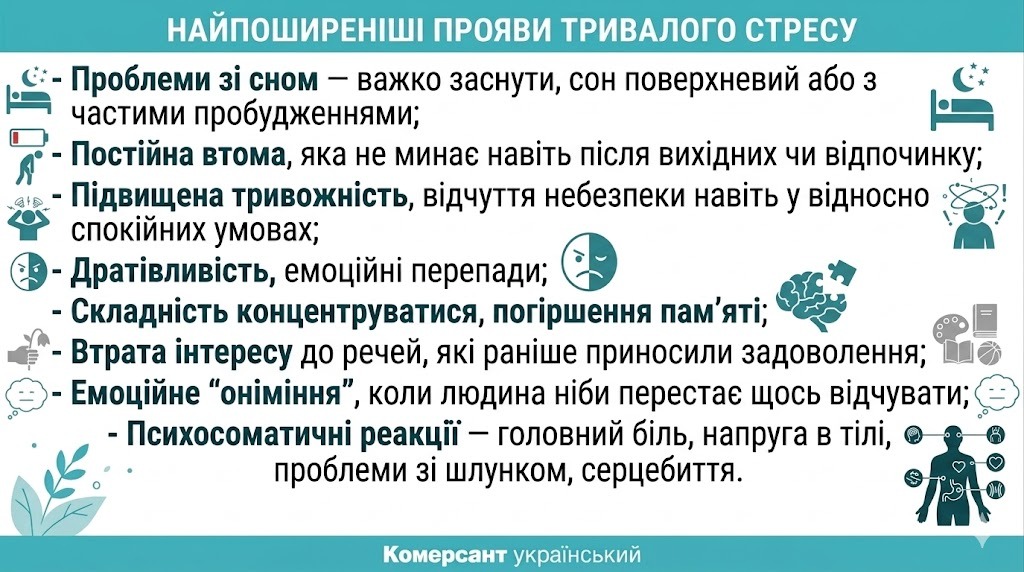
“From a psychological perspective, this is a natural reaction of the nervous system to living in conditions of constant danger and uncertainty. But if this state persists for a long time and the person can no longer recover on their own, it is a signal that their mental health needs support,” emphasizes Olga Rudyaka-Petrychenko.
The “habituation” trap: what to watch out for right now
The greatest danger lies in the fact that Ukrainians are gradually adapting to a critical level of overexertion, ceasing to notice their own exhaustion.
“One of the characteristics of chronic stress is that a person gradually gets used to exhaustion and stops noticing it. Many Ukrainians today live in a ‘gotta hang in there’ mode, putting off addressing their own condition for later,” explains the psychologist.
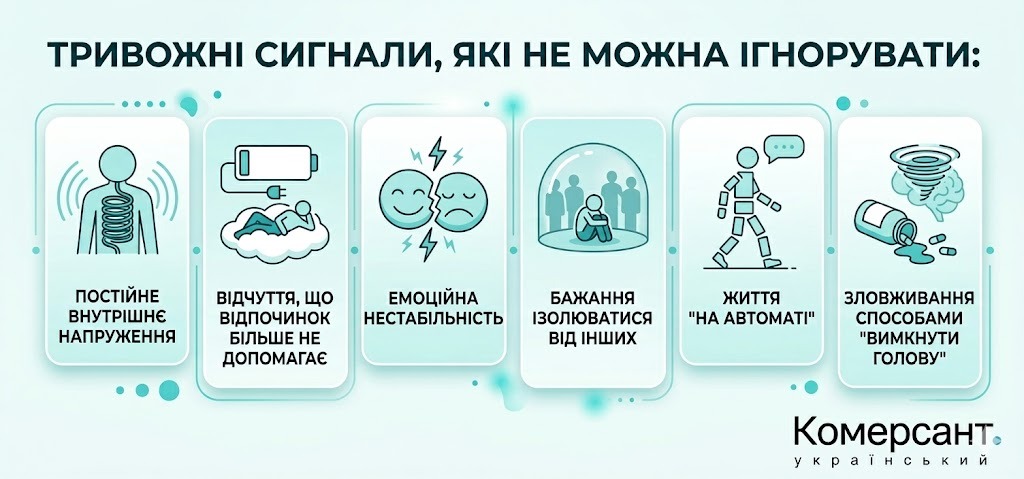
It’s a cause for concern if rest no longer brings relief, if there’s a desire to isolate oneself, or a feeling of “living on autopilot.” Olga Rudaka-Petrychenko emphasizes:
“Seeking psychological help isn’t a sign of weakness. It’s about taking care of your nervous system, which has been operating under extreme stress for a long time,” emphasizes Olga Rudaka-Petrychenko.
Adaptation capacity: how much longer can you endure without sleep and rest
Global media outlets, including Reuters in its article “Sleepless in Kyiv,” marvel at the resilience of Ukrainians who go to work after nighttime attacks. However, this resilience comes at a high price.
“The human psyche has a very large capacity for adaptation. That is why Ukrainians have been able to live and work for several years under conditions that previously seemed impossible. But it is important to understand: adaptation does not mean that the body is not being depleted,” the expert warns.
According to the psychologist, prolonged physical and mental strain inevitably leads to burnout or “emotional numbness”—a state in which a person loses the ability to feel anything.
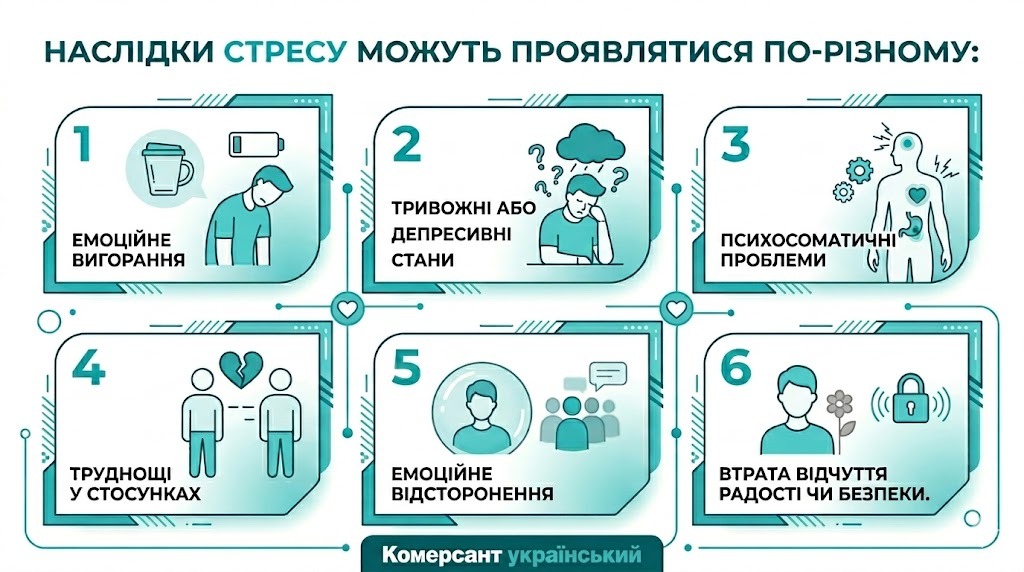
“Right now, it’s important not to romanticize resilience. Sleep, recovery, support from loved ones, the ability to talk about how you’re feeling, and seeking help—these are basic psychological needs, not ‘luxuries we can’t afford right now,’” adds Olga Rudyak-Petrychenko.
On children: adaptability or “pseudo-maturity”?
The psychologist pays special attention to the new generation of Ukrainians. She introduces a term that explains children’s outward resilience:
“Ukrainian children demonstrate a very high level of adaptability. Often, they mature faster, become more attentive to others, and more responsible. But there is an important nuance here: outward ‘maturity’ does not mean that the child has truly processed their experience emotionally. In psychology, this is sometimes called pseudo-maturation—when a child seems to pull themselves together before their psyche is ready for it,” says Olga Rudaka-Petrychenko.
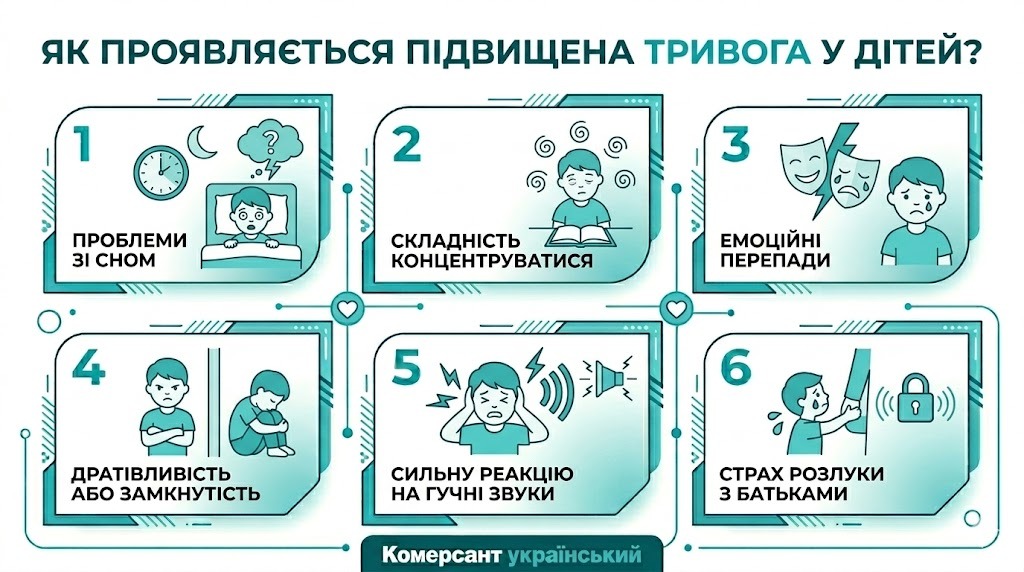
The expert’s main conclusion is that children today need not just their parents’ presence, but their emotional stability:
“Right now, children especially need stability, predictability, and adults nearby with whom they can feel safe—not just physically, but emotionally as well,” says Olga Rudaka-Petrychenko.
How has the war affected young people today?
The United Nations Development Programme (UNDP), in collaboration with the Ministry of Youth and Sports of Ukraine, presented the results of a large-scale study conducted by the sociological group “Rating” in 2025. The report covers the views of young people aged 14 to 35 living in Ukraine and abroad, and demonstrates how new realities are influencing career choices, starting a family, and visions of the future.
- Mental Health and Adaptation: Alongside issues of security and employment, mental well-being remains one of the most critical factors for young people in communities.
- “Life on Hold” or New Aspirations: The study analyzes young people’s anxieties regarding self-realization and shifting priorities in their lifestyles.
- Migration Sentiments: Analysts have identified key factors that compel young people to remain abroad or, conversely, encourage them to return to help rebuild Ukraine.
- Role in Recovery: Do young people feel they are part of the larger reconstruction plan? The report highlights the younger generation’s vision of their role in strengthening social cohesion and shaping national identity.
“These aren’t just numbers; they’re a roadmap for the state. We see a generation that is maturing faster and striving to be an agent of recovery, but at the same time needs systematic support in matters of security and inclusion,” the report’s authors note.
In summary, the critical level of psychological exhaustion among 90% of Ukrainians is a natural reaction to prolonged stress, where the main danger lies in the illusion of “getting used to it” and ignoring the basic needs of the nervous system. Timely professional support, a rejection of the romanticization of endurance through sheer willpower, and a focus on the emotional stability of adults are the only way to prevent “emotional numbness” in adults and “pseudo-maturity” in children, thereby preserving the nation’s mental health for future recovery.
Watch us on YouTube: important topics – without censorship