Is the Kremlin Ready to Spark a New Armed Conflict with Japan, and What Does Ukraine Have to Do with It?
14 August 11:50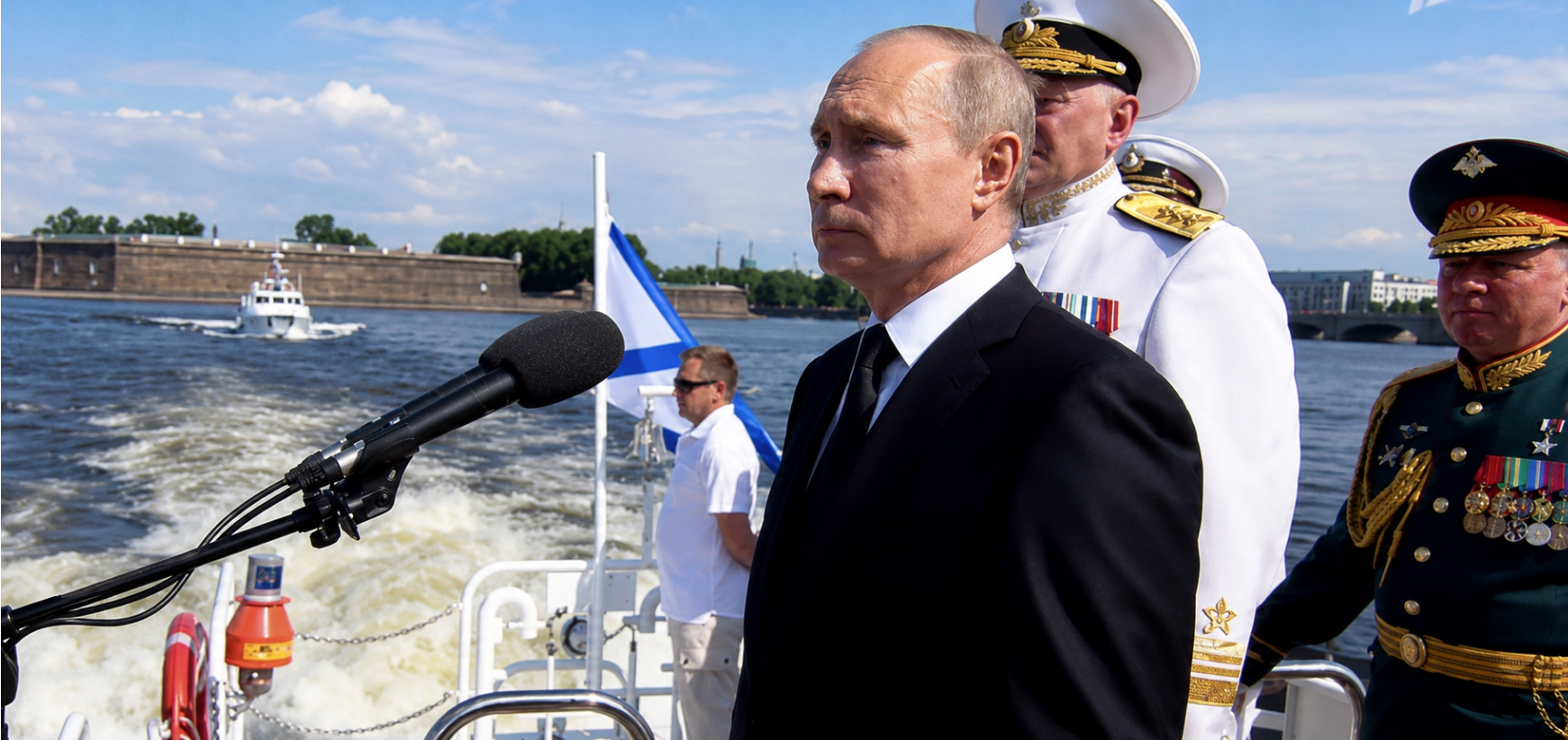 ANALYSIS
Putin’s trip to Iturup Island is much more than just another regional visit that includes a tour of a fish-processing plant. For Tokyo, which considers these territories its rightful “Northern Territories,” this move was a direct provocation and sparked a wave of strong protests. However, behind this high-profile trip lies a whole complex of geopolitical signals intended for both external actors and the Russian domestic audience. Will the legal battle escalate into an actual one, and what signal is the Kremlin really sending—and to whom? And most importantly— what does this have to do with Ukraine? Details in the article "Komersant Ukrainian"
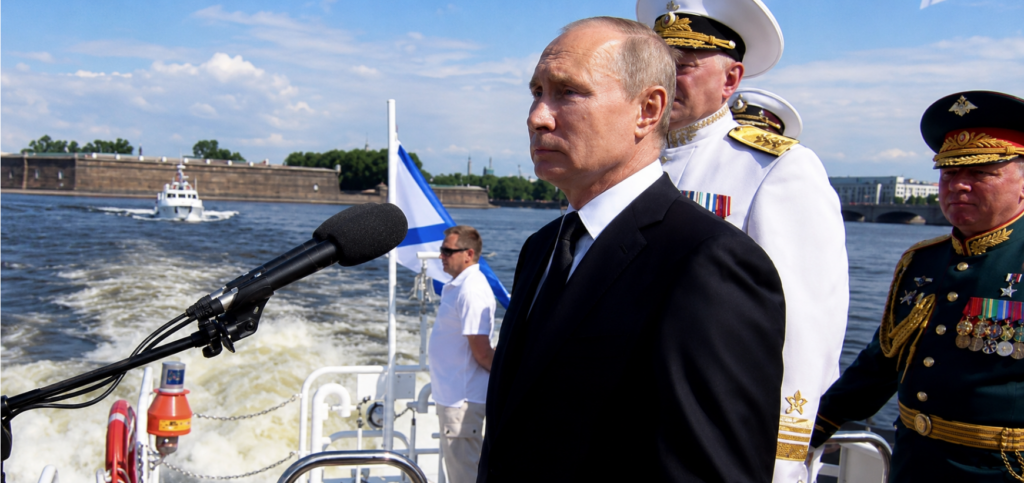
Russian dictator Vladimir Putin visited Iturup Island for the first time; the island is part of the southern group of the Kuril Islands and remains the subject of a long-standing territorial dispute between Russia and Japan. On the island, he visited the “Yasny” fish-processing plant, after which he traveled to Yuzhno-Sakhalinsk to meet with local residents.
The reaction from official Tokyo was immediate and harsh. Japanese Foreign Minister Toshimitsu Motegi emphasized:
“The Northern Territories, including Etorofu, are an integral part of Japan’s territory both from a historical perspective and under international law. Japan strongly protests this visit.”
The Russian dictator’s trip is not merely a symbolic gesture but a complex set of signals—both on the international stage and within Russia itself.
The Territorial Dispute and the Absence of a Peace Treaty
The main underlying reason for this event is the fact that Russia and Japan have yet to sign a formal peace treaty since World War II. Legally, the countries remain at war, and the status of the Kuril Islands remains the key obstacle to a compromise.
Stanislav Zhelikhovsky, a candidate of political sciences and an expert on international relations, emphasizes that the Kremlin leader’s personal presence is intended to underscore the firmness of Moscow’s position.
“In fact, we can say that Russia and Japan are at war. And I think that a treaty can be signed only when some compromise options are found… The very fact of Putin’s personal presence may serve as a demonstration that Russia considers Iturup an integral part of its territory and is not prepared to cede it,” stated Stanislav Zhelikhovsky.
Ukrainian Context: Tokyo’s Retaliation for Supporting Kyiv
A key factor in the deterioration of relations between Tokyo and Moscow was Russia’s full-scale invasion of Ukraine. Japan has taken a consistent and pro-Ukrainian stance, imposing tough sanctions against Russia and supporting Ukraine’s territorial integrity.
The analyst believes that Putin’s high-profile visit is the Kremlin’s direct response to Japan’s unyielding policy.
“Since the start of the full-scale war, Japan has become one of Ukraine’s most consistent partners in imposing sanctions against Russia… Therefore, Putin’s trip may serve as a kind of reminder to Tokyo that Moscow is prepared to demonstratively escalate the territorial issue if Japan continues to pursue a policy that the Kremlin views as ‘unfriendly,’” says Zhelikhovsky.
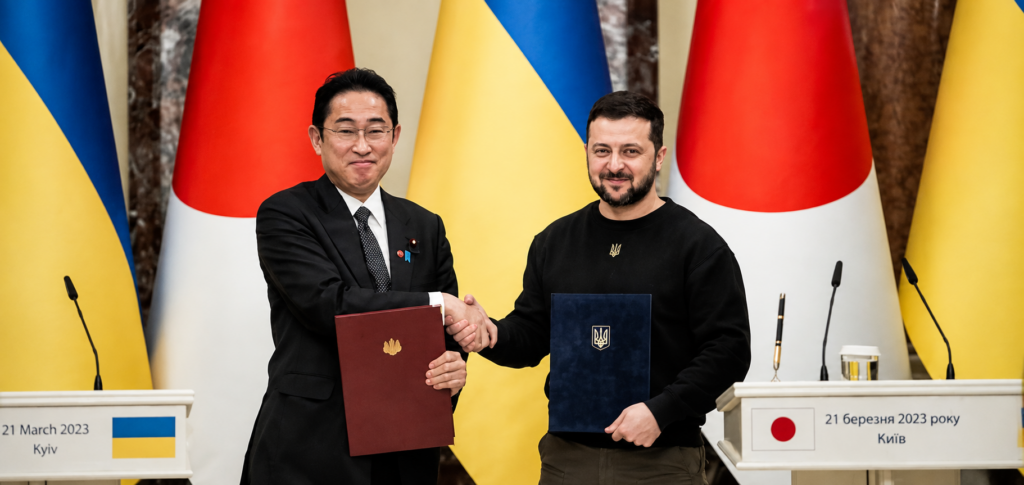
The expert also notes that Ukraine, which consistently defends its own sovereignty and its course toward the de-occupation of its territories (in particular, Crimea), views Japan’s position positively and supports its rights to the Northern Territories.
Strategic Importance and Militarization of the Archipelago
Iturup and the Kuril Islands as a whole are of critical military-strategic importance, situated between the Sea of Okhotsk and the Pacific Ocean. In recent years, Moscow has been systematically expanding its military infrastructure there and deploying missile systems.
Zhelikhovsky draws parallels between Russia’s actions in the Kuril Islands and its behavior in Ukraine’s Crimea.
“It is important to understand that the Kuril Islands hold a key strategic position… In recent years, Russia has been strengthening its military infrastructure in the Kuril Islands, including the deployment of missile systems there… Parallels can be drawn with the Crimean Peninsula—Russia similarly used it to strengthen its military presence in the Black Sea and has been militarizing it for a long time,” notes Stanislav Zhelikhovsky.
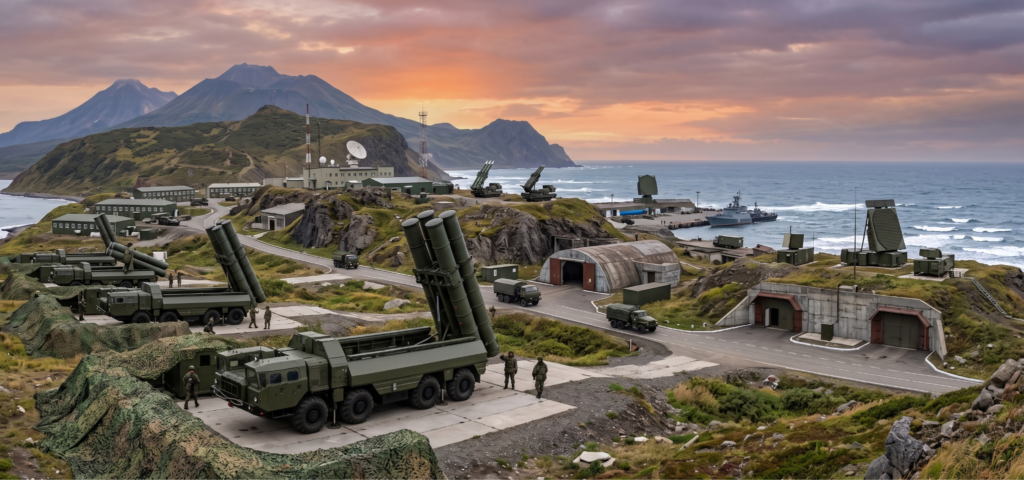
The Japanese side has repeatedly documented increased activity by the Russian Armed Forces and lodged official protests, highlighting this in reports from the Ministry of Defense, although the conflict currently remains within the political and diplomatic sphere.
Joint Exercises with China and a Signal to U.S. Allies
This show of force in the East took place against the backdrop of active naval maneuvers. An expert notes the practical phase of the annual Russian-Chinese naval exercises “Maritime Interaction,” which took place in the waters and airspace of the Yellow Sea near the Chinese base in Qingdao.
These maneuvers, along with Putin’s visit, send a clear signal to all regional players—and above all, to the United States and its main ally in the region, Japan.
“These are signals to all the players there… Russia and China, which are now joining forces, are ready to demonstrate their military capabilities. Russia is showing that, should Japan attempt to reclaim any territories by military means, it is ready to defend these islands… This is also a signal to the U.S., since Japan is its ally,” Zhelikhovsky notes.
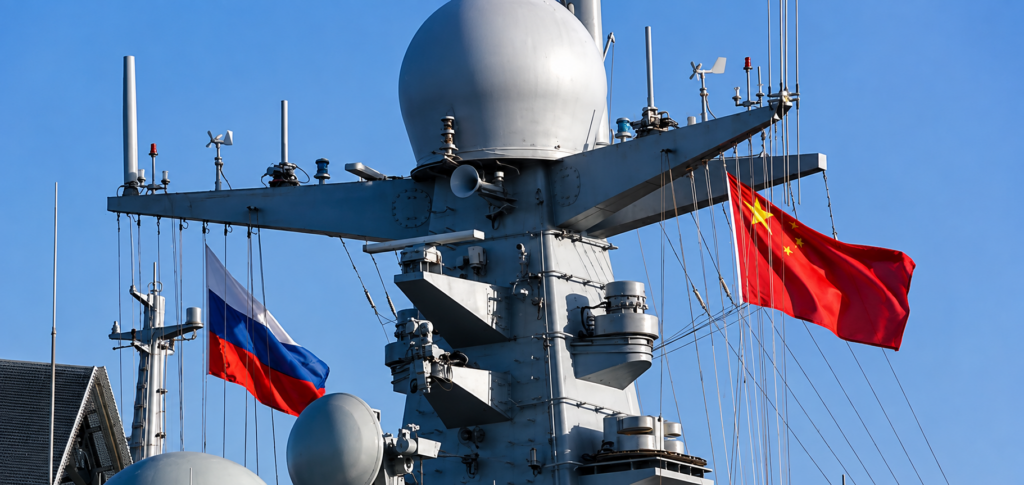
Moreover, against the backdrop of growing threats from Russia and China, Japan is seeking to revise its defense strategy and move away from exclusively pacifist restrictions, which further irritates the Moscow-Beijing alliance.
A Message to the Domestic Audience: “Enemies All Around”
In addition to external pressure, Putin’s visit to disputed territories serves an important purpose within Russia itself. Against the backdrop of significant losses in the war against Ukraine and the need to replenish the ranks of the armed forces, propaganda requires creating the image of a “besieged fortress.”
Stanislav Zhelikhovsky believes that this trip is part of a psychological campaign aimed at Russians to encourage mobilization and the signing of military contracts.
“This is a message to Russia’s domestic audience. Putin is showing that he is, supposedly, ready to fight in the West, the East, the North, and the South… The only thing people need to do is sign contracts or prepare for mobilization. This is a signal: danger is all around, enemies are all around, and everyone must unite and fight for Putin’s regime,” Zhelikhovsky concludes.
Thus, the Russian dictator’s high-profile trip to Iturup combined an attempt to intimidate Tokyo, reaffirm his partnership with Beijing, and generate a new wave of mobilization among his own citizens.
The Origins of the Conflict and the Positions of the Parties
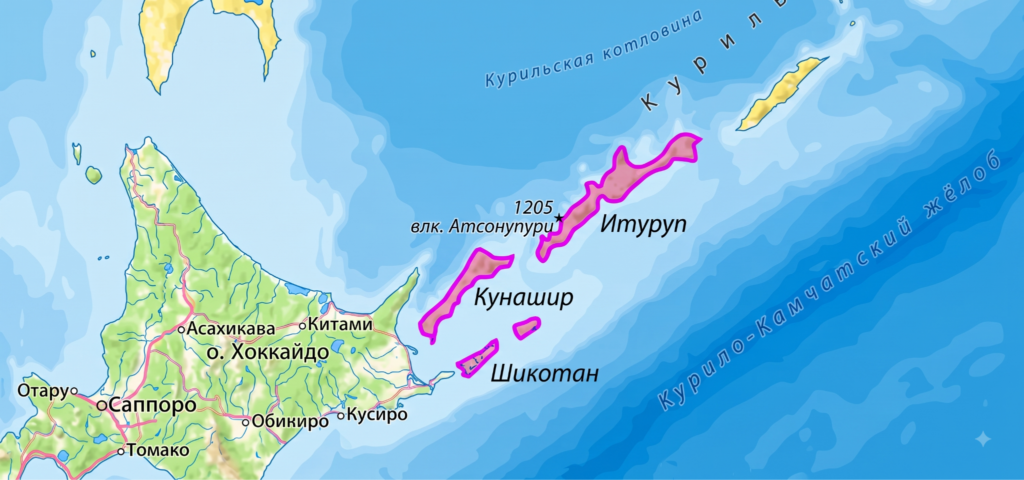
The subject of the dispute is the four southern island groups of the Kuril Range: Iturup, Kunashir, Shikotan, and the Habomai Islands.
In Japan, these territories are officially referred to as the “Northern Territories.” Authorities in Tokyo emphasize that the Soviet Union seized these islands at the end of World War II—in August–September 1945, after Japan had already announced its surrender. In light of this, Tokyo insists that Soviet troops expelled the local Japanese population and illegally occupied territories that, from both a historical and legal standpoint, belong to Japan. For its part, Moscow refers to these territories as the “Southern Kuril Islands” and considers them an integral part of the Russian Federation. The Kremlin insists that Russian sovereignty over the islands, enshrined in international legal agreements following World War II, is indisputable and not subject to revision.
Geographically, the islands are situated such that they form the boundary between the Sea of Okhotsk and the Pacific Ocean. Control over the ice-free straits between the islands allows the Russian Pacific Fleet to fully control its access from its bases to the open ocean at any time of year.
In recent years, Russia has been actively transforming these islands into a full-fledged military outpost. Modern “Bal” and “Bastion” coastal missile systems and S-300 anti-aircraft missile systems are being deployed there, and airfield infrastructure is being expanded.
For decades, the countries have been trying to find a compromise. At times, the parties returned to discussions of the 1956 Soviet-Japanese Declaration, which provided for the possibility of transferring two smaller islands (Shikotan and Habomai) to Japan after the signing of a peace treaty.
However, the dialogue finally reached a dead end after Russia launched a full-scale war against Ukraine. Tokyo continues to demand the return of its historic territories, while Moscow uses these islands as a tool of military pressure against Japan and its main military and political ally—the United States of America.
Read us on Telegram: important topics – without censorship