Expensive Purchases Without Income: Financial Monitoring Tightens Oversight
18 June 06:51
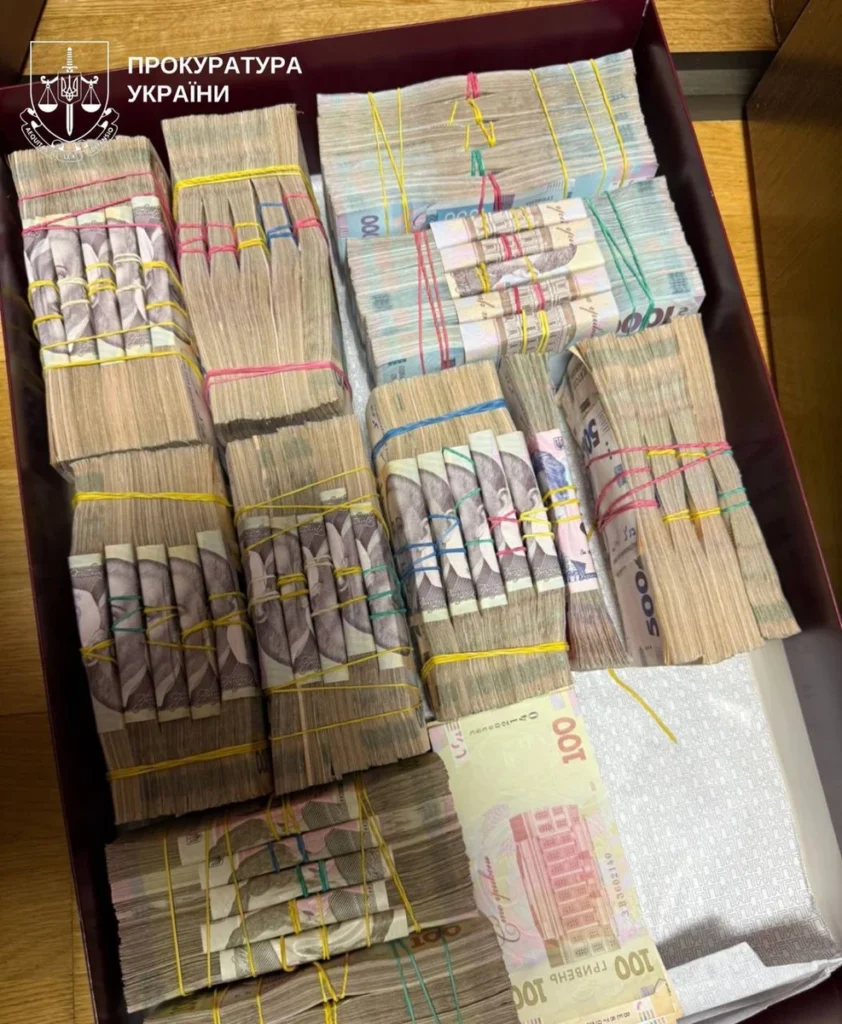
The State Financial Monitoring Service of Ukraine has stepped up its scrutiny of large cash transactions. This primarily concerns cases where citizens purchase expensive cars, apartments, or other property without officially documented income. This was reported by Philip Pronin, head of the State Financial Monitoring Service, according to "Komersant Ukrainian"
A particular risk for financial monitoring is the use of the same income or savings statement to conduct several large transactions at different banks. The mere fact of submitting such a document to different institutions is not a violation, but suspicions may arise if the statement confirms one amount but is actually used for transactions involving a significantly larger sum.
Which Transactions Are Now Under Greater Scrutiny
According to Pronin, the State Financial Monitoring Service is more actively analyzing large cash transactions. This applies particularly to the purchase of expensive property when a person’s official income does not account for the source of the funds.
The following may come under increased scrutiny:
- purchases of expensive cars;
- the purchase of apartments or houses;
- transactions involving large sums of cash;
- deposits of significant amounts of money at various banks;
- reusing the same income documents;
- transactions where the purchase price does not correspond to official income.
The State Financial Monitoring Service emphasizes: this does not refer to one-time personal transactions, but rather to large-scale ones Philip Pronin, Head of the State Financial Monitoring Service, explained that cash transactions have always been a focus of financial intelligence, but the service now has more tools for analysis.
“Cash transactions have always been on the radar of financial intelligence, but now there are new tools that allow us to do this work more efficiently and quickly,” Pronin noted.
According to him, this increased attention is not linked to specific high-profile cases or political events. It is a systematic effort aimed at identifying high-risk transactions.
What Is the Risk with Income Statements?
Separately, the State Financial Monitoring Service draws attention to cases where a single income or savings statement is used for multiple transactions at different banks.
For example, a person has a document confirming the availability of funds in a certain amount. But then this same document is submitted to different banks for transactions whose total volume exceeds the confirmed income by several times.
“You have a statement that allows you to prove savings of, say, $100,000. But you present it for transactions totaling not $100,000, but $500,000 right away,” Pronin explained.
In such a case, the bank or financial intelligence agency may ask: where did the additional funds come from, if the document confirms only a portion of the amount?
Is the use of the certificate itself a violation?
Submitting a certificate of income or savings to various banks is not, in and of itself, an automatic violation.
The problem arises when the document is actually used to verify transactions for an amount that significantly exceeds a person’s actual or officially confirmed funds.
In other words, the risk lies not in the statement itself, but in the discrepancy between documented income and actual expenditures.
How such transactions may be classified
The State Financial Monitoring Service emphasizes that each case is evaluated individually. If a transaction appears suspicious, it may be subject to further analysis.
Depending on the circumstances, such actions may indicate:
- tax evasion;
- fraud;
- money laundering;
- concealment of the true origin of funds.
According to Pronin, there have been cases in practice where such schemes were used to attempt to launder funds obtained through criminal means.
Where the materials are forwarded
If the State Financial Monitoring Service detects signs of a suspicious transaction, the materials are forwarded to law enforcement or intelligence agencies.
If the matter involves possible tax minimization or tax evasion, the information may be forwarded to the Economic Security Bureau.
The State Financial Monitoring Service also cooperates with the Economic Security Bureau and the Tax Service under a memorandum on information exchange and joint work on complex tax and security issues.
How Many Cases Are Currently Under Investigation
According to Pronin, the State Financial Monitoring Service is currently investigating over a hundred such cases.
Among the main cases are the purchase of cars and apartments without officially verified income. Some of the case files have already been forwarded to the Economic Security Bureau, and the rest are scheduled to be forwarded after the analysis is completed.
Why banks may request proof of income
Banks are required to verify customers’ financial transactions if they appear risky or do not align with the individual’s usual financial behavior.
Therefore, during large purchases or when depositing significant amounts of cash, a bank may request documents confirming the source of the funds.
These may include:
- income statements;
- tax returns;
- property purchase and sale agreements;
- inheritance documents;
- proof of asset sales;
- other documents explaining the source of funds.
What Has Changed in Financial Monitoring
Starting in 2026, Ukraine has adopted an updated approach to financial monitoring. It involves more active analysis of high-risk transactions and the exchange of information among regulatory authorities.
For citizens, this means that large cash transactions that do not correspond to official income may come under the scrutiny of banks and financial intelligence agencies more frequently.
What Ukrainians Need to Know
If you’re planning a major purchase—such as a car, an apartment, or other expensive property—it’s important to have documents confirming the source of your funds.
This is especially true when payment is made in cash or the funds are transferred through several banks.
The main rule is that the total amount of transactions must correspond to the income or savings that a person can document.
Read us on Telegram: important topics – without censorship