Drones struck a plant that supplies fuel to airports and the Russian military-industrial complex
3 November 14:12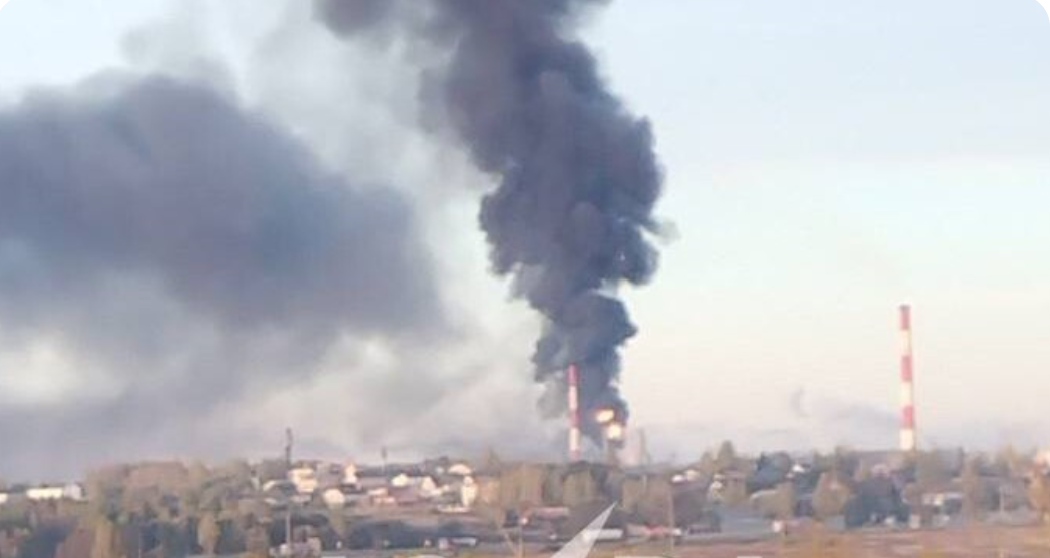
On the night of November 2, drones attacked the “Slavneft-YANOS” oil refinery in Yaroslavl. A fire broke out at the facility following the attack. The strike was reported by the OSINT resources Exilenova and ASTRA; the latter geolocated photos and videos from the scene and determined that it was indeed the plant that was on fire, according to
“The Slavneft-YANOS oil refinery (PJSC “Slavneft-Yaroslavnefteorgsintez”), also known as the Yaroslavl Oil Refinery, is one of Russia’s top five oil refineries. An ASTRA OSINT expert, after examining photos and videos received from readers, determined that it is this facility, located in Yaroslavl at 130 Moskovsky Prospekt, that is on fire,” notes ASTRA.
It is known that a threat of drone strikes was announced in this area overnight, and locals reported explosions and a fire at the facility.
The reports did not specify the consequences of the attack, such as damage to equipment or a halt in production.
According to ASTRA, a fire broke out on the premises of the “Slavneft-YANOS” plant, located at 130 Moskovsky Prospekt in Yaroslavl. Overnight, a drone attack alert was issued in the city, and local residents reported explosions and a fire at the facility.
Why the Yaroslavl Oil Refinery Is Important
“Slavneft-YANOS,” or the Yaroslavl Oil Refinery, is one of the five largest oil refineries in Russia. The plant has been in operation since 1961, and its capacity is about 15 million metric tons of crude oil per year—approximately 300,000 barrels per day.
The facility produces gasoline, diesel fuel, fuel oil, jet fuel, lubricants, paraffins, and other petroleum products. Its products are supplied to consumers in the Central and Northwestern regions of Russia, including the Moscow region. The refinery’s customers also include airports and enterprises of the Russian Federation’s military-industrial complex.
Therefore, potential damage to such a refinery could have implications beyond the local fuel market.
SEE ALSO: Drones Shut Down Two Rosneft Refineries and Attacked a Plant in Yaroslavl
What attacks on this refinery have been recorded previously
The Yaroslavl refinery has been targeted on multiple occasions. As reported by
On August 28, the AVT-4 primary oil refining unit at the plant was damaged. Following the attack on September 17, the AVT-3 unit—which accounts for about 40% of the refinery’s total capacity—was damaged. The facility then suspended operations.
According to Reuters estimates, in September, following drone attacks, three of Russia’s six largest refineries producing diesel fuel significantly reduced or completely halted operations.
Operational disruptions at the refineries are complicating Russia’s domestic fuel supply situation. Russian authorities had already restricted exports of gasoline, diesel, and jet fuel.
By late August, gasoline production in Russia had fallen to about 70% of domestic demand due to attacks on key refineries. Among the facilities whose operations were disrupted were plants in Perm, Nizhny Novgorod, and Yaroslavl.
As reported by "Komersant Ukrainian", since the beginning of 2026, the Ukrainian Armed Forces have attacked Russian refineries more than 70 times. As a result of the strikes, at least 26 facilities were put out of commission. As of the end of July, only eight of them had fully resumed operations, another 11 had resumed partial processing, and seven remained idle.