Experts Weigh In on Whether Ukraine’s Air Defense System Can Withstand Winter Attacks and How Many Missiles Are Needed
3 November 12:47
Today, Russian jet drones (such as the “Geran-4”) are shot down in about 60% of cases, and in October, the General Staff reported a success rate of up to 66%. However, a much bigger problem is ballistic missiles, which are the hardest to stop. Against this backdrop, grandiose promises of hundreds of new missiles raise many questions. Are Western manufacturers really capable of supplying us with as many as we need? Why are Europe and the U.S. slowing down the process of transferring missiles? And should we hope that this winter we’ll be able to reliably close the skies to missiles? Find out in this "Komersant Ukrainian" article
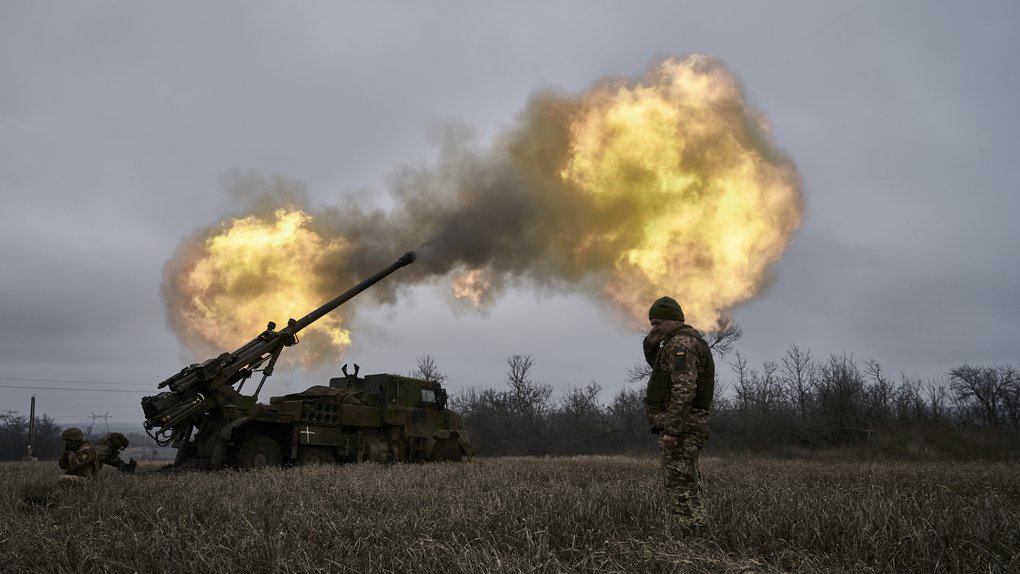
In October, Russian forces launched nearly 6,500 Shahed-type drones (including “Geran” models) at Ukraine. The defense forces managed to destroy 4,859 of these drones. According to the General Staff, our air defense system shoots down conventional “Shaheds” with 89% effectiveness .
At the same time, countering newer jet-powered drones is somewhat more challenging, though this rate reached 66% in October (for comparison, it had previously hovered around 57–60%).
The General Staff emphasizes that the enemy is constantly changing its tactics. Russia combines strikes, alters flight paths and altitudes, and launches decoys alongside missiles. However, ballistic missiles remain the primary and most challenging threat. Despite strong results in countering drones, Ukraine urgently needs more modern systems and missiles to defend against ballistic strikes.
500 interceptor missiles from the U.S.
The striking figure of 500 interceptor missiles is, first and foremost, a political signal. Military expert Dmytro Snegirev noted this.
“This is a political move. Trump has made it clear that his administration is considering expanding military-technical assistance to Ukraine in the future. The reaction in Russia has already been extremely negative: they have realized that the United States will use this as a tool for military and political pressure, crossing Russia’s first red line,” Snegirev notes.
At the same time, he does not rule out that, in the absence of concessions from Russia regarding peace talks, the U.S. may proceed with the transfer of weapons from its stockpiles.
However, this will most likely not involve the latest PAC-3 missiles, but rather earlier generations— the PAC-2.

At the same time, as noted by Bohdan Dolintse, an aviation expert and member of the Public Council at the State Aviation Service, a batch of 500 missiles is effectively equal to the annual production volume of PAC-3 missiles in the United States.
“When we talk about 500 missiles, as of today, we’re talking about nearly the annual production volume of PAC-3 missiles in the United States. They plan to increase production of this type of missile, and over the next 3–4 years, the U.S. plans to increase production by two and a half times,” Dolintse explains.
According to him, provided there is no impact on existing market demand, this number of missiles could be manufactured and delivered to Ukraine in approximately one and a half to three years. However, for the current heating season, this pace is too slow.
What Are the Real Capabilities of the U.S. and EU Defense-Industrial Complexes?
In assessing the capabilities of the defense-industrial complexes of Western partners, the expert cited illustrative production figures for anti-aircraft guided missiles. Annual production of PAC-3 interceptor missiles in the U.S., following the modernization of production facilities, stands at about 620 units per year. There are plans to increase this to 720 missiles per year in the future .
Meanwhile, France and Italy plan to scale up production of interceptor missiles only by 2030— to approximately 300 units per year.
Collectively, the U.S. defense industry and European air defense system manufacturers will be able to produce up to 1,000 interceptor missiles per year (approximately by 2030). At the same time, requests from the Ukrainian side and statements by the president indicate a need for 350 missiles per month.
“In other words, such a quantity does not exist, even if we take into account the combined capacity of EU countries and the U.S. defense industry. This raises a major question: why is the president being given such figures, which, as we can see, do not correspond to the capabilities of European and American partners?” Snegirev emphasizes.
Since the United States is physically unable to meet the current demand from its stockpiles any faster, Kyiv has stepped up its search for short-term alternatives through supplies from European allies and Japan, and is also calling on partners to review their own reserves.
Bogdan Dolintse calls the adaptation of existing European air defense systems (such as SAMP/T or NASAMS) to counter ballistic missiles by developing new interceptors and modernizing the systems (for example, to accommodate Aster 30 Block-type missiles).
“Europe has extraordinary potential and the capacity to develop and improve its air defense systems and build its own missile defense systems with Ukraine’s participation—in terms of system testing, radar training, and prototype testing… The realistic timeframe for developing such an anti-ballistic missile could range from 6 to 12 months,” Dolintse predicts.
The Position of European Allies and Ukraine’s Capabilities
The expert drew particular attention to the fact that criticism is often directed exclusively at the U.S., although the actual situation in Europe is more complex. In particular, Germany has refused to transfer additional interceptor missiles to Ukraine. Poland, meanwhile, stated that it currently lacks the capacity to transfer missiles. Spain and Greece also reported that they would not transfer interceptor missiles from their stockpiles to Ukraine.
Another obstacle is the position of French President Emmanuel Macron, who opposes the use of European funds to enable Ukraine to purchase interceptor missiles from outside Europe.
“In other words, we are limited to European countries, which in turn refuse to transfer interceptor missiles to us. This is the real picture of anti-ballistic defense as it stands in the world today,” Snegirev notes.
Against the backdrop of external delays, Ukraine’s own developments are drawing particular attention, notably the FP-7 missile as part of the private-sector “Freya” project . Recent discussions of these initiatives have raised questions about economic efficiency and the high cost of such systems.
Bogdan Dolintse, an aviation expert, emphasizes the stringent criteria for modern weapons systems: range, warhead weight, and the ability to penetrate enemy air defense systems.
“Missile weapons are generally less cost-effective, considering that a missile costs between 4 and 10 million dollars and can carry only 400 kilograms of explosives, and 50–70% of such missiles are shot down by air defense systems… But if it hits, say, the same Russian oil refinery or another military infrastructure facility, such a munition can destroy or damage dozens of critical facilities,” explains Bohdan Dolintse.
Despite financial challenges and the high cost of development in the early stages, the government is systematizing its support for the industry. A striking example is the recent launch of projects such as Brave1, which provide grant funding and direct government investments totaling tens of millions of hryvnias for promising missile solutions in the middle and late stages of development. This provides Ukrainian developers with the resources to continue their work despite economic barriers.
Should we expect the skies to be closed this winter?
When asked whether Ukraine will be able to effectively shoot down 80–90% of enemy ballistic missiles this winter—as previously stated by the head of state—the expert urged realism.
“No, we won’t be shooting down 90% of ballistic missiles. Let’s be realistic,” Snegirev concluded.

Thus, although Ukrainian air defense has demonstrated impressive effectiveness against drones, it will be extremely difficult to withstand massive ballistic missile attacks this winter due to an objective global shortage of anti-ballistic missiles. The Western defense industry simply cannot keep up with the demand to produce the hundreds of missiles needed each month, and European allies are currently limiting transfers from their own stockpiles.
Therefore, we should not expect a quick turnaround in the delivery of new air defense systems in the coming months. Consequently, Ukraine’s power grid and cities will have to endure their most challenging heating season yet amid a limited supply of interceptors.
Read us on Telegram: important topics – without censorship