Air defense alone won’t be enough: a military expert explains how Ukraine can stop Russia’s ballistic terror
20 July 11:29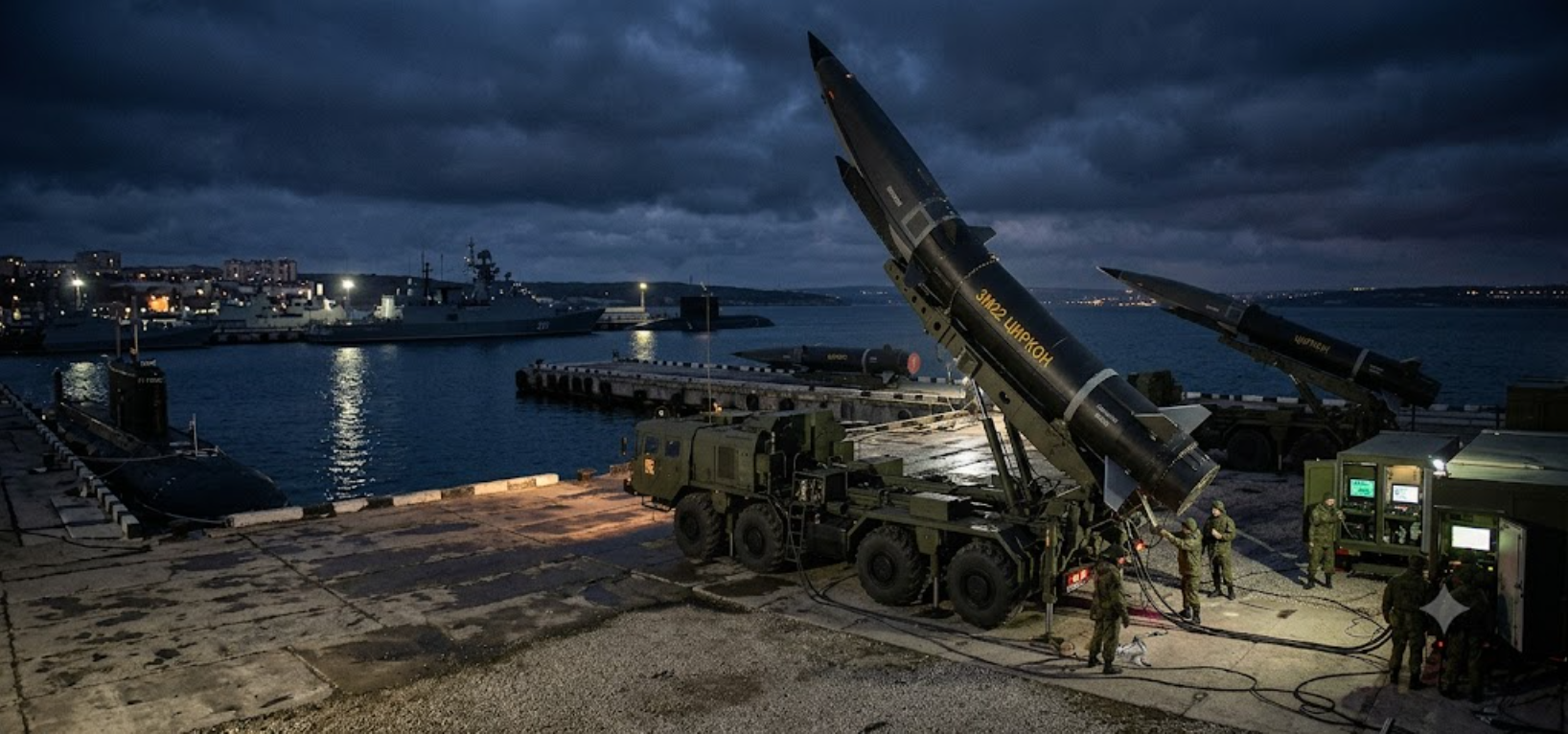 ANALYSIS
A series of intense ballistic missile strikes on Ukrainian cities indicates that Russia has begun to draw on its untouchable strategic reserve. However, attempting to intercept every enemy missile is a dead end, and air defense systems alone are incapable of completely closing off the sky. The experience of Israel, which has lived under constant shelling for years, proves that the only way to stop ballistic terror is through devastating retaliatory strikes on the enemy’s airfields, ports, and military-industrial complex. Why is Moscow depleting its untouchable arsenals and using up a year’s worth of hypersonic “Zircons” in just a few weeks? How many missiles does the enemy actually have left, and why won’t Western Patriot systems be a panacea? Read the detailed analysis
Moscow is resorting to extreme and, from a military standpoint, rather senseless measures. This was noted in a commentary
“These [ed. – Zircons] are a super-strategic reserve; they are missiles designed for nuclear warheads. Yet they’re simply using them to strike civilian targets, squandering them on conventional munitions. They’ve practically ‘wasted’ their strategic reserve in this situation. It’s like building a stool with gold nails,” notes Israeli officer Tamar.
Commenting on the shortage of missile defense systems, particularly Patriot systems, Tamar noted that the Western defense industry simply cannot keep up with the actual demands of the war. U.S. manufacturing capacity is currently unable to produce missiles in the quantities needed simultaneously for both Ukraine and the Middle East.
Israel’s Experience
Israel has long since stopped using the Patriot system, having switched to its own “David’s Sling” system. According to Grigory Tamar, the batteries and missiles that were previously stored in the country and provided to Ukraine in coordination with the U.S. have long since reached the end of their service life, although Israeli specialists had even updated the software on them to address modern threats before they were shipped.
Even the world’s most advanced air defense system is incapable of providing 100% protection, the expert believes. He cited the example of Israel, which has built a six-tier defense system that intercepts about 90% of ballistic missiles. However, the remaining 10% that penetrate the defense dome still cause significant destruction and result in loss of life.
“Air defense is extremely important, but it is still a secondary issue. You cannot defend yourself with air defense systems alone. In Israel, we rely primarily not on air defense, but on delivering a devastating retaliatory strike against the enemy. That is precisely what we need to focus on, so that the enemy thinks twice before striking you again,” emphasizes Grigory Tamar.
According to the expert, the only realistic solution for Ukraine in this situation is to respond with fierce and relentless fire directly at the points from which the missile threat originates.
Watch us on YouTube: important topics – without censorship
Tamar calls for striking, with all available means, the military airfields from which enemy aircraft take off, as well as the ports housing the remnants of the Russian fleet. He praised the Ukrainian forces’ successful strikes deep behind Russian lines, particularly against the Omsk oil refinery, and stressed that such pressure must only be intensified.
“We can’t stop. We have to hit them so hard that every Russian, including Putin, will curse the day they attacked you,” the Israeli military official concluded.
Strategic Reserve: How Many Missiles Does Russia Have Left?
Russia’s use of its newest and most expensive missile systems against Ukraine has reached a point where it is beginning to deplete its strategic, untouchable reserves.
According to estimates by military analysts and the Main Intelligence Directorate of the Ukrainian Ministry of Defense, the total number of missiles fired at Ukrainian cities in recent times significantly exceeds the current capabilities of the Russian military-industrial complex.
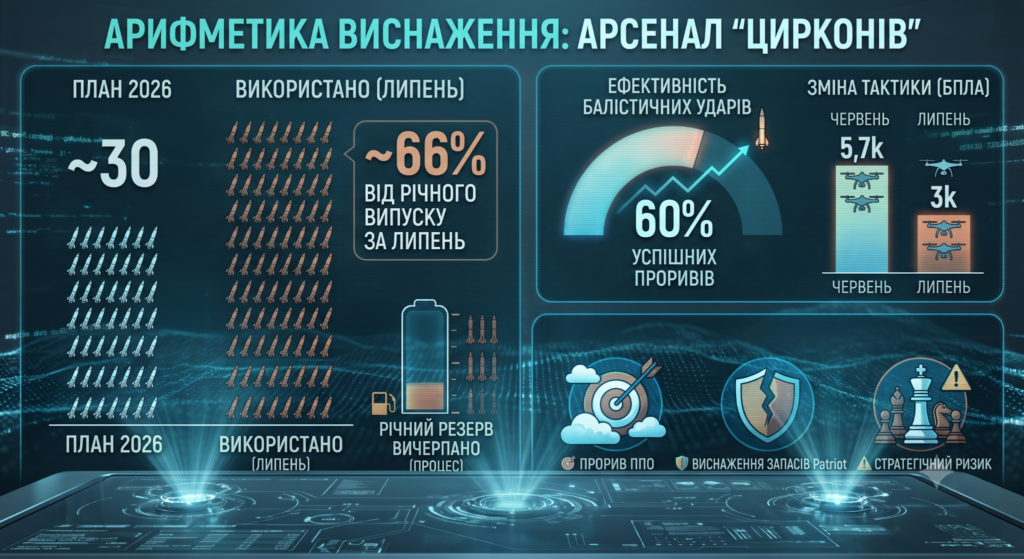
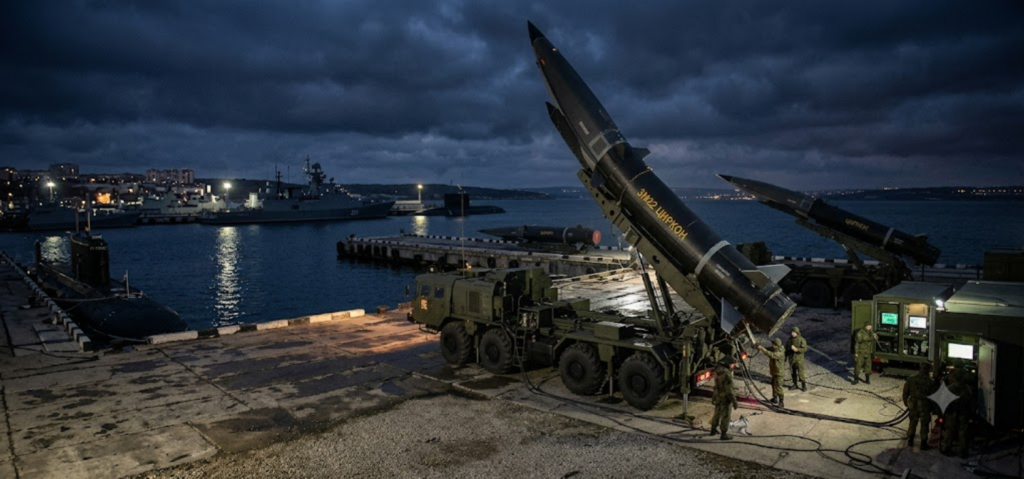
The situation with the 3M22 “Zircon” hypersonic anti-ship missiles has become particularly telling. In just the first three weeks of July, the Russians fired two dozen of these expensive missiles at Ukrainian targets.
To understand the scale of this expenditure, according to intelligence data, the annual production plan for “Zircons” in Russia for the entire year of 2026 is approximately 30 units. Thus, in less than a month, the aggressor has used up nearly two-thirds of its total annual production capacity.
Before the start of this July series of massive attacks, the enemy’s total stockpile of “Zircons” was estimated at just over 120 units. A military expert from the publication “Military” notes that launching anti-ship missiles at ground targets on such a scale is a clear sign that strategic stockpiles, accumulated over many years, are being drawn down.
Russian defense plants are simply unable to keep up with such an intense rate of use, as their actual production rates are measured in individual units per month.
Analysts at the Institute for the Study of War believe that the enemy is deliberately depleting its own untouchable reserves to accomplish a specific tactical objective.
The main goal of such combined strikes, in which “Zircons” are combined with ballistic missiles from the “Iskander-M” and S-400 systems, is to overload Ukraine’s air defense system to the maximum and deplete the ammunition supply for the Patriot systems.
At the same time, military intelligence emphasizes that such tactics have only a short-term effect. In the long term, the shift to using strategic reserves “on the move” leaves Russia itself without critically important weapons that it had planned to retain in case of a potential direct conflict with NATO.
Read us on Telegram: important topics – without censorship