Between Ambition and Reality: The Prospects for Biomethane in Ukraine
23 April 12:14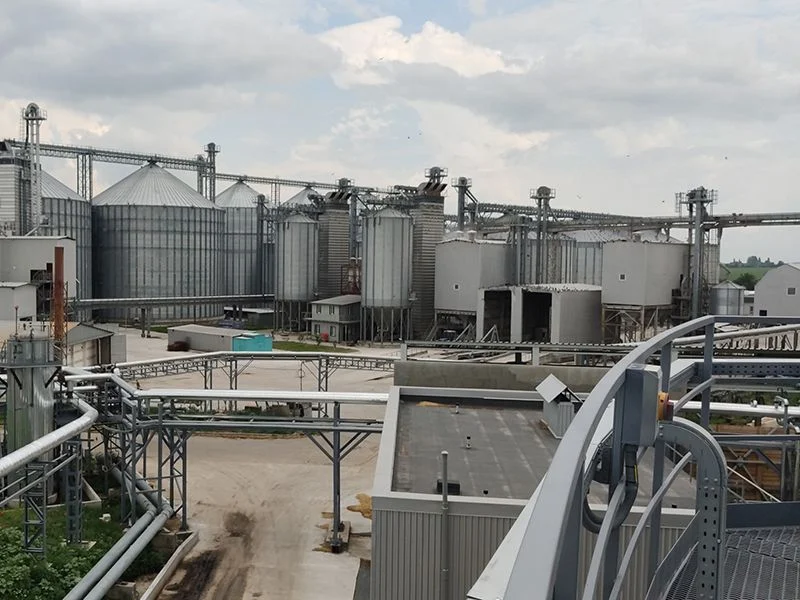 FORECAST
The Ukrainian government has taken another step toward energy independence and integration into the European energy market by approving the Program for the Development of Biomethane Production through 2035. This document is intended not only to revitalize the domestic renewable energy market but also to lay the groundwork for transforming Ukraine into one of the key suppliers of biomethane to the European Union.
As First Deputy Prime Minister and Minister of Energy Denys Shmyhal emphasized, the Program for the Development of Biomethane Production will unlock Ukraine’s potential to become a major producer of biogas and an exporter to the European Union, which will help Europe reduce its dependence on Russian hydrocarbons. According to him, implementing this strategy will also help strengthen the country’s energy resilience and stimulate investment in the renewable energy sector.
In recent years, Ukraine has indeed taken significant steps toward establishing a biomethane market. As energy expert Gennady Ryabtsev noted in an exclusive comment to "Komersant Ukrainian", a biomethane registry is already in place, relevant regulatory mechanisms have been implemented, and technical requirements for transporting this resource through the existing gas transmission system have been established.
“A biomethane registry is already in place, there are relevant procedures, and all necessary requirements for using standard gas transmission system facilities are in place. In other words, the requirements for biomethane have now been established so that it can be transported via standard pipelines, and this is already being implemented,” Ryabtsev explained.
This means that Ukrainian biomethane can already be integrated into the European energy market today.
“We already have biomethane producers who export it and use the pipelines of Ukraine’s gas transmission system operator for this purpose,” Ryabtsev emphasized.
Thus, the basic infrastructure and regulatory framework are already in place, and the industry’s further development largely depends on investment attractiveness.
According to Ryabtsev, the availability of raw materials plays a special role in the development of biomethane. Production of this resource is based on the processing of organic waste—agricultural, household, or industrial. Ukraine has significant potential in this area, as the agricultural sector is one of the key sectors of the national economy.
“Various types of household waste, agricultural waste, and wood processing waste can be used for this,” the expert explains.
However, despite the government’s optimistic plans, experts caution against excessive expectations. Ryabtsev emphasizes that biomethane production volumes remain relatively small at present.
“We’re currently talking about only a few dozen million cubic meters of this resource being exported,” the expert said.
For comparison, a target of 2.5 billion cubic meters was previously announced, but reaching that level will require significant time and resources.
A separate issue is the scale of infrastructure projects. According to plans, eight facilities are slated for construction. However, as the expert notes, “the number of plants should not mislead anyone, because this is actually a small-scale enterprise.” The production capacity of such facilities is limited, and their efficiency directly depends on the availability of raw materials.
It is precisely the raw material factor that is the key limiting factor.
“These volumes of raw materials are simply limited; they are physically constrained by the question of where to get that much waste,” Ryabtsev emphasizes.
Therefore, despite the sector’s potential, biomethane is unlikely to become a full-fledged alternative to traditional natural gas in the near future.