“There isn’t a single oil depot left intact on the Left Bank,” said Kuyun
12 August 17:43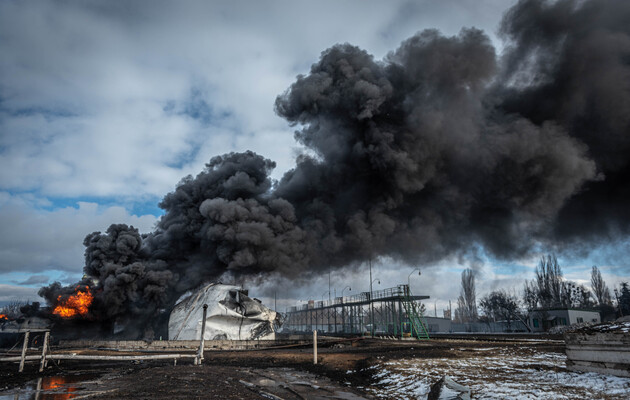 ANALYSIS
Ukraine’s fuel system is facing new challenges due to the enemy’s actions, which are deliberately destroying infrastructure and cutting off southern supply routes. With the fall-winter period approaching, the market may face a worsening shortage, so the government should start preparing now for worst-case scenarios and build up decentralized reserves. Serhiy Kuyun, director of the “A-95” consulting group and a fuel expert, notes this in his article, according to "Komersant Ukrainian".
According to him, the July “mini-crisis” in the market served as a warning sign, as a real shortage was felt even despite substantial supply volumes in the wholesale market. The main cause of the current problems is the actions of the occupiers, who are gradually cutting off Ukraine’s south.
“This is a triple blow: a reduction in fuel supply channels, increased consumption due to the shift from ‘maritime’ exports to ‘road’ transport, and increased pressure on and reduced capacity of the border for fuel imports,” emphasizes Serhiy Kuyun.
The expert believes that due to attacks on infrastructure (in particular, bridges and vehicles on the highway from Reni), when planning a strategy for petroleum product supply for the coming months, “it’s best to forget about the south.”
As a result, the entire burden will fall on the already overloaded land border, and the supply system will become less diversified.
Fuel Storage: Why Traditional Oil Terminals Are Not Working
The issue of fuel availability could become much more acute during the fall and winter. Stabilizing the market requires reserves, but building them using the existing on-ground infrastructure poses enormous military risks.
“I don’t know of a single oil depot on the Left Bank that has survived. Nationwide, I don’t think there’s a single stationary oil depot that hasn’t been hit by airstrikes since the start of the war,” notes the fuel expert.
Kuyun is also critical of the government’s initiative to require fuel companies to maintain mandatory minimum reserves at their storage facilities starting October 1. After all, the enemy is attacking not only oil depots but also gas stations and fuel tankers, and there are no mechanisms in place to protect businesses or compensate them for their losses.
Read us on Telegram: important topics – without censorship
The Solution: Underground Storage and Decentralization
According to the expert, the only realistic technological solution for the market is a transition to storage in underground facilities. However, building such infrastructure is at least twice as expensive as above-ground storage tanks, and the process itself will take one and a half to two years. At the same time, the decentralization of these facilities should be a key factor.
“Maybe someone in the government or higher up is dreaming of large storage facilities, but we mustn’t forget that this is already a target worth firing a few missiles at. But if every importer builds their own small storage facilities with a capacity of 3,000–4,000–5,000–10,000 cubic meters, that will be a much more resilient system,” Kuyun emphasizes.
On-hand reserves: advice for consumers
According to the expert, while a resilient infrastructure is being built, the fastest and most effective step at the moment is to create a decentralized stockpile directly among consumers, municipal institutions, government organizations, and private companies.
“A decentralized stockpile among consumers will help prevent panic buying and an excessive, sudden strain on the supply system in the event of a crisis… Building up a stockpile ‘on hand’ will help avoid this and provide time to overcome an unpredictable situation,” concludes Serhiy Kuyun, noting that fuel has a long shelf life and such ‘investments’ will not go to waste.
Watch us on YouTube: important topics – without censorship