No more than 20 liters per person: Sevastopol has imposed restrictions on gasoline sales
22 May 13:11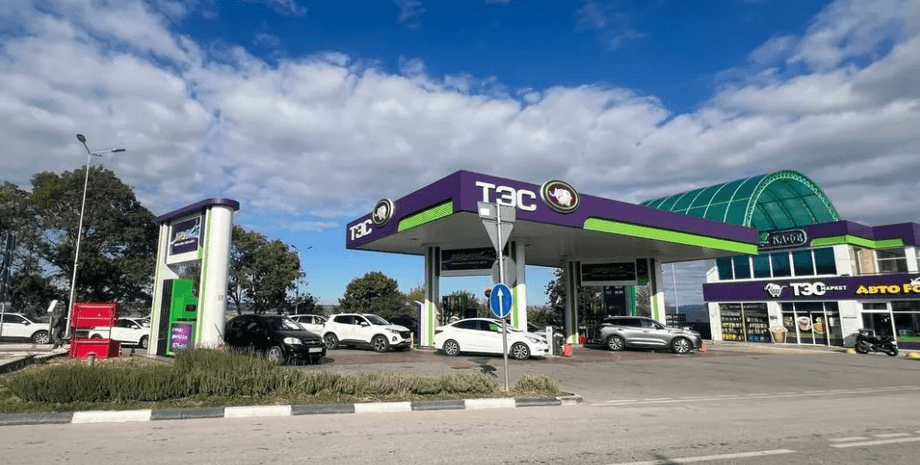
Starting May 22, Sevastopol has imposed restrictions on gasoline sales at TES gas stations—no more than 20 liters per vehicle or per canister. This was announced by the so-called governor of Sevastopol, Mikhail Razvozhayev. "Komersant Ukrainian" reports this, citing Russian propaganda media.
According to media reports, diesel fuel is currently being dispensed only with coupons. Some gas stations in Sevastopol are experiencing shortages of A-92 and A-95 gasoline.
“The ATAN network’s gas stations have A-92 and A-95 gasoline, as well as diesel, but not at all stations. Some TES gas stations have A-92 gasoline; deliveries of A-95 and diesel are expected by evening—we are working on this. Diesel is currently available only with coupons. To avoid a rush, as happened last time, we are implementing a measure that has already proven effective: fuel sales at TES network stations will be limited to 20 liters per vehicle or per canister until the situation stabilizes,” Razvozhayev said.
Razvozhayev cited certain logistical difficulties as the reasons for the tense situation with fuel supplies to Sevastopol.
Watch us on YouTube: important topics – without censorship
“There are currently certain logistical difficulties, the causes of which are known,” he added.
The Sevastopol Public Support Headquarters will keep the public informed about the fuel situation at specific gas stations.
Since the start of the war, Ukraine has carried out over 150 strikes on Russian oil refineries
Since the start of the war, the Armed Forces of Ukraine have attacked Russian oil refineries at least 158 times. Twenty-four out of 33 facilities with a capacity of 1 million tons of oil per year were hit. This is reported by Russian propaganda media.
While there were no attacks on oil refineries in the first year of the war, there were 4 in 2023, 34 in 2024, and already 88 in 2025. In just under five months of this year, Ukrainian drones have struck oil refineries 33 times. This is more than during the same period in 2025 (24 attacks).
Most often, the Ukrainian Armed Forces strike the Ryazan and Saratov refineries—each has been attacked 15 times since the start of the war. Both facilities are among the largest oil refineries in the European part of Russia. The Ryazan Oil Refinery processes about 17 million tons of oil per year—the third-largest capacity in the country after the Omsk and Kirish refineries. The Saratov Oil Refinery, in turn, produces about 7 million tons of oil per year. The Afipsky, Ilsky, and Tuapse refineries, located in the Krasnodar Krai, are also regularly targeted. Each has been hit 12 times. The capacity of these refineries is comparable to that of the Saratov refinery—about 7–9 million tons of oil per year.
At the same time, there are virtually no large oil refineries left in Russia (with a processing capacity of 10 million tons of oil per year or more) that Ukraine has not previously attacked. The only two such facilities are located beyond the Urals—the Omsk and Angarsk refineries. The Omsk refinery is the largest in Russia in terms of oil processing capacity and produces about 21 million tons of petroleum products per year. The Angarsk refinery has a capacity of about 10.2 million tons of oil per year.
Strikes on oil refineries are part of Ukraine’s strategy aimed at reducing Russian oil and gas revenues and creating a fuel shortage within the country. President Volodymyr Zelenskyy has repeatedly referred to such attacks as Kyiv’s “long-range sanctions,” intended to force the Kremlin to the negotiating table.
Read us on Telegram: important topics – without censorship