Pashinyan’s party won the parliamentary elections in Armenia
8 June 12:15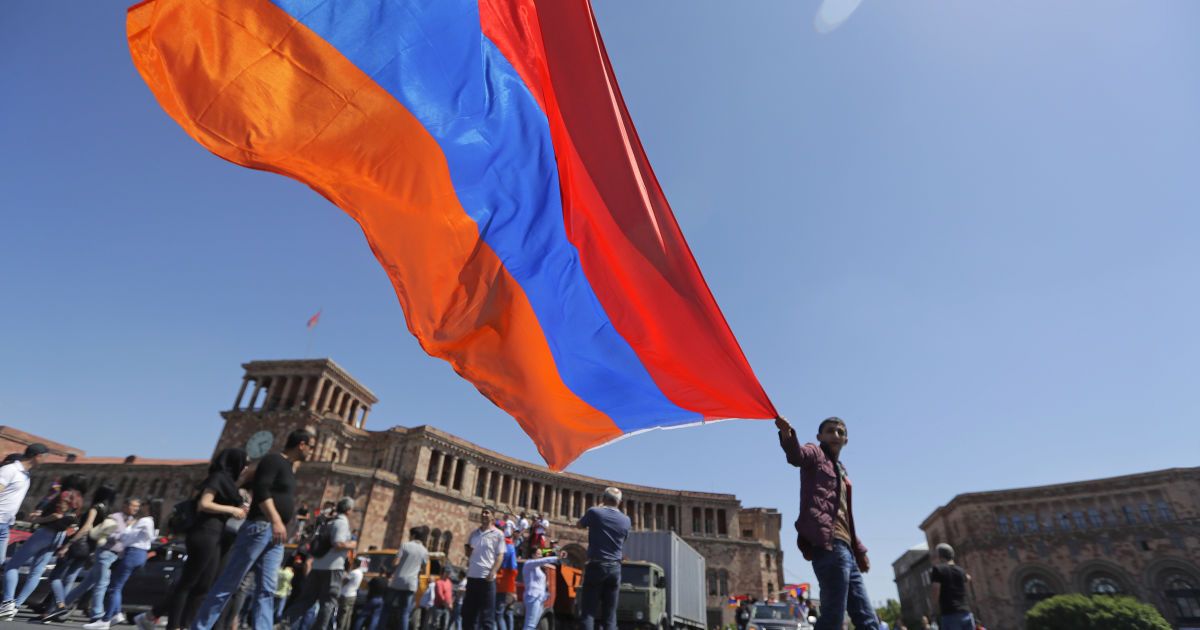
Armenian Prime Minister Nikol Pashinyan’s “Civic Contract” party won the parliamentary elections held on Sunday, June 7. According to a report by the country’s Central Election Commission on the morning of June 8, following the counting of all ballots, “Civic Contract” received 49.81 percent of the vote. This was reported by "Komersant Ukrainian" with reference to DW.
The opposition alliance “Strong Armenia,” led by Samvel Karapetyan, a Russian businessman of Armenian descent, received 23.29 percent of the vote. Another bloc of opposition forces—”Armenia,” led by former President Robert Kocharyan —received 9.94 percent.
In fourth place is the opposition party “Prosperous Armenia” led by businessman Gagik Tsarukyan, which received exactly 4 percent of the vote. The “Wings of Unity” party of former ombudsman Arman Tatoyan garnered the support of 2.3 percent of voters.
Watch us on YouTube: important topics – without censorship
As a result, the “Civic Contract” will receive 61 seats, the “Strong Armenia” bloc will receive 28 seats, the “Armenia” bloc will receive 11 seats, and “Wings of Unity” will receive 5 seats.
The final turnout was 58.97 percent. This is higher than in the 2018 and 2021 elections.
The Armenian Parliament (National Assembly) currently consists of 105 deputies. Of these, four seats are reserved for representatives of national minorities—Yazidis, Russians, Kurds, and Assyrians.
Nikol Pashinyan on the election results
The incumbent head of government has already declared victory for his political party, even though the Central Election Commission had counted less than 20 percent of the ballots at that point. “The ‘Civic Contract’ party will form the government on its own,” Pashinyan said at a press conference.
These remarks have already drawn criticism from a number of opposition forces. For instance, the “Armenia” bloc led by the former president characterized the prime minister’s statements as a “step toward the usurpation of power” and a “gross interference” in the CEC’s activities. And Arman Tatoyan, head of “Wings of Unity,” called Pashinyan’s statement unconstitutional.
The Electoral Code requires the formation of a stable parliamentary majority
Eighteen political parties participated in the election; voting took place under a proportional representation system, and the law does not set a minimum voter turnout threshold. Nearly 2.5 million voters are eligible to vote in Armenia. The law does not provide for polling stations abroad; electronic voting was organized for Armenian diplomats working outside the country.
The threshold for parties was 4 percent; for blocs comprising three parties, it was 8 percent; and for blocs consisting of four or more parties, it was 10 percent.
The Electoral Code guarantees the formation of a stable parliamentary majority—54 percent. If, based on the election results or due to the formation of a political coalition, a stable parliamentary majority is not formed, a second round of elections will be held.
The Fateful Nature of the 2025 Elections
In 2025, Pashinyan legislatively enshrined a course toward rapprochement with the European Union, which set Yerevan on a path of confrontation with Moscow. The prime minister himself emphasizes that he does not seek a break with Russia. The opposition, however, was united by a desire to maintain the country’s close ties with the Russian Federation.
Moscow expressed dissatisfaction with Pashinyan’s course toward rapprochement with the EU. Russian dictator Vladimir Putin stated that the situation in Armenia resembles the one that led to the start of the “crisis” in Ukraine. Before the elections, Russia imposed bans and restrictions on imports of Armenian alcohol, agricultural products, flowers, and fish.
Read us on Telegram: important topics – without censorship