A Risky Venture: Why Investors Find It Hard to Take the Plunge and Participate in the Construction of New Energy Facilities
17 July 13:25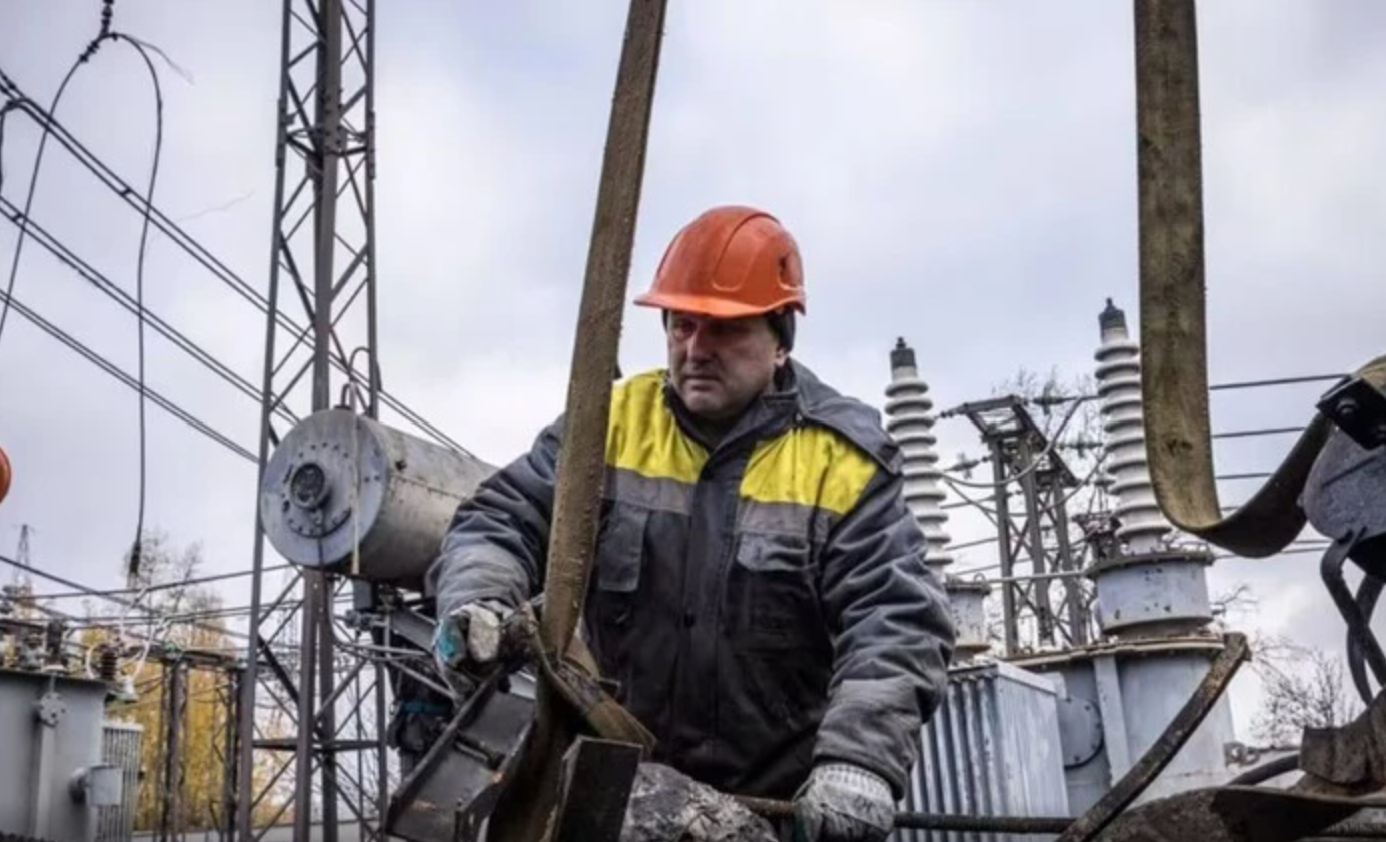 ANALYSIS
Potential investors who may participate in the tender for the construction of new generating capacity have been given the opportunity to review the tender documentation and submit their comments and proposals by July 26. Government officials involved in organizing the tender hope that the proposed terms will attract business interest. To find out how realistic this is,
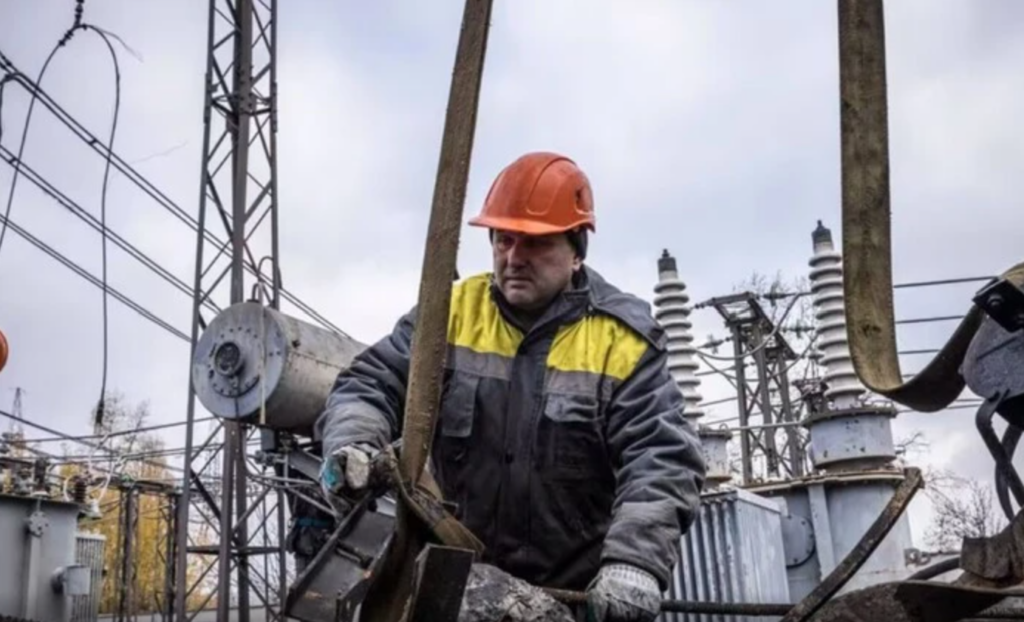
Ukraine intends to build a new energy system. The chief “architect” of the project is Energy Minister Denys Shmyhal, who presented this project back in April. A key component of the project is the tender for the construction of new generating capacity, which was announced at the same time. The organizers hope this tender will add 1.5 GW of new distributed gas-fired generation to the power grid.
Moreover, this will be in the regions that have become the most energy-deficient as a result of Russian attacks—the Kharkiv, Sumy, Poltava, Dnipropetrovsk, Odesa, Chernihiv, and Kyiv regions, as well as the city of Kyiv. The reality is, however, that the construction process will not be quick.
However, officials hope that at least some portion of the planned new generation capacity will be integrated into Ukraine’s power grid as early as 2027. These hopes are likely fueled by the fact that projects that were started earlier and are currently in the design or construction phase will also be eligible to participate in the competition.
Investors who agree to participate in the competition face a number of requirements. In particular, each power generation facility must be equipped with Level 2 anti-drone protection; the minimum capacity of each new power facility must be 10 MW; the minimum guaranteed (design) operational life of the generating equipment must be at least 20 years (or 100,000 operating hours); and the generating units must be capable of starting up in the absence of voltage in the external grid.
In contrast, significantly fewer incentives are proposed to attract investors. First and foremost, investors are promised price support during peak electricity consumption hours. This refers to state-guaranteed compensation for the potential difference in electricity prices during peak hours—in the morning and evening.
In addition, the possibility of insuring investors against war risks is mentioned. However, it is clarified that such an instrument is still under development. The big question is: will this be enough to encourage investors to participate in the tender?
Incentives for Investors
The key argument intended to encourage potential investors to participate in the tender is the introduction of a market premium mechanism. Specifically, it is envisaged that a fee of up to 27.92 euro cents per 1 kWh will be paid for the service of ensuring the development of generating capacity for 5 years after the facility is commissioned.
This will apply in cases where the price of electricity during the morning and evening peak load hours designated by Ukrenergo as periods of shortage is lower than the cost per MW/h determined in the tender.
Stanislav Ignatyev, Chairman of the Board of the Ukrainian Renewable Energy Association, previously commented to the publication
“The investor earns revenue from selling electricity on the market, and if the market price is insufficient to ensure the project’s profitability, the investor receives an additional premium. This approach is widely used in EU countries, as it allows for combining market incentives with a certain level of guarantees for the investor. From the perspective of attracting participants, the decision is logical and more market-oriented compared to direct tariff guarantees. “It avoids placing an excessive financial burden on the state while ensuring basic revenue predictability for investors,” the expert emphasizes.
Regarding insurance against war risks for investors who will finance the construction of new generating capacity, it is known that Ukrenergo has been developing a corresponding instrument.
Such insurance is expected to be implemented through a derisking mechanism developed by the Energy Community Secretariat. Derisking is essentially a risk mitigation strategy, particularly through the involvement of international reinsurers.
As explained by Ukrenergo, establishing a second layer of protection could significantly increase project costs and, consequently, reduce interest among potential investors. It is precisely the existence of a mechanism for insuring against war risks that should help alleviate the financial pressure on businesses and stimulate the rapid launch of new capacity in the power system.
This initiative was scheduled to be presented at the conference on Ukraine’s reconstruction in Gdańsk. And in late June, on the sidelines of the conference, a panel discussion was held on the topic “Investing in Ukraine: De-risking as the Key to Scaling Private Capital.” During this discussion, Serhiy Nikolaychuk, First Deputy Governor of the NBU, explained, in particular, what the framework for supporting investment projects should look like.
“We need to develop a multi-tiered system in which private insurers actively underwrite war and other risks, international reinsurers provide additional market capacity, international financial organizations offer targeted support instruments, and the state provides protection against war risks in areas that objectively cannot be covered by the market or where the cost of insurance is too high,” the official noted.
It is precisely a clear and reliable mechanism for insuring war risks that could be the decisive factor in persuading potential investors to participate in the tender for the construction of new generating capacity.
Challenges for Investment
If the market premium does not compensate for war risks and the high cost of financing in Ukraine, many potential participants may approach the tender with caution. This is the view of Stanislav Ignatyev, Chairman of the Board of the Ukrainian Renewable Energy Association.
“For many participants in the tender, the decisive factor will be not only the size of the premium, but also the availability of state guarantees, mechanisms for insuring war risks, and support from international financial institutions,” the expert emphasizes.
So, what, first and foremost, might interest investors in funding the construction of new power generation facilities? This is precisely what this publication
“I believe that the economics of this business allow for investment without any artificial support. In other words, if the projects’ profitability is already sufficient, there’s no need to try to offer investors additional incentives. And so we need to focus, first and foremost, on the issues that are holding back investment. One such issue is undoubtedly insurance against war risks. The second issue concerns the actions of the energy regulator—namely, the stability of the regulatory framework and the consistency of the rules of the game. The NEURC’s policy is completely unpredictable. One moment they raise the cap on electricity prices in the winter; then, a few weeks after the acute phase of the crisis and power outages, they lower them; then they adjust them again. No one knows what they’ll come up with tomorrow, and because of this, it’s very difficult for investors to develop any long-term financial models.”
What should a war risk insurance mechanism look like to convince investors to put their own money into building new energy facilities?
“What the government can do regarding insurance is to actually coordinate a support scheme with international partners, under which we would receive funding to make war risk insurance more affordable for various regions. And we shouldn’t just ask international partners for money; we need to create an entire mechanism under which insurance companies would provide such coverage, with their services partially covered by funds from our international donors. This must be a special mechanism developed by our government in collaboration with international donors—so that it actually works. But, unfortunately, this cannot be done in a week or even a month.”
Given the problems already mentioned, how much interest might investors have in the new tender?
“Most of the power plants covered by this tender are to be located precisely in regions that are more vulnerable in terms of military risks. In addition, investors are required to fund the construction of what’s called a ‘second level of protection’ at their own expense—these are large concrete structures designed to protect against ‘shahid’ attacks. This will roughly double the cost of such projects. And, unfortunately, I can predict that interest in this tender from potential investors may be quite low. And even if there is any interest, it will likely come only from state-owned companies. But the private sector is unlikely to get involved in projects that are already twice as expensive as usual. And so, unfortunately, we shouldn’t expect any major breakthroughs here.”
New power generation facilities, the construction of which is to be launched through this new tender, will come online in 2027 at the earliest. So what should Ukrainians expect next winter?
“Unfortunately, we cannot count on distributed gas-fired generation to compensate next winter for the structural problems—the electricity shortages—that we experienced, for example, last winter. And the main reason for this situation is that these plants are being built more slowly than we’d like, there are fewer investors than we’d like, and this, in turn, is a consequence of the very same unpredictable policy on the part of the regulator. In other words, our market regulation problem leads to a lack of investment and new facilities, which in turn causes electricity shortages. This is a simple chain of logic that explains why our efforts to build new generation capacity will still be insufficient by next winter. And this is already evident in the rhetoric of officials, who are already preparing the public for the fact that winter will be difficult,” stated Volodymyr Kudrytskyi.
Indeed, for example, Davyd Arakhamia, the head of the “Servant of the People” faction, has already suggested that next winter will be the hardest in Ukrainian history. It is telling that he made this statement after a faction meeting at which lawmakers were deciding who would head the government.
And the new head of government himself, Serhiy Koretskyi, speaking in parliament on the day of the vote, stated that the coming winter could be the hardest since the start of the full-scale war.
It’s worth noting that the main argument in favor of appointing Serhiy Koretskyi as the new prime minister was that the experience he gained as head of Naftogaz during the past heating season will be particularly useful next winter as well.
Indeed, such experience will certainly not hurt the new prime minister, the new government, or the country as a whole.