The Russian economy has entered a phase of structural decline — Novak
22 June 18:52 YouTube
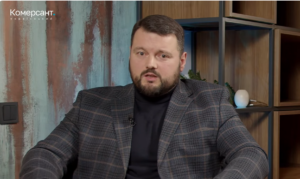
The Russian economy is not merely experiencing temporary difficulties—it is losing the structural foundation that has sustained it for decades. Economist Andriy Novak discussed this on the "Komersant Ukrainian" YouTube channel while analyzing a study by the Kiel Institute for the World Economy and the Stockholm Institute for Transition Economics.
According to the economist, it is important to distinguish between a typical recession and structural depletion. A recession is when the economy slows down cyclically but retains its technological capacity, export potential, and the relevance of its products on the global market.
“In the case of the Russian economy, we are talking specifically about structural depletion—that is, it is losing its structural elements. Whereas they used to produce and export certain goods, they are now producing even less of their own oil and gas. And these are their main commodities. They are losing the very foundation on which their economy once stood and thrived,” Novak explained.
This foundation is being eroded from two fronts simultaneously—through effective strikes by the Ukrainian armed forces on oil and gas infrastructure and through international sanctions, which have severely limited Russia’s ability to sell oil and gas on the global market. According to the economist, Moscow will no longer be able to recover from this situation: Europe, which previously accounted for two-thirds of all Russian energy exports, will completely cease all imports—whether by sea or pipeline—by the end of 2027.
At the same time, the state’s financial reserves are also running out. Russia had two reserve funds—the Reserve Fund and the National Welfare Fund. The first was completely depleted as early as 2023. The second, according to Novak, is also practically depleted.
“According to various estimates, there are between 2.5 and 3 trillion rubles left. That is very little. In the first quarter of this year alone, Russia’s federal budget deficit already stood at 6 trillion—that is, twice as much as the fund’s entire remaining balance. And then there’s the regional budget deficit—an additional 3.5 trillion,” the economist calculated.
If you add it all up—the federal and local budget deficits, corporate debt, and bank liabilities—the fund’s remaining balance won’t be enough to cover even a single category of debt, Novak emphasized. According to his assessment, the lion’s share of the funds from both reserves has gone specifically toward financing the war against Ukraine—defense spending already exceeds 50% of the Russian budget.
Watch us on YouTube: important topics – without censorship
A separate threat to the Kremlin is the labor shortage—and, according to the economist, this is more dangerous than a lack of money.
“Money, so to speak: you’ve agreed on a loan with someone, and the money has arrived. But there’s no one, as they say, to put it to use. There are no workers,” he explained.
During the first wave of mobilization, between 2 and 2.5 million men of working age left Russia. Added to this are direct combat losses—according to international estimates, 1.4 million killed and wounded, with more among the dead than the wounded. As a result, some Russian companies have already switched to a four-day—and in some cases even a three-day—workweek due to a labor shortage.
At the end of the conversation, Novak mentioned an event that would serve as the final signal of collapse.
“It will be a very severe collapse of the Russian ruble’s exchange rate—well beyond 100 rubles per dollar. Right now, they’re artificially propping up this rate because it’s one of the last arguments they can use to explain to people that ‘everything is fine here.’ But when the ruble depreciates sharply and significantly—that will be a signal that all processes have become irreversible, and the Russian economy is headed for total collapse,” the economist concluded, drawing a parallel with the collapse of the Soviet economy.
According to Novak, the Russian state is headed for the same fate as the Soviet Union. It will be the collapse of the USSR, Part 2.
Read us on Telegram: important topics – without censorship