Scandal at an EU wine competition: Among the winners are Crimean wineries linked to Putin’s inner circle
22 July 19:15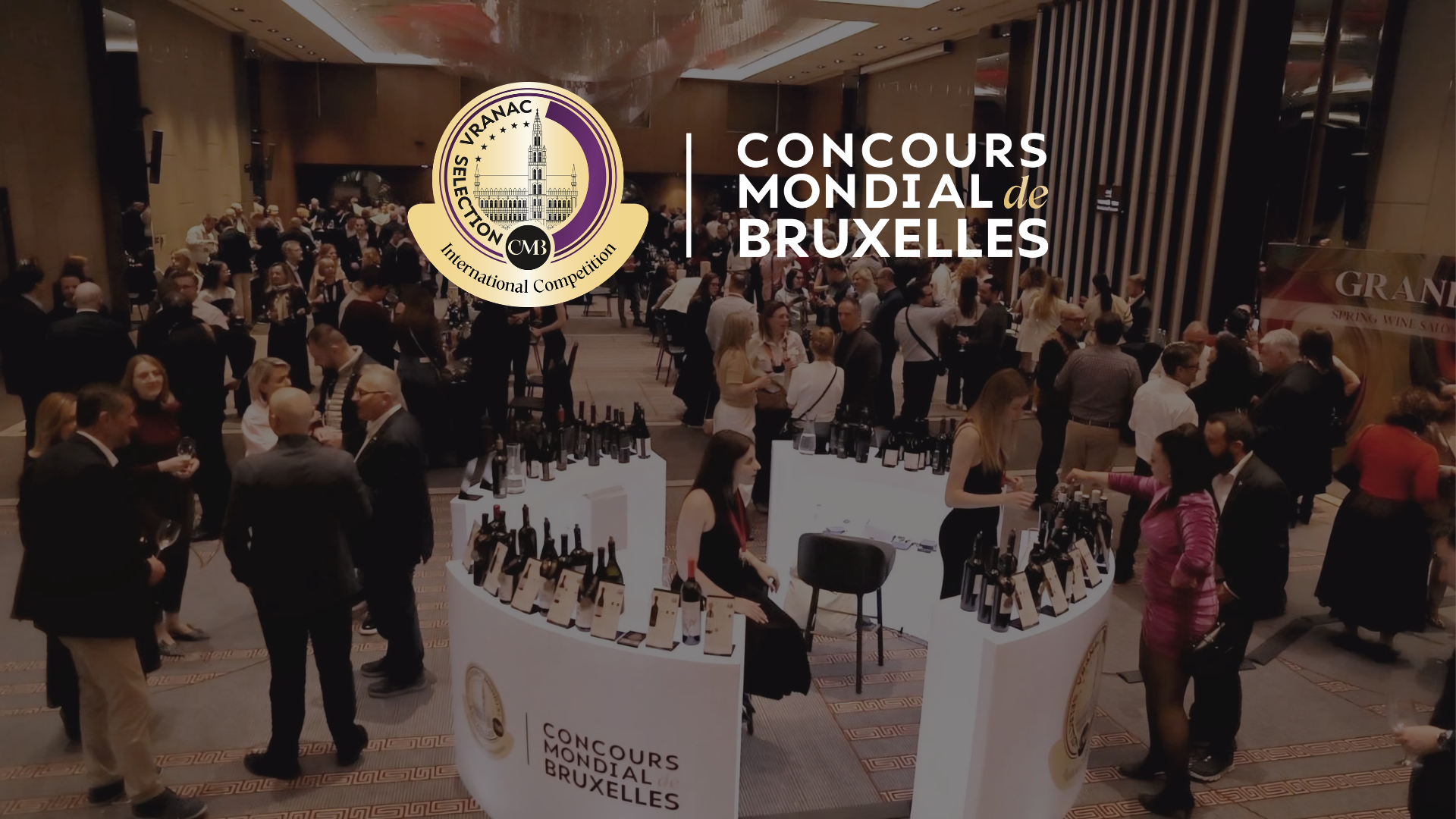 ANALYSIS
The Concours Mondial de Bruxelles international wine competition found itself at the center of a scandal following the publication of the results of its July session. Among the award winners were Russian producers and Crimean wineries. At the same time, the organizers labeled Crimean products as coming from an autonomous region, completely ignoring the fact that Crimea is part of Ukraine. This was reported by "Komersant Ukrainian".
This year, the competition was held in Armenia, but it is organized by Vinopres, a Belgian legal entity registered in the European Union. The organizers also list the EU NEIGHBOURS east program and the Deutsche Gesellschaft für Internationale Zusammenarbeit (GIZ) GmbH—both of which are funded by the EU—among the competition’s partners.
In this context, the participation of wineries from the temporarily occupied Crimea and Russian producers raised questions regarding compliance with European sanctions and international trade rules.
Crimean wineries were presented as a separate region
Among the wineries from the occupied peninsula whose wines received awards are “Valery Zakharin,” Winepark, Alma Valley, PJSC “Massandra,” and “Château Ai-Danil.” These enterprises are formally or de facto owned by individuals linked to the Russian government and Russian President Vladimir Putin.
Certain questions also arise regarding the competition’s financial transactions. EU Regulation No. 692/2014 prohibits European companies from engaging in financial transactions with entities from annexed Crimea without the appropriate certificates issued by official Ukrainian authorities. One of the wineries—“Massandra”—has been subject to EU sanctions under Regulation No. 269/2014 since July 25, 2014. The company has also been included on the OFAC SDN sanctions list since December 22, 2015. The legal entity Winepark—Mriya—also appears on the OFAC list.
Thus, monetary contributions from sanctioned companies to competition organizers may indicate a violation of sanctions legislation and potential secondary sanctions.
Does the Ukrainian side feel cheated?
The participation of judges from Ukraine in the competition has become a separate issue. According to the rules of the Concours Mondial de Bruxelles, wines are evaluated through blind tasting—without indicating the brand, country of origin, or grape variety.
“According to verbal statements, which can be confirmed by official tasting sheets and commission minutes, not a single Russian or Crimean wine was served to the Ukrainian judges. Otherwise, they could have identified such entries and lodged a protest with the organizers before the award lists were published,” writes the publication Drinks.
Iryna Dyachenkova, a longtime judge at international competitions and co-founder of Drinks, stated that Ukrainian experts had no information about which specific countries and regions the competition organizers had registered.
“Ukrainians were effectively used to legitimize the occupiers’ sanctioned businesses on the international stage. This is a direct violation of the principles of fair partnership and professional ethics,” Dyachenko noted.
She also called on the competition organizers to issue an official explanation regarding the participation of Ukrainian judges and to confirm that they did not evaluate wines from the occupied territories of Ukraine and the Russian Federation. Furthermore, in her opinion, the awards given to sanctioned producers should be revoked.
Watch us on YouTube: important topics – without censorship
Russian representatives also attended the competition
In addition to Ukrainian experts, representatives from Russia participated in the Concours Mondial de Bruxelles. According to Drinks, 14 representatives from the Russian Federation attended the competition and were also given the opportunity to evaluate wines. The participation of Crimean and Russian producers raised additional questions because the competition’s organizer is registered in Belgium, and the competition itself collaborates with organizations and programs funded by the European Union.
Another issue lies in the designation of Crimea as an independent wine-producing region. At the international level, the geographical origin of wine must be determined by the country of origin and the corresponding wine-producing region. Presenting Crimea without mentioning Ukraine could create the risk of legitimizing Russia’s occupation of the peninsula.
International trade law and rules regarding geographical indications do not provide for a “neutral” status for territories in matters of state sovereignty. For these reasons, the participation of Crimean wines in the competition and their presentation as products of a separate region may have not only reputational but also legal consequences.
The publication of the competition results, which included Crimean wineries among the winners, has generally called into question the organizers’ procedures for verifying participants and their compliance with sanctions restrictions.
This situation may also affect the future participation of Ukrainian experts in the Concours Mondial de Bruxelles and other international professional events unless the organizers revise their approaches to admitting sanctioned producers and labeling products from the occupied territories.
Read us on Telegram: important topics – without censorship