Tonight, Ukrainians will be able to see the Lyrids: where to look for “shooting stars”
22 April 01:28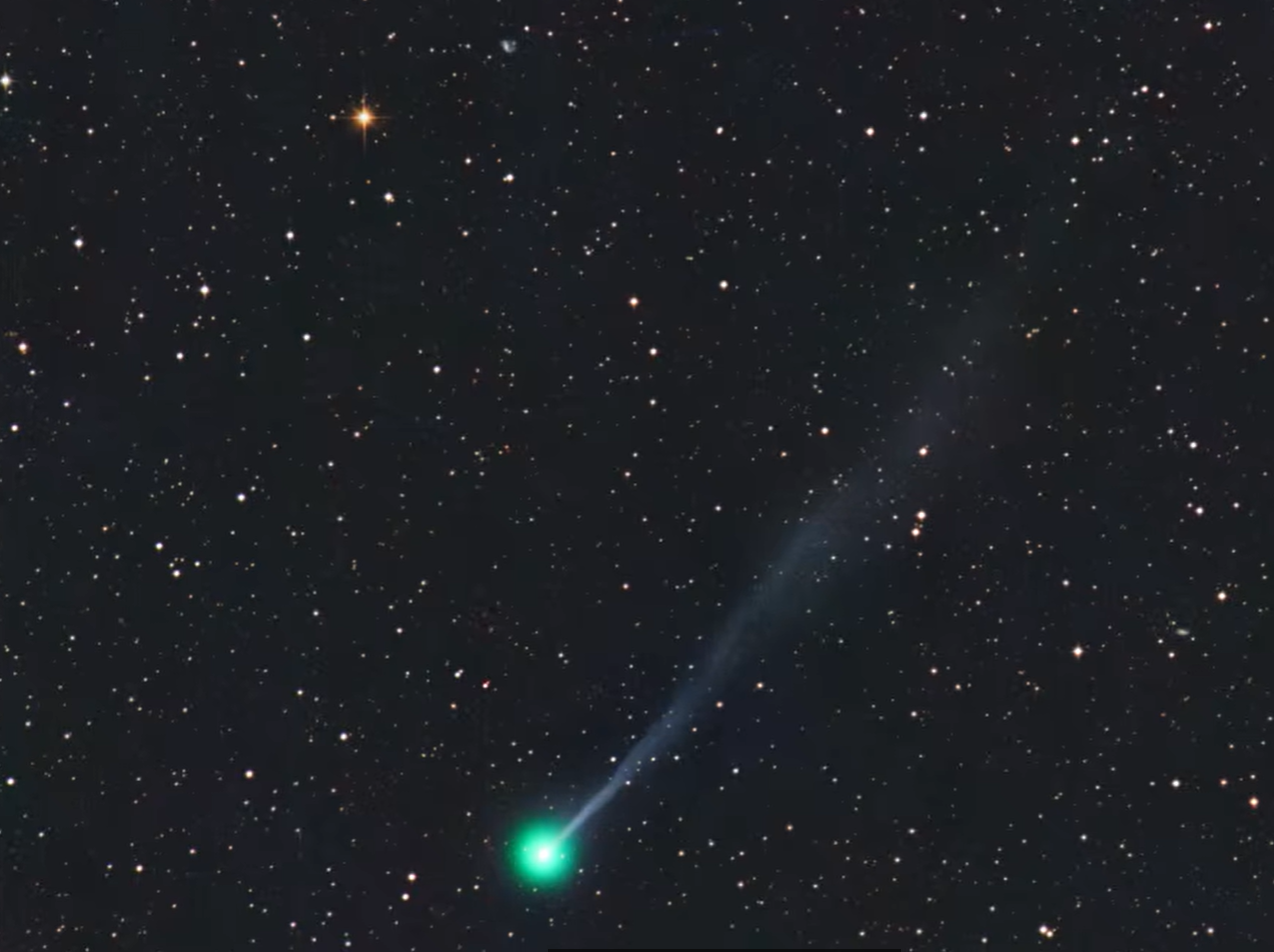
On the night of April 22, 2026, the Lyrid meteor shower will reach its peak activity. Astronomers recommend watching the sky on this very night, as under favorable conditions, observers can see approximately 10–20 meteors per hour. ScienceAlert reports this, according to "Komersant Ukrainian"
The best viewing conditions are expected in the Northern Hemisphere, and this year’s waning crescent moon will hardly interfere with observations.
When to watch the Lyrids on April 22
The best time to observe the Lyrids is after midnight and until dawn on the morning of April 22. EarthSky specifically notes that in 2026, the best time to view the shower is during the morning hours of April 22, while AMS identifies the night of April 21–22 as the peak for this meteor shower.
The peak window is quite narrow, so this particular night is considered the most important for observations.
According to Scientific American, this year’s mathematical peak occurs around 19:15 UTC on April 22, but for observers, the best time remains the dark pre-dawn hours, when the shower’s radiant rises higher above the horizon.
Where the Lyrids will be best seen
The Lyrids are best seen in the Northern Hemisphere, so Ukraine is among the favorable regions for observation.
To see more meteors, you need to get away from city lights, choose an open area without tall buildings or trees, and give your eyes time to adjust to the darkness.
Wired also notes that conditions will be best in areas with dark skies and at higher elevations, and you should look not only toward the constellation Lyra but also scan the sky widely, as meteors can appear in different parts of it.
How many meteors can you see
At the peak of the Lyrid meteor shower, you can usually see about 10–20 meteors per hour under a dark sky. Some sources cite 15–20 meteors per hour as a realistic maximum for this year.
At the same time, the American Meteor Society reminds us that the actual number of visible meteors depends on the darkness of the sky, the clarity of the atmosphere, and how high the radiant has risen.
Why conditions are favorable this year
In 2026, the Moon is in its waxing crescent phase and will not significantly brighten the sky on the peak night. EarthSky notes that moonlight will not interfere with morning observations on April 22, and the AMS indicates that the Moon will be about 27% illuminated on the peak night.
This means that viewing conditions this year are indeed better than in years with a bright full moon.
How to Observe the Lyrids
To see more “shooting stars,” follow a few simple rules:
- go outside after midnight;
- choose a dark spot without streetlights;
- don’t look at your phone, because the screen light makes it harder for your eyes to adjust to the dark;
- give your eyes 15–30 minutes to adjust to the darkness;
- don’t stare at a single point; instead, scan the sky widely.
NASA recommends lying on your back with your feet facing east and looking up, taking in as much of the sky as possible. Once your eyes have adjusted, the meteors will become more visible.
What Are the Lyrids
The Lyrids are one of the oldest documented meteor showers. They have been observed for over 2,500 years.
The shower occurs when Earth passes through dust and small particles left behind by Comet C/1861 G1 Thatcher. When these particles enter the atmosphere, they burn up and create bright streaks of light that we call meteors or “shooting stars.”
Read us on Telegram: important topics – without censorship