Global business has lost $25 billion due to the war between the U.S. and Iran
19 May 06:43
The U.S.-Israeli military operation against Iran has resulted in losses for businesses totaling approximately $25 billion—and those losses are only increasing with each passing day of the conflict. This was reported by Reuters, according to "Komersant Ukrainian"
Why businesses are losing billions
The main reason for the losses is the energy and logistics shock. Due to the war and the blockade of the Strait of Hormuz, the supply of oil, gas, raw materials, and finished products has become significantly more difficult.
The Strait of Hormuz is one of the most critical routes for the global energy sector. A significant portion of global oil transportation passed through it, so any restrictions there immediately affect prices, freight rates, ship insurance, and logistics.
According to Reuters, companies are facing three main challenges:
- the need to change trade routes;
- higher energy prices;
- disruptions in supply chains.
Nearly 300 companies have taken protective measures
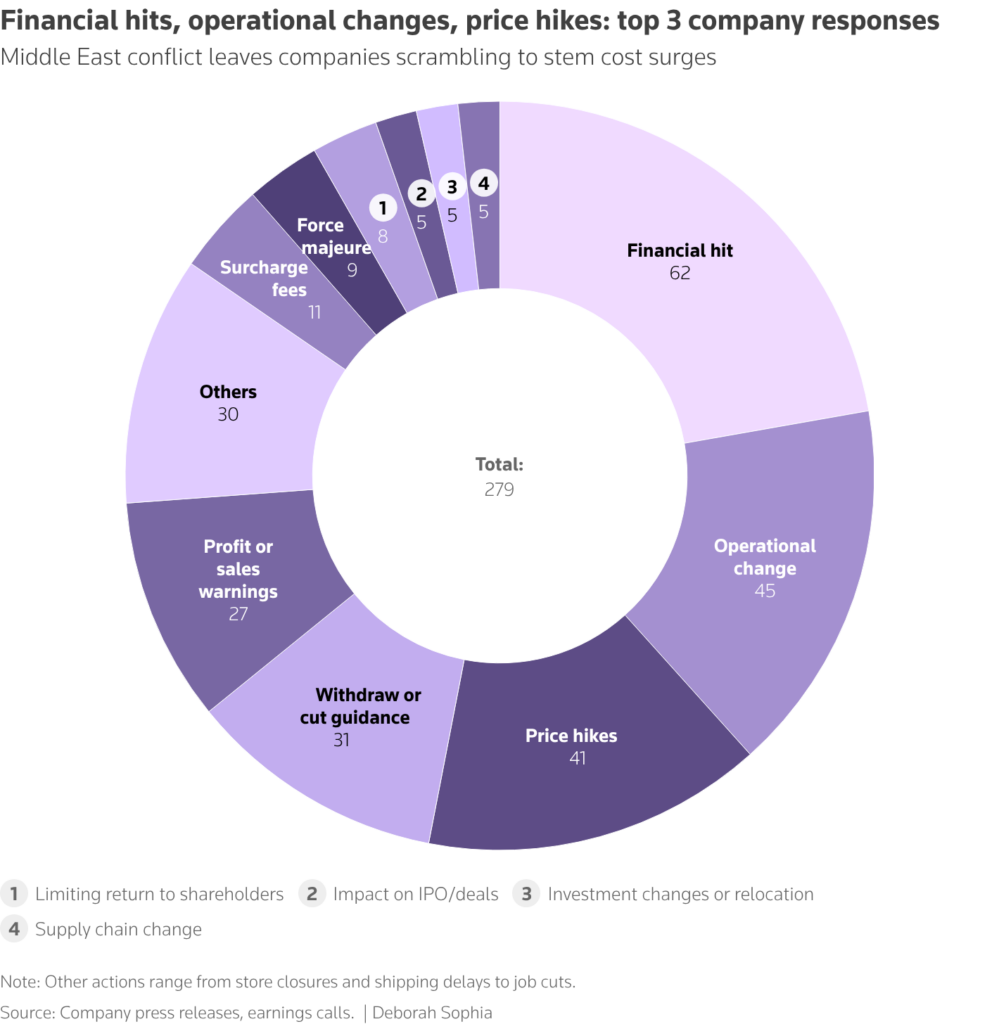
Reuters analyzed statements from companies in the U.S., Europe, and Asia. The analysis revealed that 279 companies have already directly linked their financial difficulties or protective measures to the conflict surrounding Iran.
Businesses are forced to:
- cut back on production;
- raise prices;
- revise financial forecasts;
- cancel or postpone dividends;
- suspend share buyback programs;
- place employees on mandatory leave;
- introduce fuel surcharges;
- seek government assistance.
Watch us on YouTube: important topics – without censorship
Airlines Among the Hardest Hit
Aviation has become one of the most vulnerable sectors. According to Reuters, airlines account for nearly $15 billion of the total losses.
The reason is obvious: jet fuel is one of the carriers’ main expenses. When fuel prices rise, companies either raise fares or lose profit margins. Some airlines are already warning of possible ticket price increases, even though travel demand remains unstable.
Industry and manufacturers are also under pressure
In addition to aviation, manufacturers that depend on petroleum products, gas, chemical raw materials, and maritime transport are suffering significant losses.
It is particularly difficult for companies working in:
- petrochemicals;
- automotive components;
- home appliances;
- logistics;
- consumer goods;
- industrial raw materials.
Reuters notes that among the companies reporting financial setbacks or revising their forecasts are major international corporations, including Whirlpool, Toyota, Procter & Gamble, and Continental.
Companies are revising their forecasts for the second half of the year
The lack of progress in negotiations between Washington and Tehran is already affecting business plans for the second half of the year.
Some corporations are forced to significantly lower their forecasts for profit, sales, or margins. For some companies, expected figures could be cut in half if the energy and logistics crisis drags on.
Analysts expect the greatest pressure on corporate profitability to emerge in the second quarter, when rising costs are fully reflected in financial results.
Why the Strait of Hormuz is critically important
The Strait of Hormuz connects the Persian Gulf to the open seas. Large volumes of oil and liquefied natural gas traditionally pass through it.
When traffic through the strait is restricted, the global market immediately faces several blows:
- oil prices rise;
- ship insurance costs rise;
- routes are lengthened;
- delivery costs rise;
- delivery delays occur;
- companies are factoring additional risks into prices.
That is why the war in Iran has quickly turned into not only a geopolitical crisis but also a global economic crisis.
Oil prices remain high
Reuters notes that the energy market is under heavy pressure due to supply risks from the Middle East. Some forecasts indicate that the price of Brent may remain high, and in the event of a further blockade of the Strait of Hormuz, it could rise even further.
For businesses, this means not only more expensive fuel but also an overall increase in production, logistics, and import costs.
European and Asian companies are particularly vulnerable
Companies in Europe and Asia face the greatest risks, as they are heavily dependent on energy imports and maritime routes.
If oil and gas prices remain high, businesses may continue to raise prices for consumers. This, in turn, could intensify inflationary pressure and reduce the population’s purchasing power.
Read us on Telegram: important topics – without censorship