
Government: The appointment of the Prosecutor General is a matter of judicial reform, not the Anti-Corruption Strategy
2 July 12:55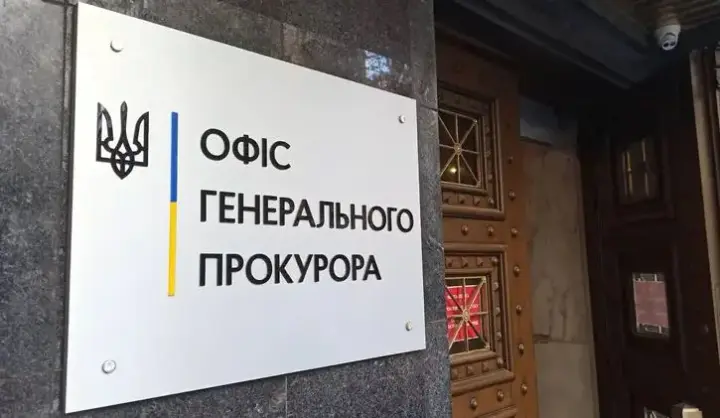
The government sees no grounds for international observers to oversee the “election” of the prosecutor general
The Verkhovna Rada Committee on Anti-Corruption Policy will prepare a revised version of the draft law on the Anti-Corruption Strategy, which is intended to consolidate three registered legislative initiatives on this topic and incorporate European Union benchmarks within Cluster 1, “Fundamentals.” Committee Chair Anastasia Radina announced this following a committee meeting, according to
“I will propose moving forward with Draft Law D (the revised version)—creating a comprehensive version combining all three texts, based on the benchmarks of the ‘Foundations’ cluster. At the next committee meeting, we will be ready to proceed with consideration of this decision,” Radina stated.
During the discussion, Deputy Prime Minister for European and Euro-Atlantic Integration Taras Kachka noted that the government does not consider it feasible to fully integrate all 26 EU benchmarks under negotiation chapters 23 “Judiciary and Fundamental Rights” and 24 “Justice, Freedom, and Security.”
According to him, some of these provisions are politically sensitive, and their full inclusion in the document could complicate or even block the adoption of the Anti-Corruption Strategy and the State Anti-Corruption Program.
In particular, Taras Kachka stated that the government does not see an urgent need to include provisions on the “election” of the leadership of the Office of the Prosecutor General in the Anti-Corruption Strategy.
According to the Deputy Prime Minister, the government believes this issue relates more to constitutional and legal regulation and the justice system than directly to anti-corruption policy.
At the same time, toward the end of the discussion, Kachka suggested that EU benchmarks could be included in the text of the document as a compromise solution.
“I will be happy if Parliament approves the bill with the text of the benchmarks,” he said.
Following the meeting, the Anti-Corruption Committee decided to prepare a new draft of the bill that would take into account both the government’s position and the requirements necessary for Ukraine to fulfill its European integration commitments.
Context
As a reminder, Bill No. 15343 on “strengthening the independence of the office of the Prosecutor General” was previously registered in the Verkhovna Rada, sparking debate among experts due to potential risks to the appointment process and the balance of powers.
As former Special Anti-Corruption Prosecutor Stanislav Bronevitsky explained , “the bill effectively transfers the initial personnel decision from the President and the Verkhovna Rada to the Competition Commission and the High Council of Justice.”
He also points out that the High Council of Justice effectively gains decisive influence over the composition of the Competition Commission: it directly appoints three members, and selects another three from candidates proposed by international and foreign organizations, including the EU.
“The proposed procedure does not guarantee the appointment of a Prosecutor General at all. After the Verkhovna Rada rejects two candidates, the process could go in circles: a new competition—the President—Parliament—a new competition,” explains Bronevitsky, noting that such a model could lead to a prolonged period during which the Prosecutor General’s Office would remain without a leader.
In addition, attention is drawn to the establishment of a six-month term for the acting Prosecutor General without a clearly defined mechanism for further action in the event of an unfinished competition.
According to Bronevitsky, the model of qualification requirements for candidates set forth in Bill No. 15343 is also questionable.
“The requirements for candidates do not ensure adequate professional training. The bill allows for individuals with general management experience—including in international organizations—without requiring practical experience in the field of criminal justice,” explains Bronevitsky, adding that this will undermine the specialized nature of the Prosecutor General’s position.
As reported by
SEE ALSO: YouTube interview on the “Midas” case, the work of NABU and SAPO, leaks of pre-trial investigation materials, and the activities of the Verkhovna Rada’s Temporary Investigation Commission
Watch us on YouTube: important topics – without censorship










