“Ukrainians Are Being Sold a Myth”: Former SAPO Prosecutor Says the EU Does Not Require a Competition for the Position of Prosecutor General
18 June 13:25
Stanislav Bronevitsky , a former prosecutor with the Specialized Anti-Corruption Prosecutor’s Office, stated that there is no requirement in the official documents between Ukraine and the European Union to introduce a competitive selection process for appointing the Prosecutor General. He made these remarks in response to a debate that arose following statements by certain civil society representatives claiming that such a competition is allegedly mandatory for Ukraine’s further progress toward EU membership, according to
Prior to this, civil society activist Martyna Boguslavets stated that a competitive selection process for the position of Prosecutor General “has become one of the European Union’s official requirements” as part of the negotiation process regarding Ukraine’s accession to the EU.
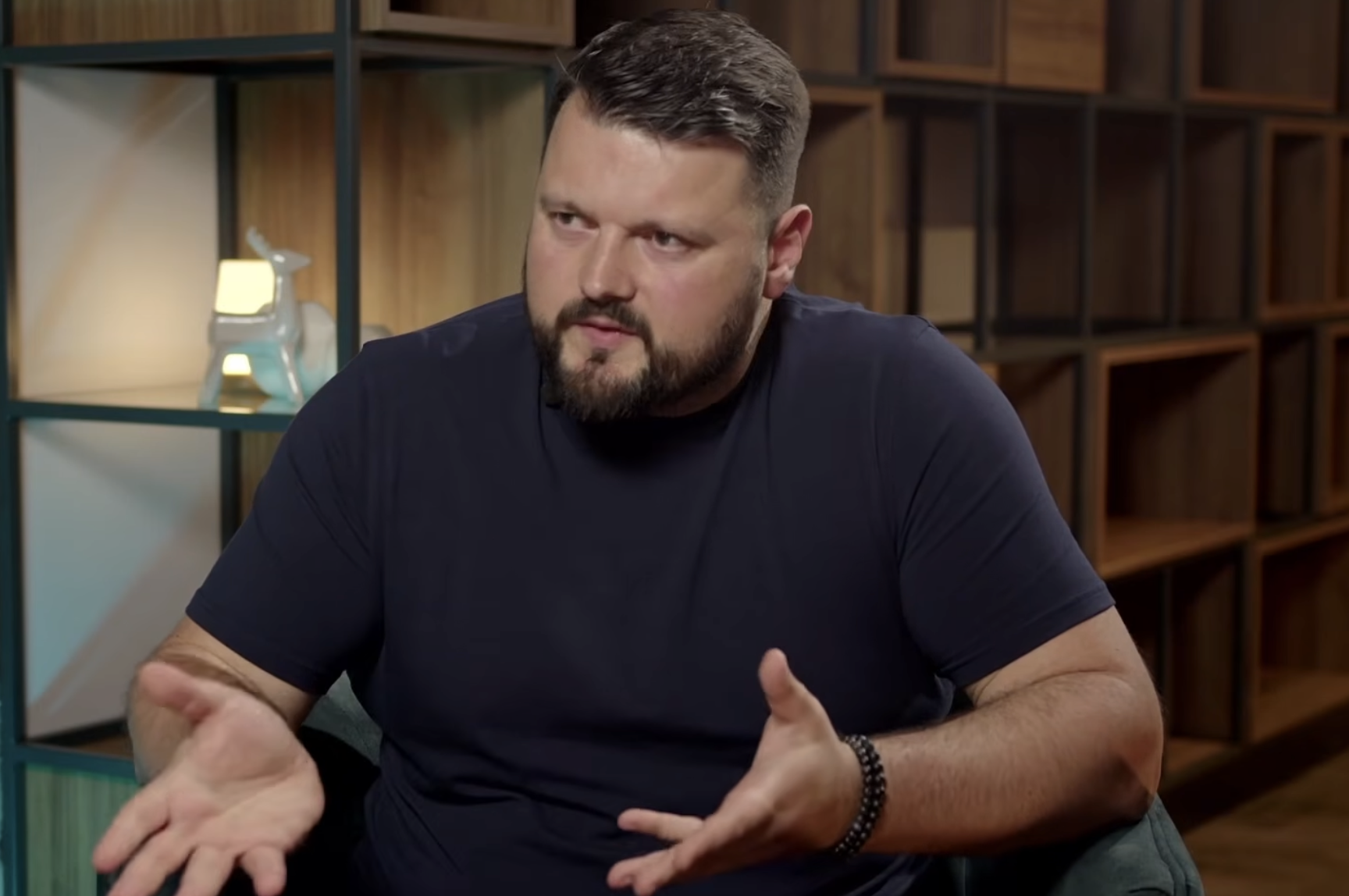 Stanislav Bronevitsky
However, Bronevitsky is convinced that such claims do not correspond to the content of the documents cited by supporters of the competitive selection process.
“Let’s start with the fact that nowhere—in any documents, including communiqués, joint statements, or documents between Ukraine and the European Union—has there been a requirement to specify a competitive selection process as the method for appointing the Prosecutor General. And all those who are now calling for a competition are, in fact, referring to a single statement—that of Kachka and Marta Kos dated December 11, 2025,” he said in a comment to
"Komersant Ukrainian" .
According to the former prosecutor, the document in question does indeed mention the need to review the procedure for appointing the head of the Prosecutor General’s Office, but it contains no explicit requirement for a competitive selection process.
“One of the points in this statement did indeed specify the following: to conduct a comprehensive review of the procedure for selecting and dismissing the Prosecutor General in order to bring it into line with best European practices, with the involvement of the Venice Commission. But if we read this text literally, it does not mention any competitive selection process. Bringing the procedure into line with best European practices is not the same thing as a competitive selection process,” Bronevitsky emphasized.
Watch us on YouTube: important topics – without censorship
“Let’s see how this works in Europe”
The former SAPO prosecutor also questioned the argument that a competitive selection process is supposedly the standard for European Union countries:
“If civic activists and certain civil society organizations constantly talk about best European practices, then let’s see how it works in Europe. Who appoints prosecutors general, and are international representatives or foreign experts involved in this process?”
He cited examples from several EU member states.
“In Austria, prosecutors are formally appointed by the federal president. In Romania, the president appoints the heads of the prosecutor’s office upon the recommendation of the Ministry of Justice. In the Czech Republic , the government appoints and may dismiss the chief public prosecutor upon the recommendation of the Minister of Justice. In Finland, the government proposes a candidate, and the president appoints the Prosecutor General. In Sweden , the Prosecutor General and his deputy are appointed by the government. In other words, we see that political appointment mechanisms exist everywhere, and they are quite similar to the model that exists in Ukraine today,” Bronevitsky noted.
In his view, any radical change to the procedure in Ukraine will inevitably run up against the provisions of the Constitution.
Read us on Telegram: important topics – without censorship
“The appointment of the Prosecutor General is one of the powers of the President of Ukraine as defined by the Constitution. Accordingly, changing the procedure for appointing the Prosecutor General is a matter of amending the Constitution of Ukraine,” he stated.
“A competitive selection process is not a panacea”
Separately, Bronevitsky criticized the widespread assertion that a competitive selection process alone can guarantee the independence and integrity of the future head of the Prosecutor General’s Office.
“A competitive selection process is not a panacea for all problems. We have already seen a whole series of competitive procedures that ended either in great disappointment or in complete collapse. A competitive selection process in and of itself does not guarantee a high-quality result,” he said.
As an example, he cited the case of the deputy head of the Specialized Anti-Corruption Prosecutor’s Office (SAPO).
“Let me remind you of the competitive selection process for appointing the deputy head of the SAPO (Oleksandr Klymenko—Ed.), who was forced to resign in the fall of 2025 after the public learned of leaks of materials from criminal proceedings. The person passed the competition, but that did not prevent further problems,” Bronevitsky noted.
He also mentioned the competition for the position of NABU director.
“I’ll recall the competitive selection process for the NABU director (Semen Kryvonos—ed.). Then scandals arose surrounding his biography, his past, and other circumstances that became the subject of public debate. In other words, we see that selection processes can also collapse at a certain stage,” the former prosecutor added.
“The Prosecutor General’s Office Cannot Function Without a Prosecutor General”
According to Bronevych, protracted competitive selection procedures can create serious problems for the work of the Prosecutor General’s Office.
“Let’s imagine a situation where the Prosecutor General resigns. It takes a certain amount of time to organize and conduct a competitive selection process. And that period will be quite lengthy. As a former representative of the prosecutor’s office, I believe that a prolonged absence of a leader only harms the institution,” he said.
According to him, similar situations have already occurred in Ukrainian law enforcement agencies.
“We have already seen examples where key law enforcement institutions operated for a long time without full-fledged leaders. I believe that without a Prosecutor General, neither the country nor the Prosecutor General’s Office can function properly,” Bronevitsky emphasized.
“This is not about a specific candidate, but about control over the procedure”
Commenting on the question of possible political motives behind promoting a competitive selection model, Bronevitsky shared his own view of the situation.
“Most likely, this is not about imposing any specific candidate. It is more likely about changing the institutional model for appointing the Prosecutor General as a way to take control of the competition process itself,” he said.
The former prosecutor believes that in the future this could lead to the emergence of new centers of influence over the prosecutor’s office.
“The idea is to use control over the procedure to promote people who will benefit those who are currently actively advocating for this model—civil society organizations, activists, and certain interest groups. This cannot be allowed to happen. The Prosecutor General must be separate from any political influence, completely impartial, and independent of any centers of influence,” he stated.
Personnel Policy in the Prosecutor’s Office
At the same time, Bronevitsky emphasized that personnel policies within the prosecutor’s office as a whole must be transparent. And specific issues—in the context of activists’ allegations of a “Russian connection” regarding certain law enforcement officials—must not go unanswered.
Watch us on YouTube: important topics – without censorship
“Under the banner of European integration, we are often forced to accept things that do not exist in the EU”
In closing, Bronevitsky spoke critically about the practice of promoting certain “reforms” under the banner of European integration.
“We’ve been moving toward the European Union since 2014, in fact. We’re constantly being asked to carry out yet another round of reforms. We carry them out, and then it turns out they’re not enough. Then we need yet more reforms. And then even more. And this is starting to feel like running in circles,” he said.
According to the former prosecutor, the public should be more critical of arguments claiming that certain decisions have no alternative.
“Under the guise of accession to the European Union, some of our public figures, including certain members of parliament, are trying to push through processes that do not exist—and cannot exist—within the European Union itself. Therefore, we must very clearly distinguish between the actual requirements of our partners and what certain influential groups are trying to present as requirements of the European Union,” concluded Stanislav Bronevitsky.
Context
The discussion was sparked by a post from civic activist Martyna Bohuslavets following the European Union’s decision to open the “Fundamentals” negotiation cluster for Ukraine as part of the EU accession process.
In her post, Boguslavets claimed that the competition for the position of Prosecutor General had allegedly become one of Brussels’ requirements for Ukraine.
Read us on Telegram: important topics – without censorship