From conscription to sharing nuclear weapons: Poland strengthens its defense in the face of threats
7 March 2025 21:10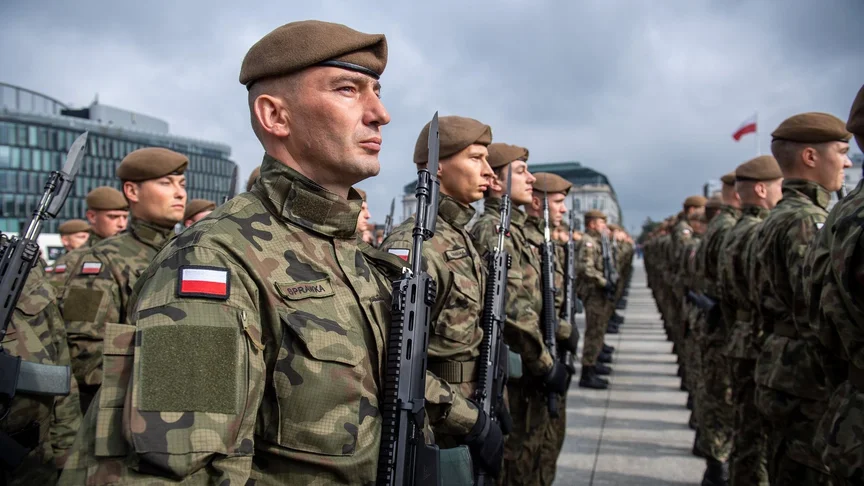
Poland wants to gain access to nuclear weapons and draft all adult men for military training. This was stated by Prime Minister Donald Tusk, reports "Komersant Ukrainian".
He spoke about ongoing negotiations with France on the so-called “nuclear umbrella” over Europe, emphasizing the need for a bolder view of Poland’s capabilities in terms of modern weapons.
“We must realize that Poland must have the most advanced capabilities related to nuclear weapons and modern unconventional weapons. That is why we are facing a very serious race, and it is a race for security, not an arms race,” Tusk emphasized.
Donald Tusk also said that his government is preparing to introduce large-scale military training for all adult men in the country and that the initiative should be ready by the end of the year. In this way, Warsaw hopes to have a well-trained reserve force ready to meet potential threats.
How Poland is preparing to defend itself
In recent weeks, the topic of Poland’s national security has been the subject of intense discussion at the highest state level. There has been increasing talk of the need to strengthen the country’s defense capabilities, including the potential possession of nuclear weapons and preparations for full military mobilization. These statements are part of a broader context of rising international tensions, especially against the backdrop of the war in Ukraine and Russia’s increasingly assertive policies.
The debate on nuclear weapons in Poland is not new, but recent statements by government officials indicate a hardening of the stance on the issue. Although Poland is not officially a nuclear power, it is considering participating in the Nuclear Sharing program, which allows NATO allies to access U.S. nuclear weapons without formally possessing them.
It is worth recalling that in 2024, President Andrzej Duda openly spoke about Poland’s readiness to join this program. The United States has not yet made an official decision on this issue, but the growing threat from Russia may push NATO to expand its nuclear presence in Central and Eastern Europe.
However, some experts emphasize that Poland, as a signatory to the Nuclear Non-Proliferation Treaty (NPT), cannot legally develop its own nuclear program without serious diplomatic consequences. Moreover, just creating the infrastructure to produce nuclear warheads would require billions of dollars in investment and years of preparation. However, the growing political willingness to raise this topic indicates that Warsaw is seeking to strengthen its negotiating position in NATO and deter potential threats.
In parallel to the debate on nuclear weapons, the government is conducting extensive preparations for possible military mobilization. Currently, the Polish Armed Forces have about 550,000 soldiers (including the Territorial Defense Forces and reservists), but in the event of a full-scale conflict, this number could increase several times.
The Polish mobilization system is based on several key mechanisms:
- Military qualification – thousands of young men and women are involved in this process every year, undergoing a medical examination and receiving a category of fitness for military service.
- Training of reservists – in 2023, about 200,000 people were called up for training, and in 2024, another 230,000 citizens are planned to be called up.
- Compulsory military service – currently, there is no mandatory conscription in Poland, but there are plans to introduce compulsory service in the event of an emergency in the country.
The mobilization can be announced in two ways:
- launching partial mobilization. It covers certain social groups, mainly reservists and people with military experience;
- announce full mobilization. In this case, all citizens of conscription age (18-60 years) and persons previously recognized as fit for military service will be subject to it.
According to the current legislation, the President of Poland can declare mobilization upon the Prime Minister’s proposal in case of a direct threat to the country. For many citizens, this will mean an immediate call-up for military service and the obligation to report to designated military units.