Threat from the North: How the Shutdown of Relay Stations in Belarus Is Changing the Tactics of Russian Drone Attacks
30 June 14:47 ANALYSIS
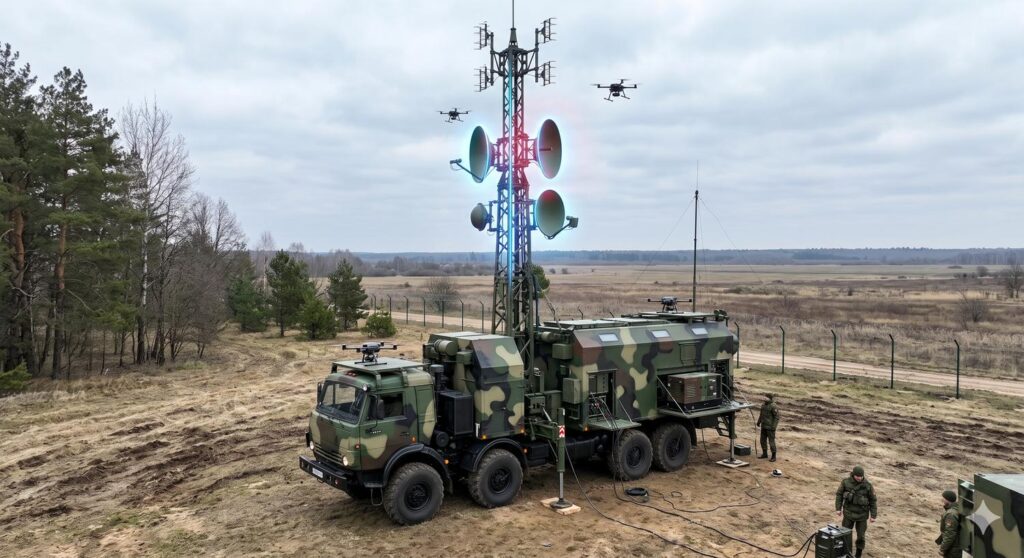
Belarus’s self-proclaimed president, Alexander Lukashenko, may have temporarily suspended the operation of Russian broadcast repeaters on Belarusian territory, but on the day of a massive attack, he could resume their operation in a matter of minutes. Military experts emphasize that President Volodymyr Zelenskyy’s statement that these facilities are currently inactive should not lull anyone into a false sense of security. They warn, however, that Minsk may simply be hiding the towers from Ukrainian radio reconnaissance in order to activate them immediately during the next Russian strike and once again guide enemy UAVs in real time. What threat did these Belarusian relay stations actually pose, and how did they turn drones into guided weapons? What steps can the Ukrainian Armed Forces take to “neutralize” the threat—read more in the article
Ukrainian President Volodymyr Zelenskyy announced yesterday that Russian repeaters operating on Belarusian territory had been suspended. Military expert and Ukrainian Armed Forces Reserve Colonel Roman Svitan, in an exclusive comment to
Controlled terror: What is the danger posed by Belarusian relay stations?
The main problem with shooting down drones under operational control is that they cease to be mere “blind projectiles.” As long as there is a connection, the operator (who could physically be located even in Moscow) is able to control the drone in real time: changing its altitude, speed, and course.
“Then it effectively becomes a piloted aircraft. It’s difficult to shoot down, and most importantly—it can be precisely guided toward a target, including a moving one. This is a huge problem,” emphasizes Roman Svitan.
It was precisely to ensure such a stable connection along the Ukrainian-Belarusian border that the Russians deployed a network of repeaters. Thanks to these, enemy operators were able to “guide” drones deep into Ukrainian territory, subjecting the northern and western regions to constant attacks.
Logistics to Poland Under Attack
The presence of operational towers in Belarus allowed Russian UAVs to literally “glide” along the border, threatening a whole series of Ukrainian regions: Volyn, Rivne, Zhytomyr, Kyiv, and Chernihiv.
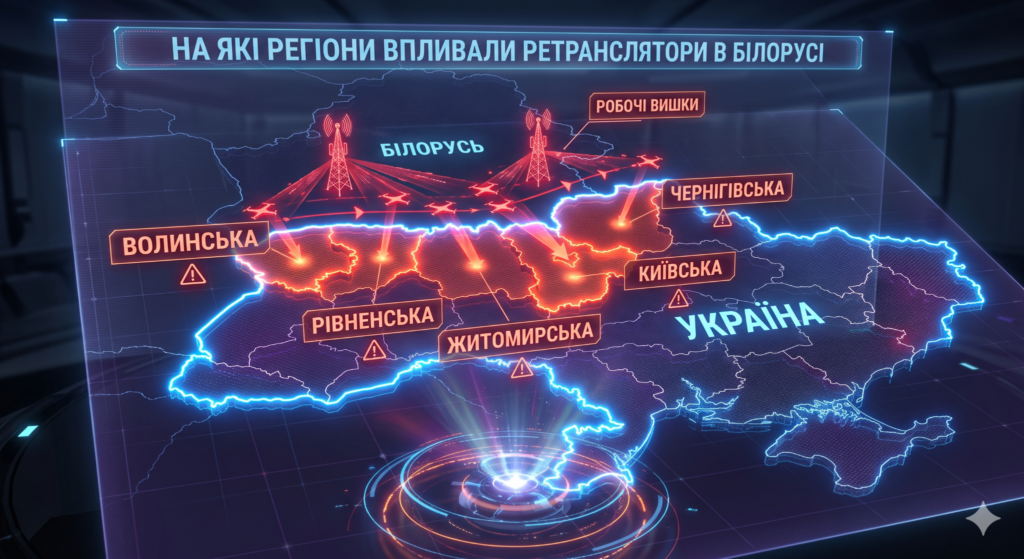
According to Svitan, the Russians now have a very specific and dangerous objective—to sever Ukrainian logistics chains. This refers to so-called military traffic moving along the northern border toward Kyiv and Poland. The use of drones controlled via Belarus was intended to be a key tool for striking these supply lines.
Did Lukashenko shut them down, or was he afraid of a strike?
The sudden announcement that the repeaters have ceased operations raises many questions. Roman Svitan suggests two scenarios: either Belarus’s self-proclaimed president, Alexander Lukashenko, decided to shut them down on his own, or some of them had already been successfully neutralized.
“This is a big question; everything will become clear in the near future. But there’s a serious danger: they could have simply turned them off so we wouldn’t detect them on the radio spectrum (and we have very good radio intelligence). However, they could turn them back on right at the moment of a massive attack,” the expert warns.
The Ukrainian Armed Forces’ Strategy: “Neutralize” Them in a Matter of Minutes
The Ukrainian side is well aware of this risk. As soon as the repeaters are activated, they’ll “light up like Christmas trees” on the radio spectrum, allowing their locations to be pinpointed instantly.
The military analyst is convinced that Ukraine will not wait but will act preemptively. Moreover, a willingness to take radical steps is already evident in statements by the country’s top military and political leadership.
“We must be ready to destroy them. As soon as they switch to repeater mode, they must be eliminated immediately—literally within a few minutes. I think we already have this mechanism in place. They will simply be destroyed as soon as they transmit a signal. This is the only way to ensure the security of our northern regions,” Roman Svitan concluded.
Thus, the sudden suspension of Russian relay stations in Belarus is not a sign of de-escalation, but rather a tactical pause. However, Ukraine is not waiting for an attack—it is preparing for it. It is fully aware of the risks and is developing effective strategies, in particular, the rapid elimination of the threat as soon as it materializes.