
A powerful magnetic storm has hit the Earth: what Ukrainians can expect over the next two days
5 May 09:16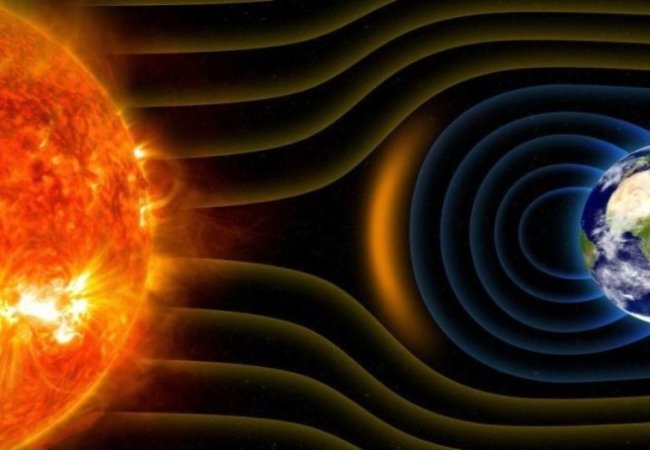
As of May 5, 2026, a magnetic storm has engulfed the Earth. According to Meteoagent, the K-index of geomagnetic activity has risen to 5.7, indicating a turbulent magnetosphere, reports "Komersant Ukrainian"
Magnetic storm on May 5: what is known
According to Meteoagent as of May 5, geomagnetic activity has increased significantly. The main indicator—the K-index—stands at 5.7 points, meaning a red-level storm.
This level means that Earth’s magnetosphere is in a disturbed state. For weather-sensitive people, this could be a challenging day: headaches, fatigue, drowsiness, irritability, fluctuations in blood pressure, and impaired concentration are possible.
At the same time, the solar flare index for May 5 is forecast to be C1. This is not the highest class of solar activity, but combined with the elevated K-index, the day may be difficult for your well-being.
The most important indicator in this forecast is the K-index of 5.7, as it indicates the level of geomagnetic activity. The higher the K-index, the stronger the disturbance in the Earth’s magnetic field.
It is important to note that magnetic storm forecasts may change, as solar activity researchers update their data every three hours. Therefore, we recommend regularly monitoring updates; all current information for today is below:
| Index | Value as of May 5 |
|---|---|
| Solar flares | C1 |
| K-index | 5.7 |
| Schumann Resonance | Good |

Magnetic storm forecast for May 6
For May 6, the Meteorological Agency forecasts a significant decrease in geomagnetic activity.
The expected K-index is 2.7.
This is significantly lower than on May 5. In other words, after a powerful geomagnetic disturbance, the situation should stabilize. For most people, May 6 may be a calmer day.
At the same time, in the Meteoagent chart for May 6, some of the solar and Shuman indices are marked as N/A, meaning the data may be subject to change.
Forecast for May 7
A moderate increase in geomagnetic activity is forecast for May 7 compared to May 6, but without a spike as strong as on May 5.
The expected K-index is 3.7.
This means that the magnetosphere may remain somewhat agitated, but the level does not appear as intense as on May 5. Weather-sensitive individuals should also remain attentive to their well-being on May 7, though the most challenging day in this forecast is May 5.
Why do magnetic storms affect well-being?
During magnetic storms, the state of the Earth’s magnetic field changes. Some people may react to these changes with a decline in well-being, especially if they already have issues with the cardiovascular system, blood pressure, sleep, or nervous tension.
The most common complaints during magnetic storms:
- headaches;
- weakness;
- drowsiness;
- insomnia;
- irritability;
- fluctuations in blood pressure;
- rapid heartbeat;
- decreased performance.
Watch us on YouTube: important topics – without censorship
How to feel better during a geomagnetic storm
On days of increased geomagnetic activity, it is advisable to reduce physical strain on the body. This is especially true for people with hypertension, heart disease, chronic fatigue, and heightened anxiety.
What can help:
- drink enough water;
- avoid excessive coffee and alcohol;
- avoid overexerting yourself physically;
- get more rest;
- go to bed earlier;
- ventilate the room;
- monitor your blood pressure;
- keep any medication prescribed by your doctor on hand if needed.
When the situation improves
According to the Meteorological Agency’s forecast, the strongest geomagnetic disturbance is expected on May 5. By May 6, the K-index is expected to drop to 2.7, and on May 7, a moderate level of 3.7 is expected.
Thus, after peaking on May 5, the magnetic storm should gradually subside.
Note that magnetic storm forecasts may change, as solar activity researchers update their data every three hours.
Read us on Telegram: important topics – without censorship









