What Made Prime Minister Svyrydenko Memorable, and What Should Businesses Expect Following Her Resignation
13 July 17:28 ANALYSIS FROM
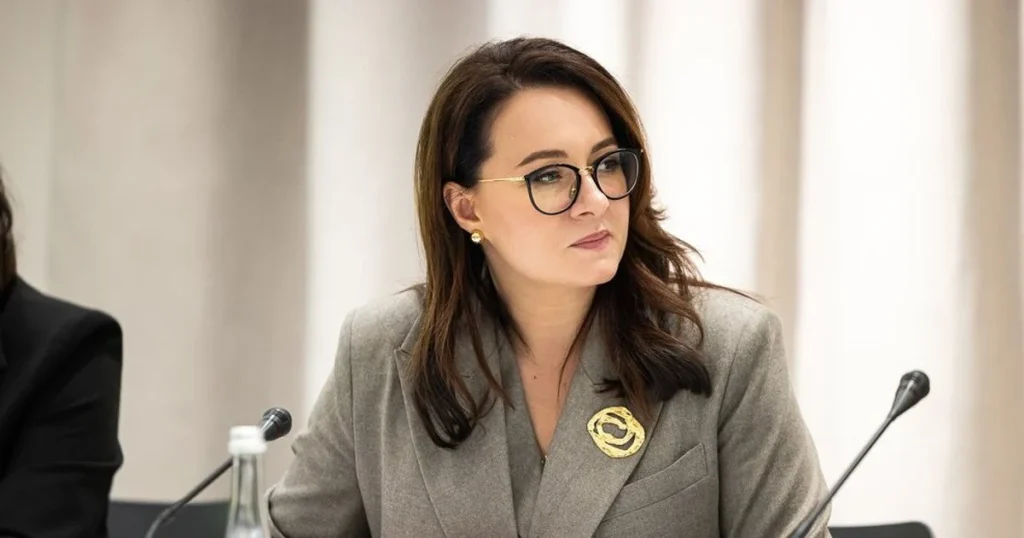
The replacement of Prime Minister Yulia Svyrydenko, announced by President Volodymyr Zelenskyy, and the subsequent reshuffle of the Cabinet of Ministers could directly affect business conditions and the functioning of the country’s economy.
Exclusively for
Failure of social reforms and a blow to the agricultural sector
The opposition camp views the achievements of Yulia Svyrydenko’s government with deep skepticism. Mykhailo Tsymbaliuk, a member of parliament from the “Batkivshchyna” faction, said in an interview with "Komersant Ukrainian" believes that the Svyrydenko government left behind a host of unresolved systemic problems, particularly in the agricultural sector and the area of mobilization policy.
“We expected the government to take a more serious approach to social policy; pension reform has still not been submitted to the Verkhovna Rada. As for the economic program, we did not see support for many industries, and the Ministry of Agriculture has not been preserved—yet in an agrarian country, there should be a separate ministry. On the contrary, it was merged with the ministries of economy and the environment,” Tsymbaliuk says indignantly.
Clearly, the reshuffle is now directly affecting the agricultural sector due to the absence of a separate specialized ministry and the automatic cancellation of all current government bills.
The lawmaker also noted that the Cabinet of Ministers failed to adequately fund the Armed Forces and created additional obstacles for businesses by tightening regulations on employee retention.
“This government has failed to increase the pay of military personnel, and reforming the Military Service Code is also a task for the government, which includes the Minister of Defense. This government—specifically the Ministry of Economy, for example—has introduced changes to the employee retention system, making it stricter and imposing additional requirements, which will not have a positive impact on economic growth.”
Other opposition factions also share this critical stance. Mykola Velychkovych, a member of parliament from the “European Solidarity” faction, commented to "Komersant Ukrainian" that businesses have not felt any real support from the government, and the cabinet’s financial policy has raised many questions.
“As for the consequences… Given what we’re seeing now—what’s happening to businesses, what’s happening to the economy, and what’s happening with tax policy—I don’t think it will get any worse. We don’t see Ms. Svyrydenko taking any actions that would, let’s say, stimulate business. We don’t see her or the Cabinet of Ministers initiating any bills that could stimulate the economy,” Velichkovich states.
Velychkovych drew particular attention to the lack of transparency in the use of public funds and the adoption of decisions that allegedly favored certain business players rather than society. According to him, funds from the Reserve Fund were used in a “manual mode.”
“In particular, we’re talking about Yebachok [ed. – a reference to the government’s fuel cashback program]. Instead of preventing oil traders—those who sell fuel—from raising prices, the funds were siphoned off; as a result, those who unjustifiably raised prices got rich, and on top of that, funds were siphoned from the budget, while ordinary citizens gained nothing. Ultimately, this leads to higher prices and increased costs for all related services and goods,” Velichkovich asserts
Government reshuffle and “economic reservation”: what should businesses expect?
A possible reshuffle of the Cabinet of Ministers of Ukraine will not bring about radical or systemic changes for domestic businesses. However, the new government lineup may reignite the debate surrounding the introduction of so-called “financial (economic) reservation.” This opinion was expressed in an exclusive comment
Indeed, the current Cabinet of Ministers fell just a few days short of completing its one-year term. However, despite personnel changes, one should not expect any radical shifts in policy, as there are no particular systemic complaints about the ministers’ work. At present, the focus is more on the need to “refresh” the government team.
“I don’t think there will be any significant, fundamental changes. In general, I don’t see any particular complaints about the current Cabinet. It’s just that, most likely, there’s a sense that the team needs to be, as they say, refreshed. But this refreshment shouldn’t be piecemeal; it should be comprehensive—which is why there’s talk, for example, of replacing the prime minister or key figures in the leadership,” notes Ivan Us.
According to the economist, the main thing entrepreneurs should pay attention to in the context of a government change is the likely return to the model of financial protection for employees, which was discussed earlier.
The essence of the idea is that companies operating strictly within the legal framework will be able to guarantee their employees protection from mobilization if their salary levels—and, accordingly, the taxes paid—exceed the minimum set by the state.
“This is a significant incentive for businesses to operate ‘above board.’ After all, when a company hides its actual income and pays salaries under the table, its employees are the first to be subject to mobilization—the state simply cannot see the financial contribution they make to the country’s survival. If, on the other hand, the work is transparent, taxes are paid, and everyone can see the actual earnings, the state receives a stable source of revenue,” explains Us.
However, the main problem in Ukraine, which all analysts are discussing, is the number of troops on the front lines. Therefore, increased tax revenues from legal businesses are directly channeled into the procurement of weapons, particularly unmanned systems.
“We simply don’t have as many people as the enemy does. But how can we replace the troops on the front lines? In my opinion, this can be done by investing heavily in drones,” emphasizes Ivan Us.
The economist cited a telling quote from one of the Russian military correspondents who relayed the occupiers’ complaints: “You bring military vehicles, while the Ukrainians bring drones. You lose people, and they lose equipment. Who benefits from this exchange?”
“Drones—we lost some, we built new ones. But to raise a new generation of people, we have to wait at least 20 years. Where will the resources come from to produce these thousands of drones? Precisely from taxes on Ukrainians’ official, decent salaries. The state is moving in this direction one way or another. And I hope that a change in government won’t stop this trend,” concluded Ivan Us.
What is the ruling majority saying?
Georgiy Mazurashu, a representative of the ruling “Servant of the People” faction, urges people to look not at the names of those in high offices, but at the state’s overall attitude toward human capital, without which no economy can function. In his view, the country’s economic success now directly depends on ending forced mobilization.
“I think that right now, what matters most for business, the economy, and the country as a whole is not the Prime Minister’s last name, but whether the person in that position is capable of saying a decisive ‘no’ to the shameful ‘busification’ and the treatment of Ukrainians as slaves —both in the army and on the home front. In my view, only the rejection of coercion in organizing Ukraine’s defense and a shift in focus toward motivation, coupled with the rejection of the slave-owning philosophy as a whole, will guarantee a comprehensive positive effect. Everything else falls into the realm of anecdotal changes to signs or beds…,” – Georgiy Mazurashu.
Four Threats Posed by the Resignation: Nullifying IMF Laws and Destabilization
Political analyst Ruslan Bortnik, for his part, is convinced that the sudden resignation of the Svyrydenko government carries serious institutional risks, ranging from the collapse of agreements with international creditors to the demoralization of officials.
Bortnik identifies four key consequences of this decision. The first is a disruption of the balance of power among the branches of government.
“The balance that had been established between the government and parliament will likely be disrupted. After all, Svyrydenko was able to find common ground with parliament. She had good communication with them. The new government will have to start from scratch. Svyrydenko was more effective: her ministers attended all committee meetings, and the prime minister herself was open and willing to cooperate. This could complicate the work of the government,” says Bortnyk.
The second consequence, according to Bortnik, is an intensification of internal political strife. He says the appointment of a new government is bound to lead to increased competition and confrontation among various political circles and groups within Ukraine over the positions of various ministers, deputy prime ministers, and the prime minister.
The third consequence of Svyrydenko’s resignation is legislative gridlock and even risks to IMF tranches.
“With the government’s resignation, all bills that have not been adopted at least in the first reading are withdrawn. Among them are some of the requirements set by the International Monetary Fund and foreign creditors. They will all be nullified and will need to be resubmitted. This will result in a loss of time in terms of legislative work,” says Bortnyk.
And the final factor is the demoralization of the government hierarchy. In other words, there is no clear understanding of why Svyrydenko is resigning. “The explanations being offered don’t seem very reasonable,” Bortnyk emphasizes. “She has been in office for less than a year, and no major crises are linked to her.”
The expert concludes that the transition of power will be as painful as possible, since appointing a new Cabinet “requires at least four difficult votes” in the Verkhovna Rada chamber.
If Koretskyi heads the government, what will that mean for business?
According to media sources, Serhiy Koretskyi, the head of Naftogaz, is highly likely to become the new head of the Cabinet of Ministers. His background clearly shows that he is not a traditional bureaucrat or politician, but rather a crisis technocrat. His experience in large private enterprises (WOG, Idealist) and his successful stabilization of massive state-owned companies (Ukrnafta, Naftogaz) amid wartime conditions provide insight into what to expect from him as prime minister.
A market-oriented approach. Koretsky has worked in the private sectorfor over 20 years. He has first-hand knowledge of how operational management, investment attraction, and M&A deals work—and what exactly hinders business development. For the business community, this will likely mean that the prime minister’s office will be occupied by someone with whom one does not need to communicate using complex bureaucratic jargon. The creation of the Idealist coffee shop chain and the reform of WOG demonstrate that he is focused on a service-oriented model and the customer experience. He can apply this approach to government services for entrepreneurs.
Experience in large-scale crisis management. Koretsky took the helm of Naftogaz in May 2025—at a time of catastrophic attacks on the gas infrastructure, when the country lost half of its daily production. At that time, the system was stabilized by securing international loans from the EBRD and the EIB to import gas.
A strong track record with Western creditors (IMF, EBRD). To plug multibillion-dollar holes in the budget, the new prime minister will have to constantly negotiate with the IMF and international banks. Koretsky already has this credibility: Western partners (such as Duncan Nightingale, chairman of the supervisory board of Ukrnafta) have publicly praised him for implementing transparent rules of the game. Therefore, there is a good chance of securing macro-financial assistance quickly and systematically.
At Ukrnafta, Koretsky systematically replaced old Soviet, Russian, and Belarusian equipment with American technologies (Baker Hughes, Oil Dynamics) and brought the company up to American API standards. Consequently, his government will most likely support technological changes and the localization of production in Ukraine.