Russia should be placed under UN supervision for 50 years. An interview with former SBU adviser Mykolaychuk on overcoming the “imperial syndrome”
13 July 18:08 interview
Nuclear weapons, “high culture,” and the “stolen seat” on the UN Security Council are the three pillars upon which the Kremlin’s entire campaign of bloody blackmail rests. While international diplomacy struggles to adapt to new challenges, the 20th-century security architecture is undergoing a profound crisis of legitimacy. What does NATO’s new wording about a “long-term threat” from Russia actually mean—a shift toward strategic pragmatism or preparation for a protracted Cold War 2.0? How does Russia use its international status to trade in influence? And why is the world forced to build security around Ukraine? "Komersant Ukrainian" explored these questions with Artem Mykolaychuk, Chairman of the Board of the Pylyp Orlyk Foundation, an expert on international policy, information security and counterpropaganda, a member of Ukraine’s Information Forces, a special advisor to the SBU (2022–2025), and co-founder of the unrussiaUN initiative.
What does the phrase “Russia is a long-term threat” in the NATO communiqué mean?
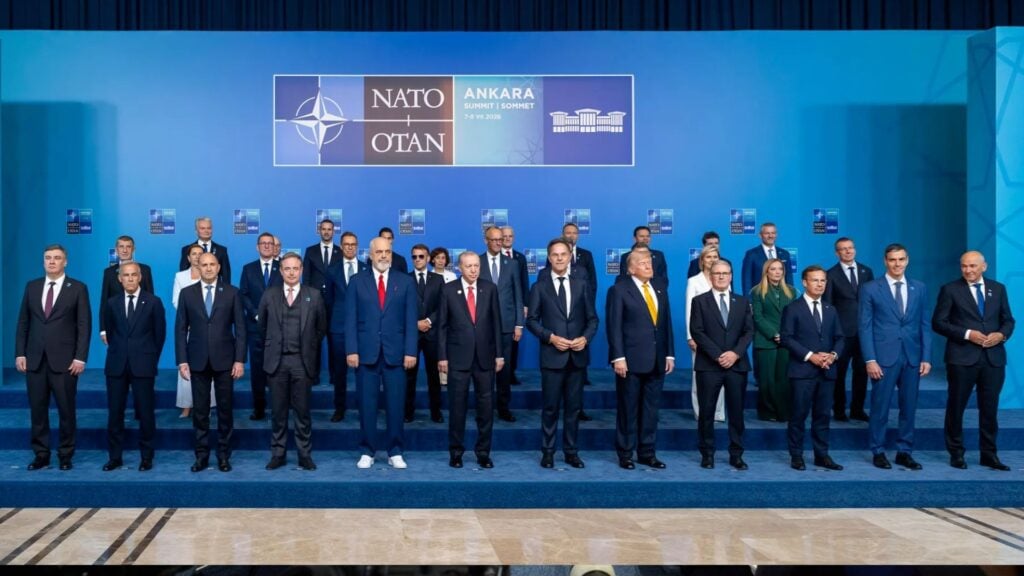
Russia has been recognized as a long-term threat to Euro-Atlantic security. This provision is contained in the declaration adopted following the NATO summit in Ankara. Meanwhile, under the Biden administration, the wording was more categorical: “the most significant and direct threat to the security of the allies.” Is this a diplomatic step backward (a softening of positions) or a realistic acknowledgment that the confrontation with Russia will drag on for decades?
— I wouldn’t say this is exactly a step backward. We need to look at the broader context: for example, last year the “White Paper” on Euro-Atlantic security was adopted, in which Russia is clearly identified as a threat, and this has paved the way for a large-scale deployment of troops and increased defense budgets. In other words, there is a real program in place to counter Russian military expansion in Europe.
On the other hand, the U.S. stance has indeed softened somewhat in its rhetoric. But even under Biden, aside from loud talk of a “direct threat,” we haven’t seen swift and decisive action. Support for Ukraine was there, but not on the scale that would have allowed us to achieve victory. Problems arose—sometimes with intelligence data, sometimes with the effective use of systems like HIMARS, and sometimes with constant restrictions on strikes against Russian territory.
Therefore, NATO’s current position represents more of an evolution from rhetoric to practical realism. The West is finally trying to take a systematic, long-term approach. The only problem is that the Alliance and the European Union are integrating Ukraine’s experience into their defense plans far too slowly. It is Ukraine that currently has practical experience in waging modern warfare against Russia, as we possess unique combat experience that no NATO army has today. As demonstrated during joint exercises, even Alliance units are outmatched by Ukrainian fighters when it comes to the realities of modern high-intensity warfare. The Russian army has also grown significantly over the years in purely military terms. Ignoring Ukraine’s experience and attempting to build a security system without Ukraine is a critical mistake that could cost the West dearly.
No Longer a Buffer: Why Is the World Forced to Build Security Around Ukraine?
The world is entering a phase of reevaluating its security architecture. World leaders are speaking openly about this. And Ukraine is setting the agenda, as we saw at the NATO summit in Ankara. What specific moment or event, in your opinion, marked the point of no return when the world realized that Ukraine is no longer a “buffer” but an independent architect of security?
— The West was simply backed into a corner by the facts. At the start of the full-scale Russian invasion, we were given only a few days; no one believed in our ability to hold out. Many in European government offices hoped it would all be over in a few hours—they would simply express their traditional “deep outrage,” limit themselves to supplying helmets and body armor, and carry on with business as usual. For them, that would have been the most convenient scenario.
But Ukrainians thwarted those plans, proving that we are a formidable, independent force. Our soldiers have made the West believe in Ukraine. Now world leaders are forced to recognize our sovereignty and take us seriously, because we did not allow Russia to achieve its strategic goals.
Why has the post-1945 world order ceased to function, and has the world adapted to the new reality? Is the current division between the “axis of evil” and the “axis of democracy” final, or is the system still in the process of transformation?
— The system is undergoing global and very painful changes. Global institutions have proven to be completely unprepared for today’s challenges. For years, international organizations—including the UN and even some NATO bodies—were infiltrated by Russian agents of influence, funded and corrupted by the Kremlin.
When local conflicts flared up, they could still somehow be quelled, or, more often, simply ignored. But now, with a full-scale war underway, the whole world has seen that NATO, in its current form, does not guarantee rapid protection against hybrid and conventional threats, and that the UN is utterly powerless to stop aggression. The 1945 world order is dead. Everything must change, and everything will change.
“Nuclear weapons, culture, and a seat at the UN”: the three pillars on which Russia’s blackmail of the world rests
If the world is entering a period of reforming international institutions, why is there still a place for Russia there? Specifically, at the UN?
— The situationwith the UN is the most absurd. Russia is there completely illegally—that is a legal fact. It never went through the procedure for joining the UN as a separate state, as required by the Charter. In 1991, they simply “swapped out the sign” from the USSR to the Russian Federation. We are actively working to correct this injustice together with the Ministry of Foreign Affairs of Ukraine, with which we have signed a memorandum.
At the time, the West completely ignored the importance of reforming this process. The world turned a blind eye to the fact that the USSR had kept half of Europe (Ukraine, Poland, the Czech Republic, etc.) under its yoke for decades, and allowed Russia to automatically take its seat on the Security Council. What’s more, if you open the UN Charter today, you won’t find the words “Russian Federation” there. It still says “USSR.” International diplomacy pretends that we are still living in the 1990s. This creates a total crisis of legitimacy for the organization.
Watch us on YouTube: important topics – without censorship
Paradoxically, on July 9, the UN Security Council convened an emergency meeting due to yet another wave of massive attacks by the Russian Federation on Ukraine. Ukraine called on the UN Security Council to immediately adopt a resolution on a ceasefire.
A representative of the aggressor country still sits there, justifying all of Russia’s shelling. Isn’t this a slap in the face of democracy?
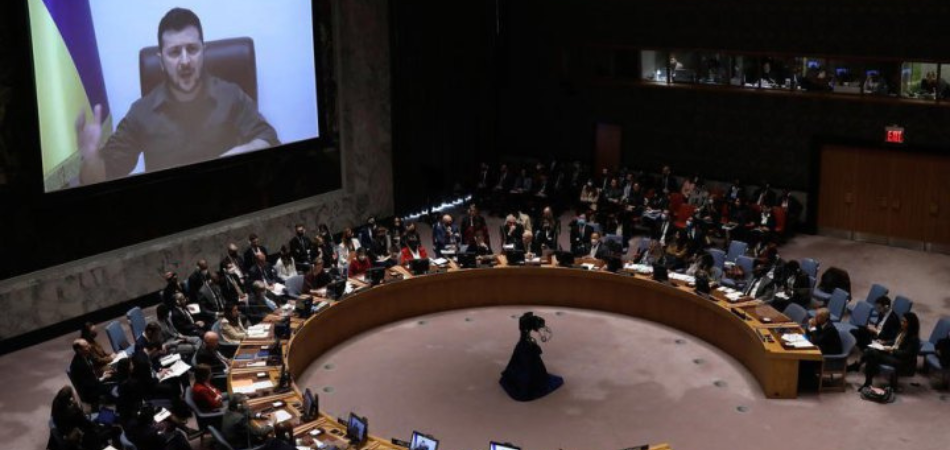
— For Russia, the UN—and especially its seat on the Security Council—is one of the main tools for legitimizing its aggression and engaging in international blackmail. Medvedev himself openly stated that they are ready to fight for a seat on the Security Council and hold on to it until the very end. He explicitly said that Russia has three pillars: nuclear weapons, a great culture, and a seat on the UN Security Council. Thanks to its veto power, Russia has literally been buying weapons for itself—such as the Iranian “Shahed” drones. The Kremlin has explicitly promised Tehran to block any sanctions resolutions against Iran in the Security Council in exchange for drones. Russia and the USSR have historically exercised the veto more times than any other country in the world, effectively paralyzing international law. They use the UN podium to broadcast propaganda and justify war crimes.
Moreover, many international organizations have been infiltrated by Russians. When senior officials or experts at international organizations are suddenly found to have accounts in so-called Russian banks, what kind of objectivity can we even talk about? That is why losing this platform would be diplomatic death for Moscow.
— This petition is of immense importance for advocacy. Currently, the platform has an interim goal of 500,000 signatures, which the system set automatically, but our goal is to reach one million or more. This will allow us to formally submit these demands to the UN General Assembly, backed by immense public pressure.
Theinternational petition “Kick Russia out of the UN” on Change.org has currently gathered over 392,000 signatures. Does this idea seem far-fetched, or could this tool actually work?
Every signature is more than just a click. It’s a tool for influence. We urge people not only to sign but also to spread the word, write letters to European and American lawmakers and parliamentarians, and include legal justification for the illegality of Russia’s membership in the UN. Since the UN is an organization funded by its member states, we can exert pressure on it through the governments of those countries. We must force the UN to operate using its own funds and in accordance with its own Charter.
The Future of Global Security and Changes in International Law
If Russia remains in its current status, what risks does this pose to the global security system? And how do you envision the international architecture after the war ends?
— If we leave everything as it is, we’ll end up with a “Weimar Republic” scenario—the situation in Germany after World War I, which directly led to World War II. If the regime in Russia does not undergo a complete transformation, any easing or lifting of sanctions will simply give the aggressor time to gather strength for a new, even bloodier strike.
— Theonly realistic way to transform Russia into a normal country, ridding it of its empire and its “prison of nations,” is to place its territory under the supervision of a UN Trusteeship Council. This will ensure the democratization, demilitarization, and denuclearization of Russia. Of course, this will also allow the subjugated peoples to gain independence as republics and secede from the aggressor state. These territories must undergo forced democratization over the next 50 years to completely rid them of their imperial syndrome.
What changes in international law can and should emerge as the legacy of this war to prevent similar tragedies in the future?
— It is unlikely that we will be able tocompletely avoid wars in the world, since human nature does not change. But we are capable of minimizing the risks.
First, an effective European counterpart to NATO must be created—a strong coalition of countries facing direct threats to their borders and ready to act immediately. Ukraine will be an essential, key component of defense within this system.
Second, this war has clearly demonstrated the vulnerability of the arms supply system, where third countries or partners can block the transfer of missiles or equipment at the most critical moment due to political disputes or fear of “escalation.” A new treaty-based system is needed: if a country is attacked, assistance must be provided automatically, without any domestic political bargaining or restrictions on the use of weapons for self-defense.
Today, the Baltic states understand perfectly well that if Putin attacks them, they may be left to fend for themselves should political wavering arise in the United States or other NATO countries. The collective security system must be automated, with decisions on the use of force in response to aggression made instantly and jointly.
Ukraine’s defense forces have already proven on the battlefield that they are capable of standing up to the Russian empire. Ukrainian drones and missiles are flying 3,000 kilometers deep into Russia. All of this is our achievement and our strength, and that is precisely why we now have the right to set the agenda and demand changes, including within organizations such as the UN. The full restoration of our borders and the subsequent implementation of mechanisms for the forced demilitarization and liberation of the enslaved peoples of Russia—this is the only chance for the entire civilized world to survive and build a secure future.
Read us on Telegram: important topics – without censorship