The Circular, Avraamiy, and the Struggle for Influence: What’s Happening Inside the OCU
13 July 14:44
The publication of an internal circular from the Kyiv Metropolis of the OCU and the announcement of possible personnel changes regarding Bishop Abraham, the vicar of the Kyiv-Pechersk Lavra, have been the two most high-profile internal church events of recent days. While the first document sets out new rules for bishops’ interactions with the Primate and government authorities, the second story concerns the possible practical application of these approaches. "Komersant Ukrainian" analyzed the content of the circular, the arguments of its authors, and the context of the conflict unfolding within the OCU.
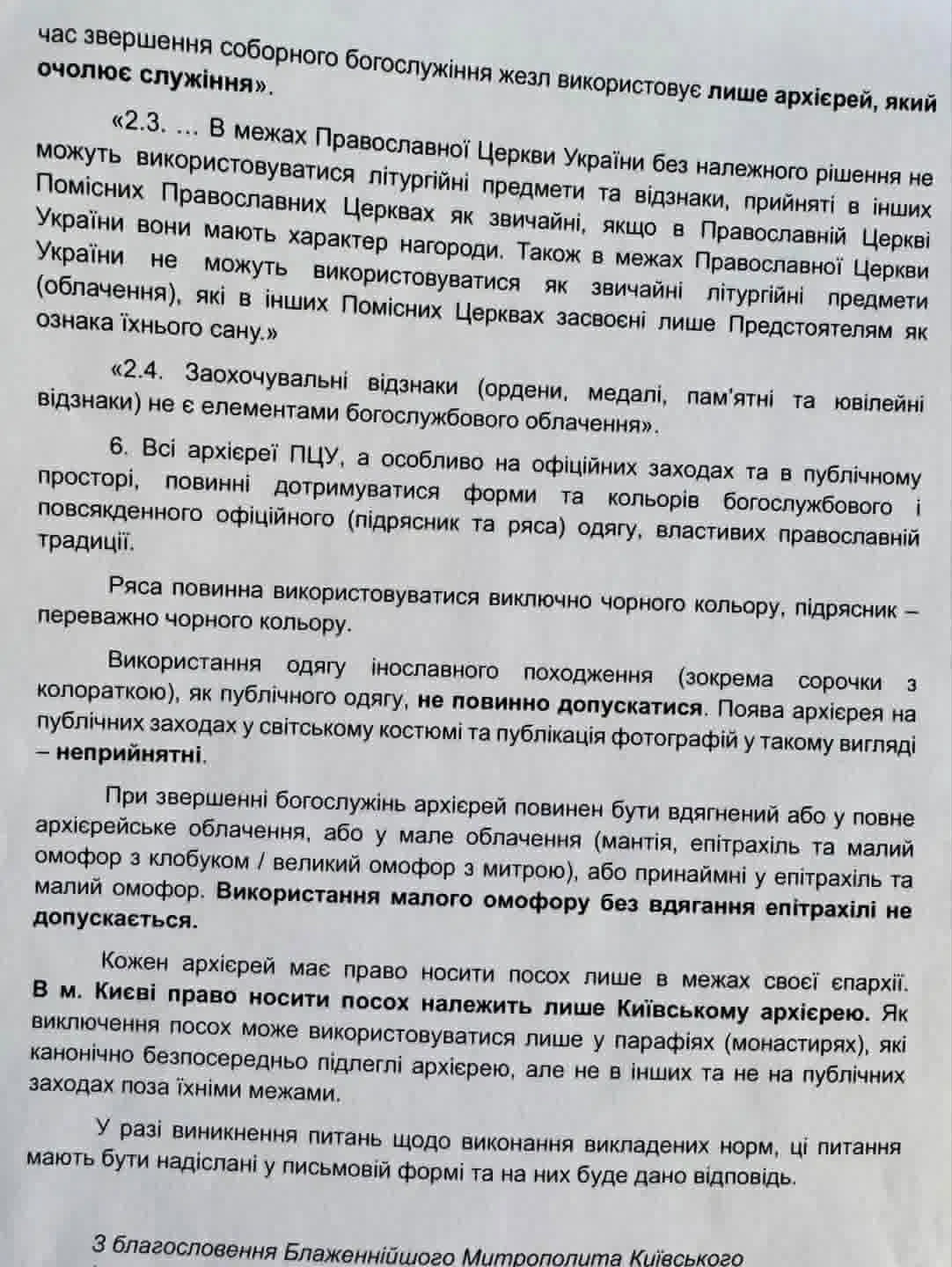
A Document That Changes the Rules
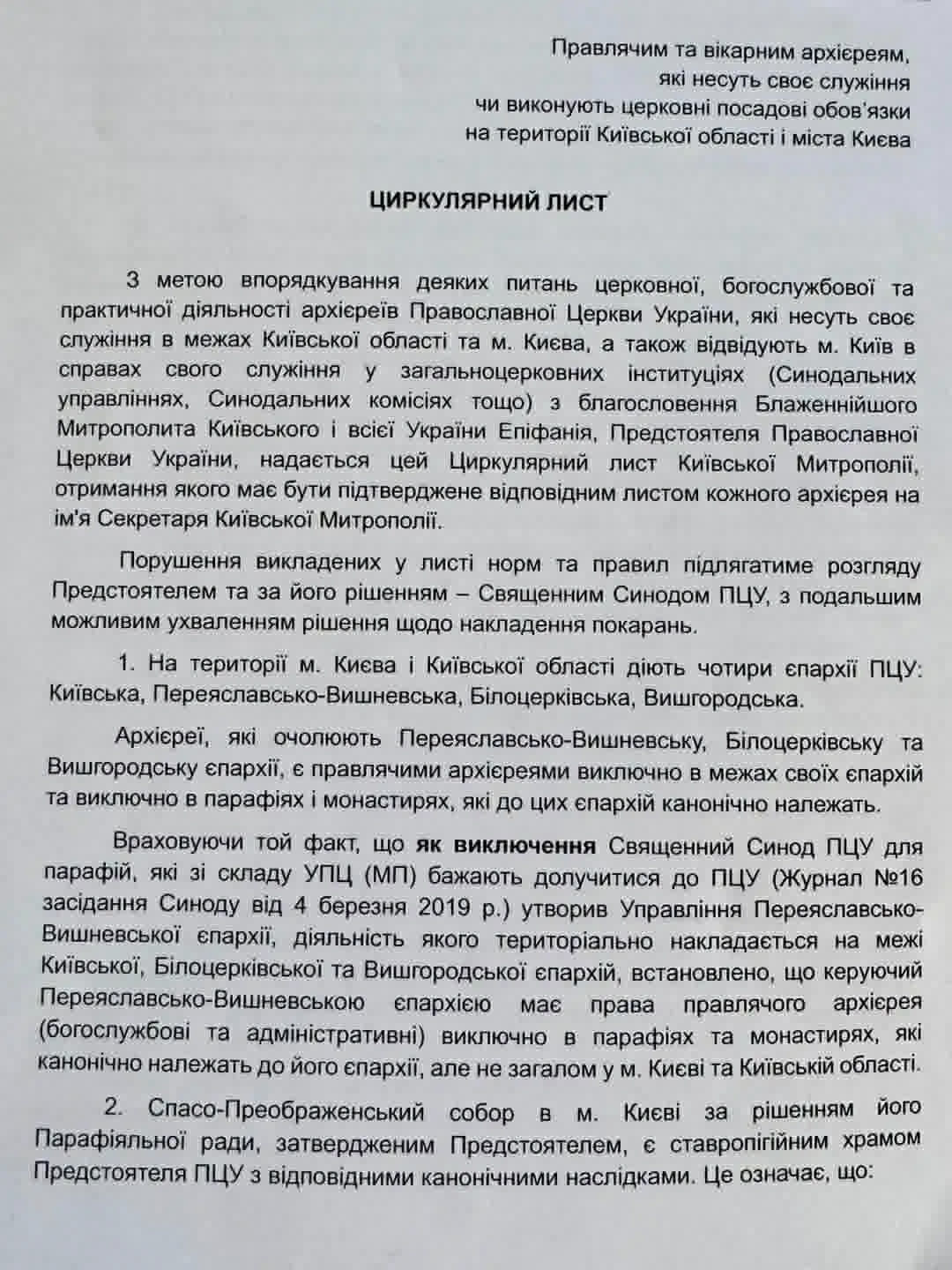
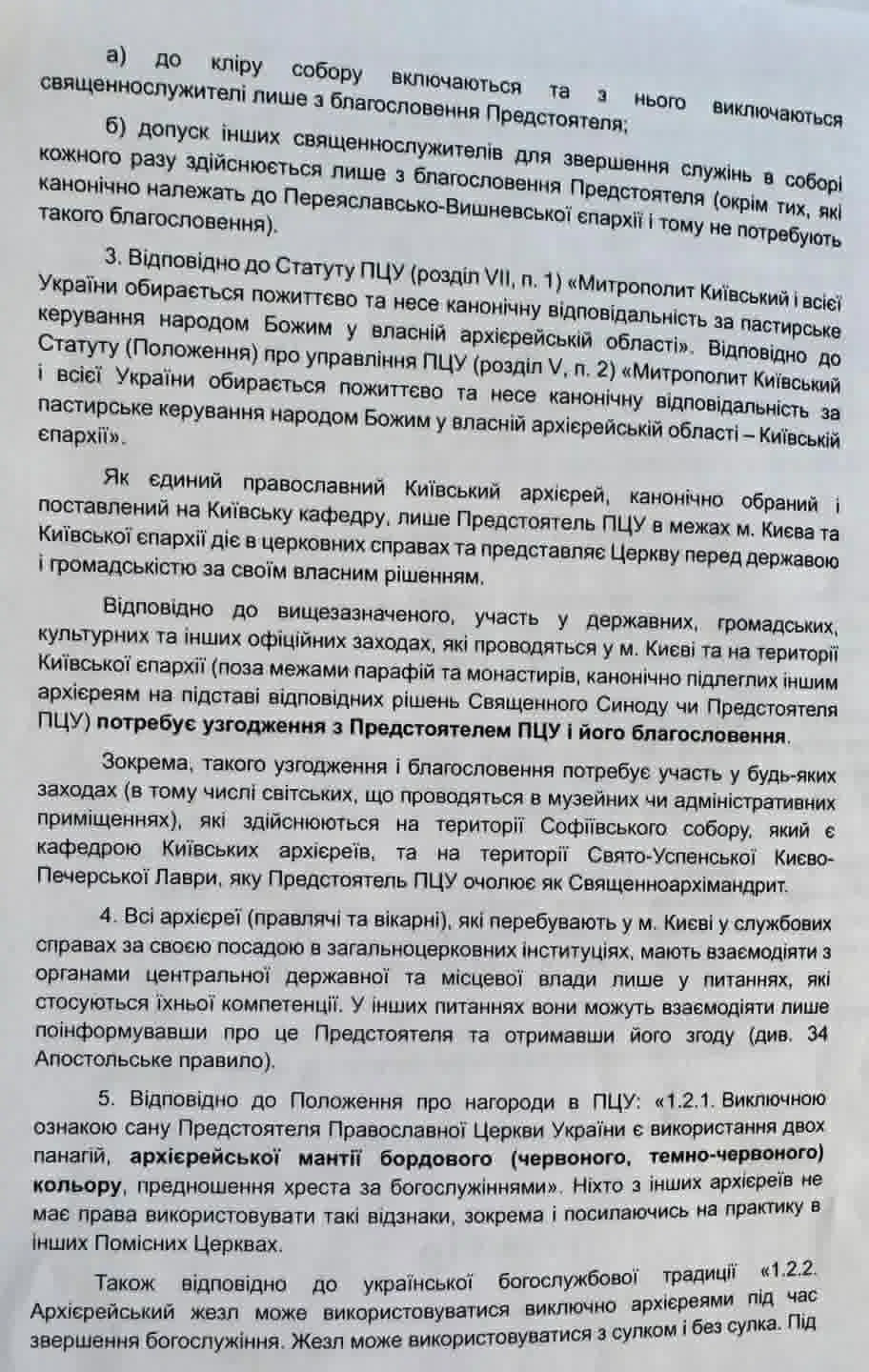
The website “Spiritual Front of Ukraine” published an internal circular from the Kyiv Metropolis of the Orthodox Church of Ukraine, which regulates the activities of bishops ministering in Kyiv and the Kyiv region. Formally, the circular is devoted to “clarifying certain issues regarding the ecclesiastical, liturgical, and practical activities of bishops.” However, some of its provisions significantly expand the Primate’s role in representing the Church.
In particular, the document states:
“only the Primate of the OCU acts in ecclesiastical matters and represents the Church before the state and the public at his own discretion.”
At the same time, according to the circular, the participation of other bishops in state, public, or cultural events within Kyiv and the surrounding region
“requires coordination with the Primate of the OCU and his blessing.”
The document also specifies that bishops may interact with central government authorities only after they
“have informed the Primate of this and received his consent.”
It is precisely these provisions, as pointed out by the authors of the “Spiritual Front of Ukraine” article, that demonstrate a shift toward a more centralized model of governance.
“The document no longer centers on the Council of Bishops as the bearer of legitimate ecclesiastical authority, but rather on a single administrative center that monopolizes external communications,” the article emphasizes.
The Threat of Bishop Abraham’s Removal
Furthermore, according to “Spiritual Front of Ukraine,” as early as July 13–14, the Holy Synod of the OCU may consider the removal of Bishop Abraham from his position as abbot of the Kyiv-Pechersk Lavra.
Citing its own sources, the publication claims that several scenarios are being considered— not only “direct dismissal, ” but also “transferring Bishop Abraham to another see, encouraging him to submit a resignation of his own accord, or creating conditions under which his continued presence at the Lavra would be presented as impractical from an administrative standpoint.”
At the same time, the publication’s sources emphasize that there are no complaints regarding the bishop’s ministry.
“…this is primarily a struggle for control over the Church’s representation in relations with the central government,” the authors note.
They attribute the escalation of the situation to the events following the Russian attack on the Kyiv-Pechersk Lavra in June.
After the drone strike, the President of Ukraine visited the monastery, and Bishop Avraam, as the Lavra’s abbot, “had the opportunity to speak personally with the head of state.”
It was precisely this that “became one of the catalysts for the subsequent internal conflict,” the religious publication notes .
According to the authors of the article, if there is a concurrent internal document (circular) that effectively establishes the Primate as the Church’s representative to the state, then the emergence of a bishop with his own public communications may be perceived as a challenge to the established system.
“…a bishop who gains his own public standing and direct contact with state leadership begins to be perceived not as a co-minister of the Primate, but as a potential rival to the administrative center,” the article states.
According to the publication, if a decision to remove Avraam is not made in the near future, a “deferred removal scenario” may be implemented . The essence of this scenario is “to avoid open conflict now, but later create a situation in which Bishop Avraam’s dismissal can be explained not by personal motives, but by managerial inefficiency.”
Officially, the OCU has not yet confirmed the information about the possible removal of Bishop Avraam and has not commented on the publication of the circular.
At the same time, this document alone has drawn attention to the principles of church governance. Within church circles, in particular, there has been discussion as to whether it signals a gradual shift in the model—from the traditional principle of conciliarity to a more centralized system of church governance.