Will Ukraine feel the effects of the environmental disaster in Tuapse: what should Odessa residents prepare for?
29 April 14:41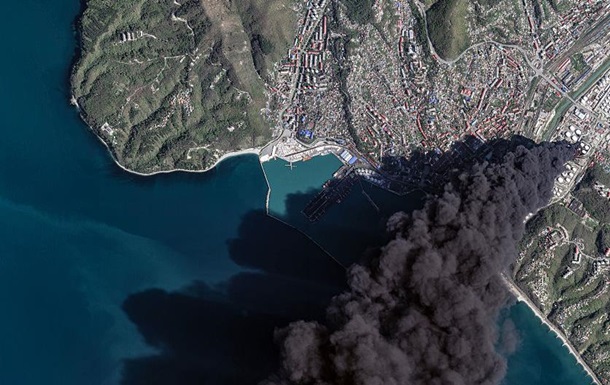
Strikes on Russia’s oil refining infrastructure are causing not only economic paralysis for the enemy but also concerns about the state of the Black Sea ecosystem. The fire at the refinery in Tuapse has become yet another sign of environmental danger. Is there a risk of the Black Sea becoming contaminated, and could oil slicks turn it into a dead zone?
Is there a threat of contamination of the Black Sea?
The environmental consequences of attacks on Russian refineries may have a much longer-lasting effect than the fires themselves. Yaroslav Yemelyanenko, a member of the Public Council under the State Agency for Environmental Protection, warns of a hidden threat to the marine ecosystem and human health due to contamination of food chains.
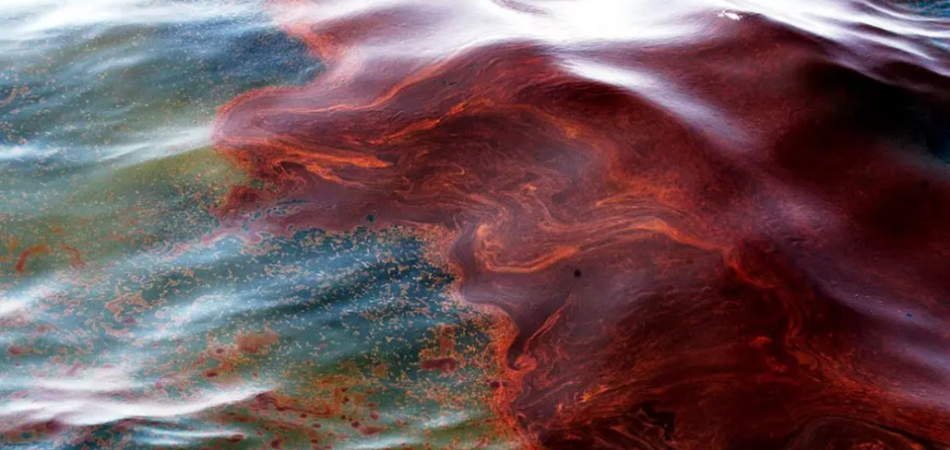
“The consequences of such fires are long-lasting but mostly local. In the Tuapse area and the surrounding region, heavy oil fractions settle in bottom sediments, affecting plankton and bottom-dwelling organisms, and through them—the entire local food web. For people, this means risks during the fire itself due to combustion products and a more delayed effect through food in the long term,” says Yemelyanenko.
At the same time, Yemelianenko emphasizes the sea’s ability to self-clean over long distances. He says this is not a scenario where the entire sea becomes contaminated.
“A significant portion of the oil products evaporates or decomposes quickly; the rest is diluted by the volume of water and currents. Therefore, beyond the incident zone, the impact weakens sharply and returns to background levels. The situation is serious and long-lasting—but for a specific area, not for the entire Black Sea or other countries,” says Yemelyanenko.
Why is Russia unable to stop the disaster?
The reason for the protracted disaster lies in the degradation of Russia’s management system and resources. According to a member of the Public Council under the State Agency for Environmental Protection, such accidents in Russia become problematic not only because of the damage itself, but also because of the response.
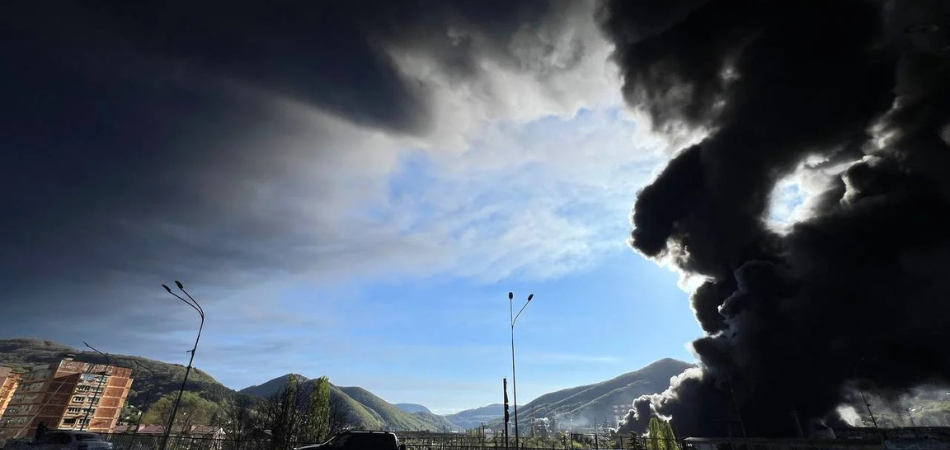
“A significant portion of the oil refining system is outdated, response mechanisms often operate slowly, and access to modern technologies is limited. This leads to prolonged fires, greater emissions, and a longer-lasting impact on the environment,” adds Yemelyanenko.
Yaroslav Yemelianenko directly links Russia’s environmental helplessness to its military aggression. After all, Russia currently lacks sufficient resources for rapid and effective large-scale cleanup.
“Russia is exhausted by years of trying to ‘take Kyiv in three days.’ And the lack of information for the public and the ineffectiveness of the authorities’ actions only exacerbate the damage and panic among Russians. If such incidents recur, they begin to accumulate into a cumulative environmental impact for the region,” says Yemelianenko.
Is there a threat to the Odesa region?
The most pressing question on Ukrainians’ minds: will the wind or ocean currents carry “greetings” from the burning city of Tuapse to our shores? The expert reassures us: geography and physics are on our side.
“As for the air, the distance from Tuapse is too great, and such emissions disperse quickly and do not maintain dangerous concentrations over hundreds of kilometers. In other words, it won’t reach the Odesa region in a form that would have any impact on health,” says Yaroslav Yemelianenko.
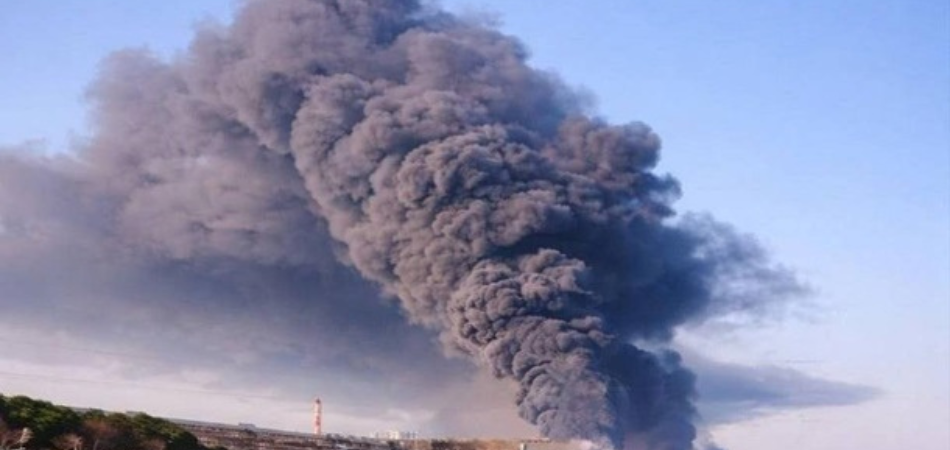
As for ocean currents, the situation is even clearer. The spread via water will be different, the expert says.
“Surface currents in the Black Sea move along the coast of the Russian Federation, so the main transport of pollution will head toward Sochi and further along that same coast. This localizes the impact specifically in Russia’s coastal zone without spreading to other countries,” says Yemelyanenko.
Thus, the environmental consequences of the strikes on the oil refinery are a painful blow to Russia itself. Thanks to natural factors, the Ukrainian region of Odesa remains safe from toxic emissions from Tuapse, while the aggressor country is forced to pay with its own resources and environment for its outdated infrastructure and war-ravaged economy.
Watch us on YouTube: important topics – without censorship
What is the Kremlin saying?
The strikes by Ukrainian drones on the oil refinery in Tuapse had an effect the Kremlin did not anticipate. For the first time in a long while, the scale of the destruction forced Vladimir Putin to personally comment on the incident, attempting to save face amid the obvious failure of the air defense system.
The Russian dictator not only acknowledged the targeted strikes but also tried to shift the focus to environmental safety.
“Here is the latest example—the strikes on energy facilities in Tuapse, which could potentially cause serious environmental consequences,” Putin stated

Interestingly, the dictator cited the governor’s report, assuring that “people are coping” and “there are no serious threats.”
The U.S. Institute for the Study of War notes in its report: Putin’s personal response underscores the significance of the losses. Ukraine is intensifying its offensive campaign precisely as Russia attempts to maximize energy exports to finance the war.
“Ukrainian forces will likely continue to use a wide area to strike deep into Russian rear areas and exploit Russia’s overburdened air defense system to deliver more frequent and larger-scale strikes,” ISW analysts predict.
The increase in drone production in Ukraine is becoming a strategic dead end for the Kremlin, one that the dictator has to address personally to quell panic.
Read us on Telegram: important topics – without censorship
Watch us on YouTube: important topics – without censorship