When to expect the next major offensive: an expert assesses the enemy’s strategy
28 May 18:50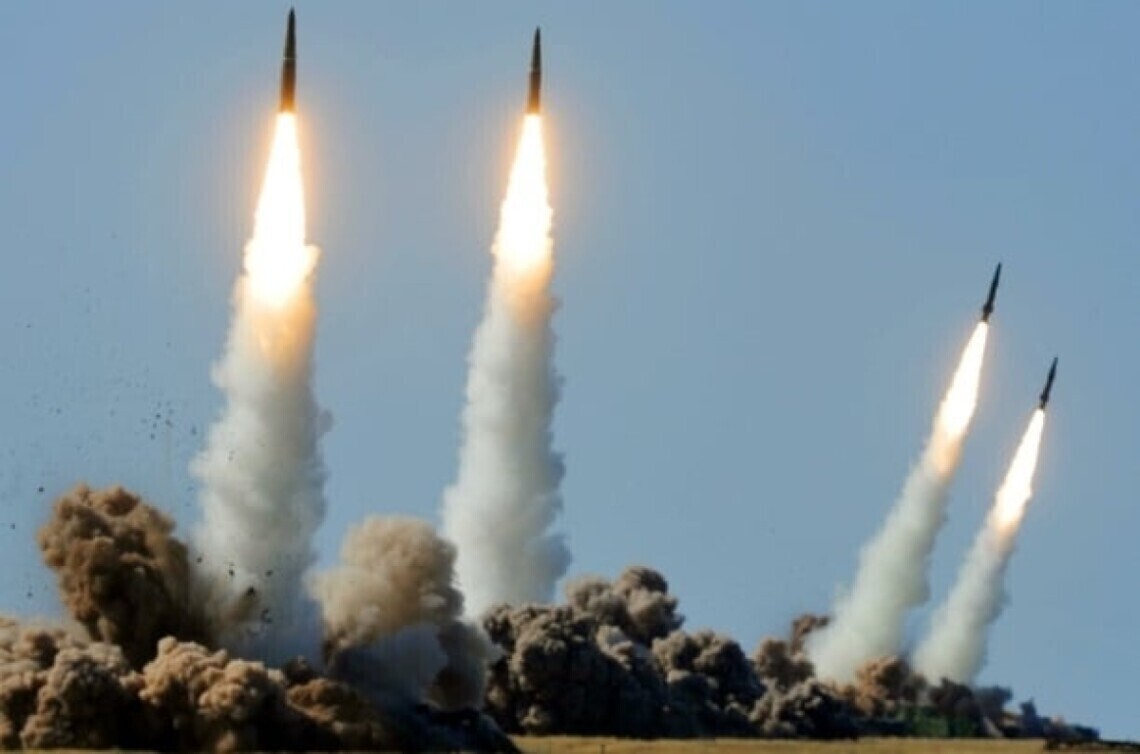
New panic-driven restrictions in Russian airspace prove that the Kremlin is attempting to anticipate the logic of future Ukrainian Armed Forces operations by effectively paralyzing its own airspace. However, while Moscow prepares for defense, Ukrainians are most concerned about the opposite question: when should they expect the next massive attacks from Russia, and what will their actual scale be?
The Russian Foreign Ministry’s loud statements about “systematic retaliation” following the use of the “Oreshnik” missile are forcing experts to look for clear timelines: how and when the enemy is technically capable of launching subsequent strikes.
What real fears lie behind the Kremlin’s decision to close its own airspace, why is Russian air defense powerless to protect strategic oil refineries, and what should Ukraine expect from missile attacks in the near future?
Fear of “friendly fire” and Ukrainian drones
The figure of 5,100 meters in the Russian authorities’ new order did not appear by accident. It is a direct consequence of the mass deployment of small mobile air defense groups in the central regions of the Russian Federation, explains
“Small mobile groups armed with machine guns, anti-aircraft guns, or MANPADS can reach altitudes of up to 5,100 meters. These units on the ground physically lack a ‘friend or foe’ identification system. They see a target in the sky and fire. Russian civilian light aircraft and private aviation have repeatedly come under such ‘friendly fire.’ To separate civilian aircraft from combat units, planes were simply prohibited from flying at this altitude,” explains Svitan.
In addition, the 5-kilometer limit is the technological maximum for most Ukrainian long-range kamikaze drones, which are equipped with internal combustion engines (ICE).
At altitudes above 4–5 km, the thin air and lack of oxygen cause such engines to “choke.” Installing additional compressors adds tens of kilograms to the drone’s weight, reducing the payload capacity for fuel or munitions, explains Svitan.
The Russians reverse-engineered hundreds of downed Ukrainian drones, precisely calculated their performance specifications, and realized: Ukrainian weapons are capable of carrying 100 kg of explosives over a distance of up to 2,000 kilometers—all the way to the Urals, where about 70% of the population and two-thirds of the Russian military-industrial complex are concentrated.
Now, anything flying in this zone below 5,100 meters outside the narrow 10-kilometer passenger corridors will be automatically considered a hostile target by the Russian military, which will attempt to shoot it down.
Air Defense on the Brink: Why Syzran and Ryazan Are Unprotected
Despite attempts to close the airspace, Russia has proven unable to ensure the actual security of its strategic fuel facilities. Recent successful attacks on the Syzran refinery (part of Rosneft and supplying fuel to the strategic aviation airfield in Engels) and the Ryazan refinery clearly demonstrated this.
Svitan emphasizes: it is physically impossible to protect all of Russia’s infrastructure, even if air defense systems from around the world were brought together.
“Russia has 17 million square kilometers of territory, over 1,100 cities, dozens of large refineries, thousands of kilometers of pipelines, and linear oil blending stations. Covering all of this with a dense shield is unrealistic. Therefore, the Russian command took the simplest route: they reliably covered only four points—Moscow, Valdai, part of St. Petersburg, and the Kerch Bridge. Everything else is funded and defended on a residual basis.”
Ukrainian radio intelligence clearly detects every Russian radar, as it “glows like a Christmas tree” on the radio spectrum.
The Ukrainian Armed Forces are successfully exploiting this gap in the enemy’s defenses, methodically destroying the enemy’s oil refineries with the aim of undermining the Russian Federation’s economic foundation.
Missile Threats and the Kremlin’s IPSO
Commenting on statements by the Russian Foreign Ministry regarding “new systemic strikes” on Kyiv and Ukrainian military-industrial complex facilities following the use of the “Oreshnik” missile, Roman Svitan urged Ukrainians not to panic.
In his view, such rhetoric is a classic information and psychological operation (IPO) involving top Kremlin officials. From a military standpoint, Russia is operating at the limits of its production capacity. Currently, the enemy has stockpiled over a hundred missiles of every type in its warehouses.
Read us on Telegram: important topics – without censorship
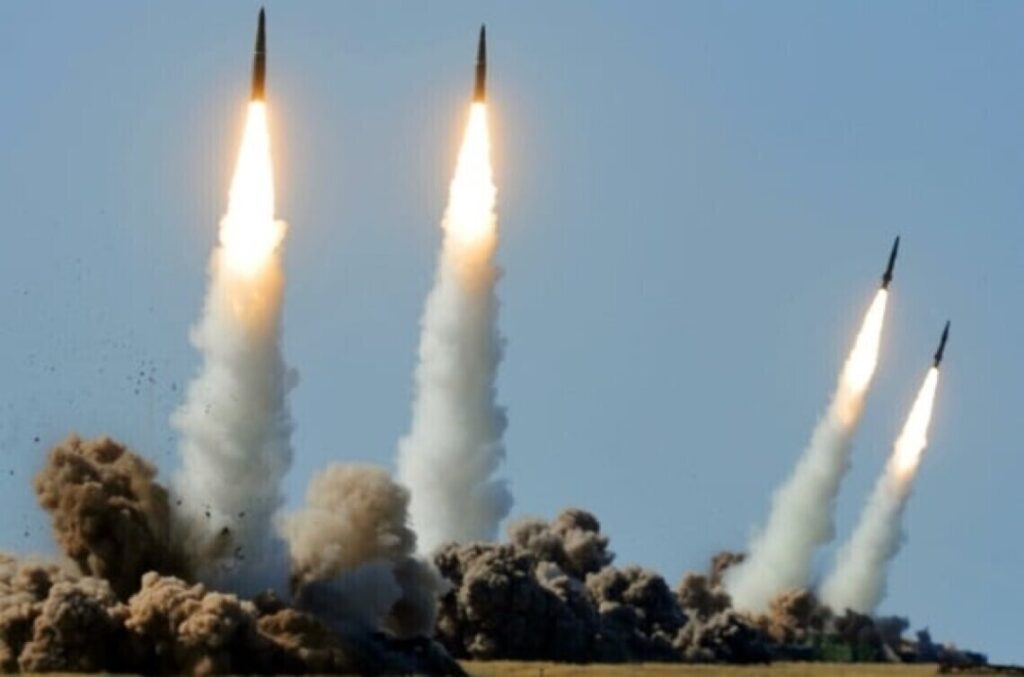
The Russian military-industrial complex allows them to carry out scheduled attacks once a week (mostly on Fridays or Saturdays) with an intensity of about 40 missiles and 400 drones. The enemy is capable of launching larger, more massive strikes involving its untapped reserves (UR) no more than once every six months.
“From Monday to Friday, they conduct flight crew training and missile reloading by technical services. This schedule has already become established. They won’t come up with anything radically new. The Russians will continue to target civilian infrastructure and vital hubs that sustain the population. We’ve been through all this before,” the expert concluded.
An analysis of the Russian military-industrial complex’s actual capabilities removes any uncertainty regarding the timing of future attacks: Russia has hit its technological ceiling and is unable to fire continuously. The next scheduled attacks (with an intensity of about 40 missiles and 400 drones) should be expected according to the established weekly schedule— primarily on Friday or Saturday.
The next massive terror campaign involving the enemy’s untapped missile reserves is possible no more than once every six months. Subsequent strikes will be predictable, cyclical, and aimed at civilian infrastructure—a scenario to which Ukrainian air defense forces and energy sector personnel are already fully prepared.
Watch us on YouTube: important topics – without censorship