€90 billion loan: Parliament ratifies key agreement with the EU
28 May 13:09
The Verkhovna Rada of Ukraine has ratified a memorandum and agreement with the European Union on the provision of a large-scale macro-financial assistance package worth up to 90 billion euros. Yaroslav Zheleznyak, a member of parliament from the “Holos” faction, announced the decision on his Telegram channel, according to "Komersant Ukrainian"
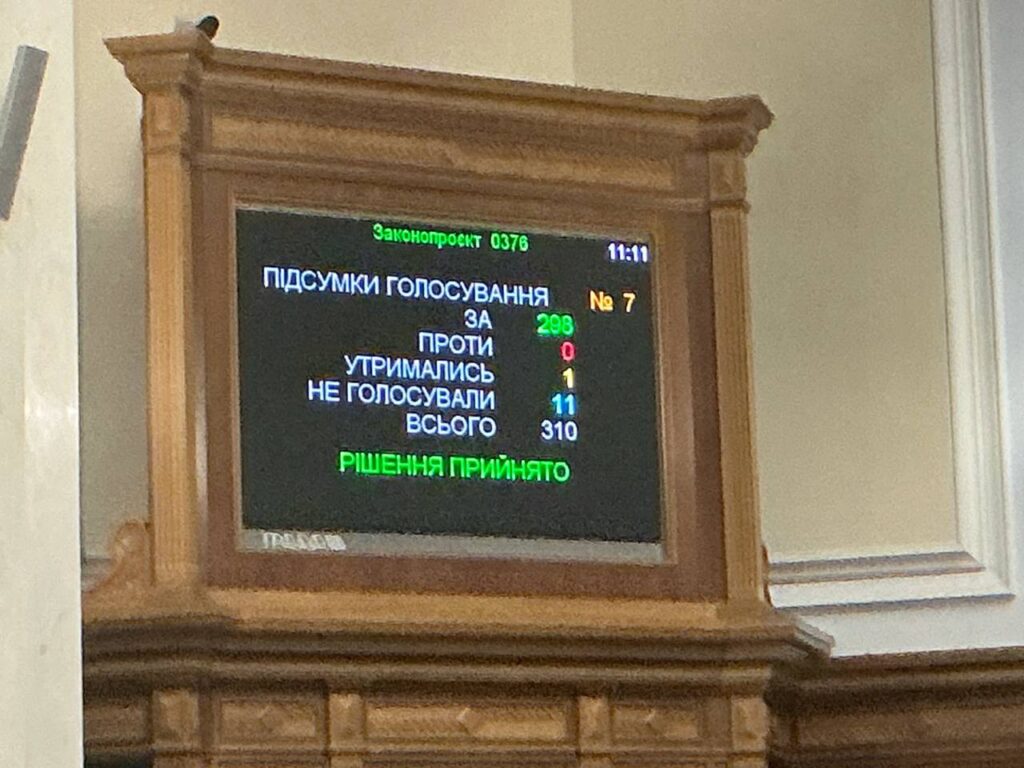
Parliament supported Presidential Bill No. 0376 immediately after President Volodymyr Zelenskyy submitted it to the Verkhovna Rada that morning.
The bill was approved by 298 MPs, with no votes against. One MP abstained, and 11 others did not vote.
What the agreement with the EU entails
Ratification launches a two-year financial support program for Ukraine for 2026–2027. The total amount of loan assistance from the European Union could reach up to 90 billion euros.
The funds are intended to help Ukraine maintain macroeconomic stability, finance critical budgetary needs, and strengthen the country’s defense capabilities.
It is expected that as early as 2026, Ukraine could receive up to 45 billion euros. A significant portion of these funds will be directed specifically toward defense needs.
How much money will go to defense
The total amount of support for 2026 is up to 45 billion euros.
These funds are planned to be divided into two main parts:
- up to 28.3 billion euros — the defense portion;
- 16.7 billion euros — the budgetary portion.
Defense funds are to be used for the procurement of weapons and the strengthening of Ukraine’s defense-industrial complex. This is crucial for Ukraine amid an ongoing war, where the need for weapons, ammunition, equipment, and production capacity remains critical.
The budgetary portion of the aid will be directed toward ensuring macro-financial stability and covering the state budget deficit.
How the budgetary component will be financed
The budgetary component, amounting to 16.7 billion euros, is to be provided through two instruments.
Up to €8.35 billion may be provided directly to Ukraine as macro-financial assistance. An additional €8.35 billion may be provided through the Ukraine Facility.
These funds are needed to support public finances, finance social and critical expenditures, and maintain economic stability during the war.
The loan will be divided into tranches
Under the agreement, the funds will not be disbursed all at once but in tranches. To receive each tranche, Ukraine must meet a series of requirements agreed upon with European partners.
These primarily involve tax, customs, and institutional reforms. The loan conditions also include support for democratic institutions, the independence of the National Bank, transparent reporting, and the irreversibility of anti-corruption reforms.
What are the conditions for the first tranche?
The first tranche, amounting to 3.2 billion euros, is linked to tax reforms.
Key requirements include:
- draft laws to abolish tax exemptions for international parcels;
- taxation of income generated through digital platforms;
- extending the 5% military levy for another three years.
It is estimated that these changes could generate at least 140 billion hryvnias in additional revenue per year.
What is needed for the second tranche
The second tranche of 3.7 billion euros requires the adoption of relevant laws, alignment of corporate taxation with the EU directive, and the development of a plan to improve VAT administration.
This set of conditions concerns deeper changes to the tax system and is intended to bring Ukrainian rules closer to European standards.
The third tranche depends on the reform of the simplified tax system
The third tranche, amounting to 1.45 billion euros, is linked to the reform of the simplified taxation system.
The expected revenue from this reform is estimated at a minimum of 70 billion hryvnias per year.
This condition may become one of the most controversial, as it concerns small businesses, sole proprietors, and changes to tax payment rules.
If the laws are not passed, the funds could be “lost”
The agreement is valid until December 1, 2027. If the Verkhovna Rada does not pass all the laws required by the agreements with the EU, Ukraine may lose access to part of the funds.
MP Yulia Sirko made this statement during the discussion. According to her, failure to meet the requirements could result in the funds being “lost.”
Tax Committee Chair Danylo Getmantsev also urged lawmakers to support the agreement, emphasizing that this involves European taxpayers’ money and, therefore, specific obligations to partners.
How Ukraine will repay the loan
It is separately noted that the costs of servicing these loans, i.e., interest, will be fully covered by the EU budget.
Ukraine is to repay the principal amount of the loan only after receiving reparations from Russia.
This mechanism is important for Ukraine because it allows the country to secure large-scale financing now without immediately placing an additional burden on the state budget.
Why the agreement took so long to implement
The EU agreed to provide this loan back in December, but the aid was blocked due to Hungary’s position.
The deadlock was broken after Viktor Orbán’s Fidesz party lost the election.
At the same time, Hungary, Slovakia, and the Czech Republic will not participate in providing funds under this loan.
Why the reparations loan was rejected
Initially, the EU discussed the idea of a so-called reparations loan. The plan involved transferring a portion of frozen Russian assets to Ukraine as compensation for damages incurred.
However, not all EU countries supported this option. Belgium, in particular, opposed it, as a significant portion of Russian funds is held there. The country feared reputational risks but was not opposed to providing Ukraine with assistance from another source.
European Commission President Ursula von der Leyen reported that several options were considered: a reparations loan or a budgetary loan. Ultimately, the EU opted for the second mechanism.