New rules for drivers are already in effect—who in Germany doesn’t need to take a driving test
18 August 06:56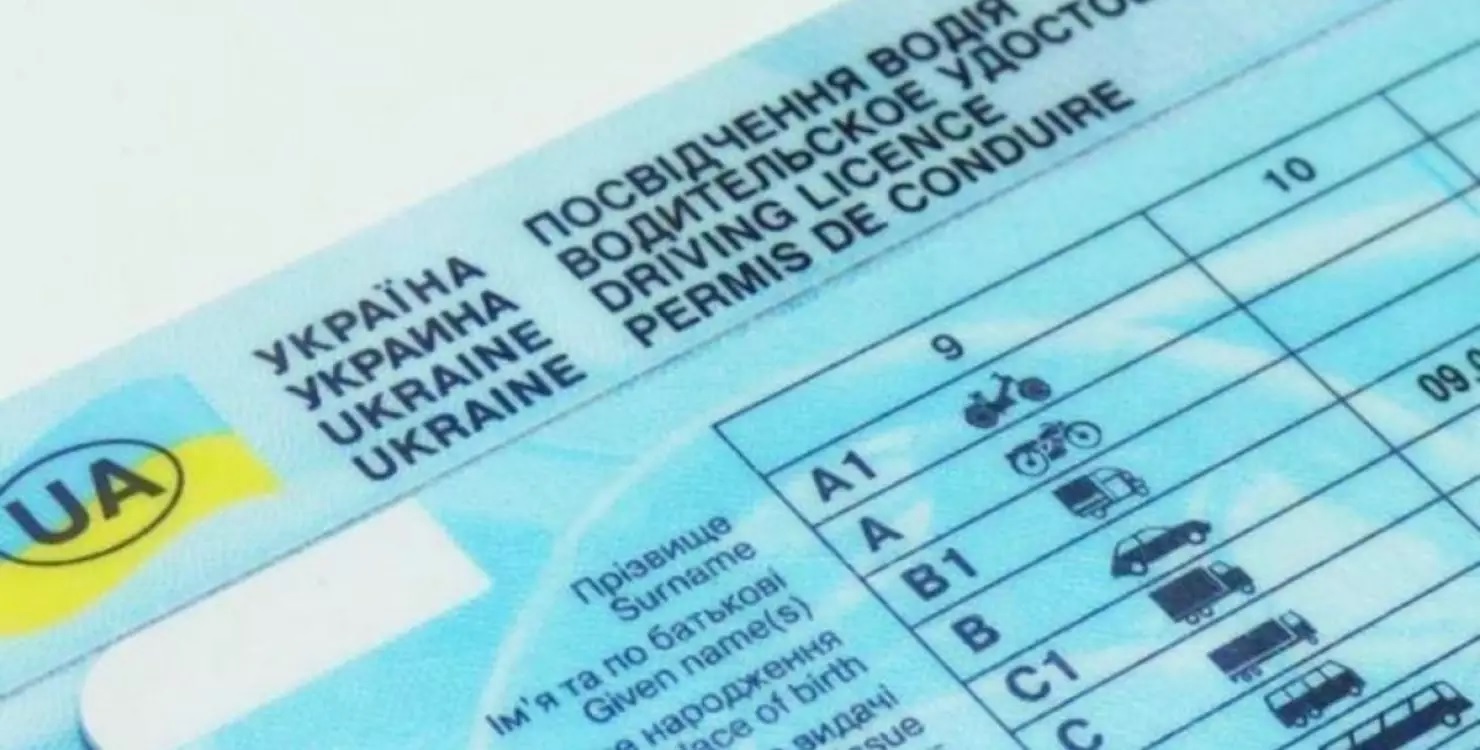
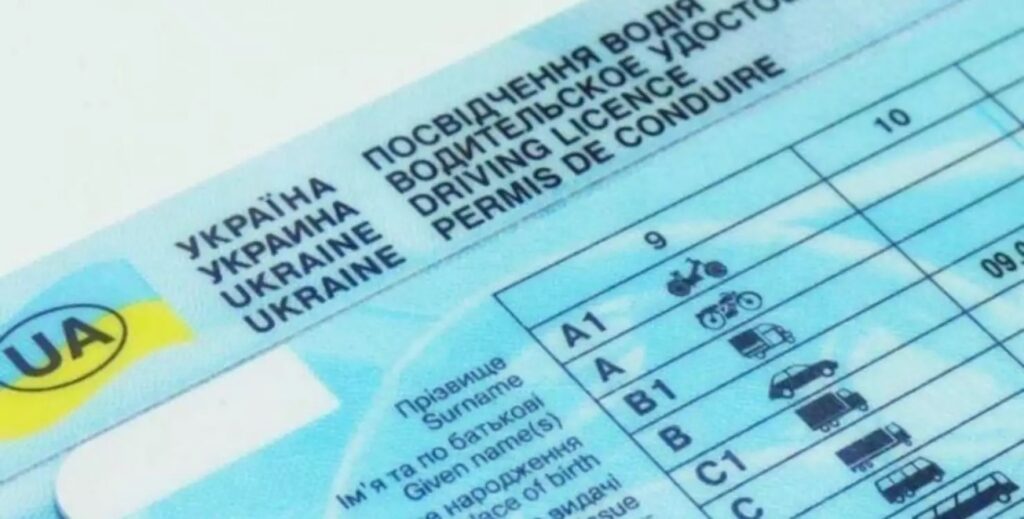
On August 18, 2026, regulations came into effect in Germany that allow Ukrainian driver’s licenses to be exchanged for German ones without taking a written or driving test.
The corresponding decree was published in the German Federal Law Gazette on August 17 under the number BGBl. 2026 I No. 236. The document was signed by Federal Minister of Transport Steffen Bilger, according to "Komersant Ukrainian"
The decree adds Ukraine to Annex 11 of the German Regulation on Driver Licensing (Fahrerlaubnis-Verordnung). This list includes countries whose driver’s licenses can be exchanged through a simplified procedure.
Which Ukrainian driver’s licenses can be exchanged without exams
In the new version of Annex 11 of the FeV, the entry for Ukraine states that theoretical and practical exams are not required for the following categories:
| Ukrainian category | Exchange in Germany | Theory test | Practical exam |
|---|---|---|---|
| A1 | German AM | Not required | Not required |
| A | Applicable category | Not required | Not required |
| B and BE | Eligible categories | Not required | Not required |
| C1, C1E, C, and CE | Corresponding categories | Not required | Not required |
| D1, D1E, D, and DE | Corresponding categories | Not required | Not required |
The document specifically notes that the Ukrainian category A1 is equivalent not to the German A1, but to category AM. This is due to differences between Ukrainian and German requirements for light motorcycles and scooters.
Categories B1 and T are not listed for Ukraine. The procedure for recognizing such licenses must be clarified separately with the local authorities.
The exchange will not take place automatically
Ukraine’s inclusion in Annex 11 does not mean that all Ukrainian licenses are automatically converted to German ones.
The license holder must personally submit an application to the Führerscheinstelle or Fahrerlaubnisbehörde at their place of primary residence. The local authority will verify:
- the applicant’s identity;
- the existence of legal grounds for residence in Germany;
- the authenticity and validity of the Ukrainian license;
- vehicle categories;
- whether there is a driving ban;
- compliance with medical requirements for truck and bus categories.
The simplified procedure applies specifically to holders of licenses issued by Ukraine. According to Annex 11, it is not limited solely to Ukrainian citizens or holders of temporary protection under §24.
At the same time, the license must be valid. The German authorities may also refuse to exchange it if the right to drive has been revoked or restricted, or if the license was obtained in violation of residency requirements.
Who Does Not Need to Exchange Their Ukrainian License Yet
Ukrainians in Germany under temporary protection are not required to apply for an exchange immediately.
According to a clarification from the German Federal Ministry of Transport, valid Ukrainian licenses are recognized in Germany and other EU countries for the duration of temporary protection. This has currently been extended until March 4, 2027.
Holders of valid Ukrainian driver’s licenses do not need:
- an international driver’s license;
- a certified translation;
- a retest;
- an immediate exchange of the document.
These rules are established by EU Regulation No. 2022/1280.
The new procedure is particularly beneficial for those who plan to remain in Germany after the expiration of temporary protection, switch to a work or other residence status, or wish to obtain a full German driver’s license.
What documents may be requested
The exact list of documents is determined by the local Fahrerlaubnisbehörde. Requirements may vary slightly across different federal states and cities.
For example, Berlin’s official service for exchanging a license from a country listed in Annex 11 requires:
- a passport or ID card;
- proof of residence;
- a current biometric photograph;
- the original foreign driver’s license;
- a translation of the document, if necessary;
- medical certificates for categories C and D.
The agency may additionally verify information regarding the Ukrainian driver’s license through the competent authorities in Ukraine.
Therefore, before making an appointment, you should visit the website of the Fahrerlaubnisbehörde in your city and check the local list of required documents.
How much will the exchange cost?
There is no uniform fee for all of Germany, as the administrative fee may be supplemented by costs for a photograph, translation, medical examinations, and document delivery.
In Berlin, the administrative fee for exchanging a foreign license without taking exams is 37.50 euros. The official Munich portal lists the same base amount.
For holders of a Category B license, the procedure should be significantly cheaper than obtaining a German license through theoretical and practical training.
However, for truck and bus drivers, the total cost will be higher due to medical certificates and proof of professional qualifications.
What requirements remain for categories C and D
Holders of Ukrainian licenses in categories C1, C1E, C, CE, D1, D1E, D, and DE are exempt from the theoretical and practical exams but must confirm:
- physical and mental fitness to drive;
- compliance with vision requirements;
- for bus categories—compliance with additional functional requirements.
The new regulation allows for vision tests to be conducted not only by an ophthalmologist but also at a certified optical facility. This should reduce waiting times and simplify the renewal of professional licenses.
A separate exception applies to Ukrainian drivers who obtained a Category C or D license without first obtaining a Category B license.
German regulations do not allow for the issuance of categories C or D without first holding category B. Therefore, to obtain a German category B, such an applicant will have to pass both exams.
License exchange does not replace Code 95
Possession of a Class C or D license alone does not authorize one to work as a truck or bus driver in Germany.
For commercial transportation, professional qualifications—usually designated by Code 95—must be separately verified. The German Federal Ministry of Transport highlights this requirement.
The new regulation simplifies access to the profession for Ukrainians. The exam for obtaining accelerated basic professional driver qualifications may now be taken in Ukrainian.
In addition, the duration of the practical exam for professional qualification has been reduced:
- the main practical phase has been reduced from 120 to 90 minutes;
- a separate 60-minute section on handling critical situations has been eliminated.
Thus, the total duration of the practical qualification exam has been reduced by 90 minutes.
When will the theoretical exam in Ukrainian go into effect?
The resolution adds Ukrainian to the list of languages for the standard theoretical driver’s license exam. However, special §76a of the FeV stipulates that this provision will not take effect until April 1, 2027.
This means that a distinction must be made between the two exams:
- the driver’s professional qualification exam can be taken in Ukrainian starting August 18, 2026;
- the standard theory test for obtaining a driver’s license will be available in Ukrainian starting April 1, 2027.
Neither of these exams is required to exchange the Ukrainian categories listed in Annex 11.
What to Do If Your License Is Lost or Stolen
The regulation introduces a special code, 99.01, for a document issued in place of a lost or stolen Ukrainian driver’s license.
This document is a special copy and is valid only for the duration of temporary protection. To obtain it, you must apply to the Fahrerlaubnisbehörde in your place of residence.
The German authorities will verify with the Ukrainian authorities whether the person actually held the corresponding driver’s license.
This temporary document should not be confused with a full-fledged exchange of a valid Ukrainian driver’s license for a German one.
How many Ukrainians are affected by the changes
In the explanatory materials accompanying the draft Bundesrat Resolution No. 318/26, the maximum number of potential applicants with Ukrainian driver’s licenses was estimated at approximately 600,000.
The German government estimated that about half of them might take advantage of the exchange option. Thus, the likely number of applicants could be around 300,000 people.
This is only an estimate, not a forecast of the number of applications in 2026. Some Ukrainians will continue to use their national IDs while under temporary protection, while others may return to Ukraine.
What Has Changed Since August 18
Following the official publication of the resolution, Ukrainians now have a permanent legal mechanism for the simplified exchange of identity cards that is not solely dependent on wartime emergency regulations.
The main changes are as follows:
- Ukraine has been officially added to Annex 11 of the FeV;
- most categories can be exchanged without theory or practical tests;
- Medical requirements remain in place for categories C and D;
- the Ukrainian A1 license is exchangeable for the German AM license;
- professional qualification exams may be taken in Ukrainian;
- Eye exams may now be conducted at optical stores;
- A document with code 99.01 has been introduced for lost licenses;
- The standard written exam in Ukrainian will take effect on April 1, 2027.
Read us on Telegram: important topics – without censorship