Oil Is More Expensive in Ukraine Than in Europe: An Expert Predicts What Will Happen to Prices Next
21 July 13:50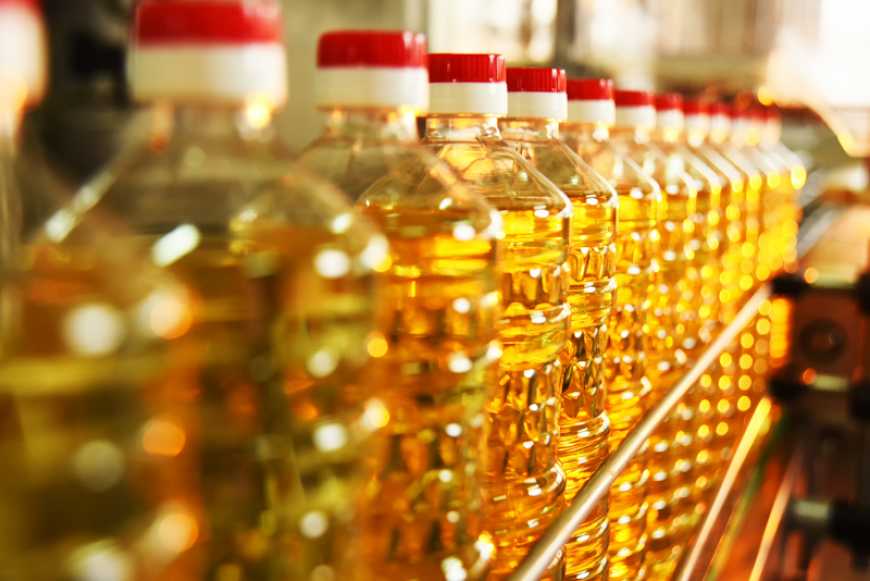
The price of sunflower oil in Ukraine currently exceeds the cost of similar products on the shelves of European supermarkets. The product is at least 5–7% more expensive than in neighboring Poland, according to a comment by Leonid Kozachenko, president of the Ukrainian Agrarian Confederation, as reported by "Komersant Ukrainian".
According to the expert, this is primarily due to logistics costs, particularly the prices of fuel and mineral fertilizers. In addition, as Kozachenko notes, labor costs have also risen, and all of this has hit processors’ pockets very hard.
“They couldn’t buy sunflower seeds at those prices, and, in fact, there was a major problem. Here, sunflower seed prices—which were at record highs, reaching up to 35,000 or even 40,000 hryvnias per metric ton—resulted in a loss of $50 per metric ton of oil. That’s why this caused the price increase, though the increase was modest. If we look at Eastern Europe, a month ago—I won’t give an exact figure today—but prices in Poland were about 5% lower than ours,” the expert explains.
According to Kozachenko, the price will drop slightly going forward because, as he puts it, producers have no choice—they need to sell their goods.
“But even though they don’t want to sell right away, they have to, because they have large debts to banks and to suppliers of various goods they use to grow crops, so they have to sell. And the price, of course, will fall,” explains Kozachenko.
However, he says this won’t happen immediately; a drop in the price of oil should be expected in about a month and a half.
“As of today, for example, it has already fallen to about 30,000 hryvnias per metric ton. It will drop further, and I think the processing plants will start operating again, but not sooner than in a month and a half,” says Kozachenko.
As Kozachenko explains, if we consider all the oil produced in our country, sunflower oil accounts for 96% of total consumption. He notes that this year, the sunflower harvest is expected to be at least one million metric tons higher. Last year, we harvested 10.5 million metric tons; this year, the harvest will be at least 12.5 million metric tons. This will also affect the cost of raw materials, which may drop slightly at the start of the harvest, says the expert.
“We’ve started harvesting rapeseed now. Rapeseed is also very marketable, and its profitability is higher than that of grain crops. The oil we produce from rapeseed is mainly exported to the European Union for biofuel production. Only one company here—‘Korolivskyi Smak’—produces edible rapeseed oil and bottles it; no one else does. “Well, of course, soybean oil is also produced, but neither rapeseed oil nor soybean oil is, let’s say, very popular on the market, because we mainly consume sunflower oil,” says Kozachenko.
Watch us on YouTube: important topics – without censorship
Producers Face Problems Due to Russian Attacks
However, as Kozachenko notes, there are currently huge problems in the market. This is primarily because the largest oil producers, which had logistics centers in the Black Sea region, suffered the most losses due to Russian shelling.
“These are Kernel and Olsids. Over the past two months, these companies have been hit by seven major strikes—the total number across both companies. I can’t specify the percentage of these assets that have been destroyed, but the losses are enormous. This will, of course, affect production costs and the question of where to get the funds to rebuild all of this. You can’t get it from a Ukrainian bank, and a foreign bank won’t provide it without insurance. Various options for implementing insurance are currently being considered, because, yes, oil—millions of metric tons of which we export to other countries—is also a product that is essential for humanity; it’s not just for us, it’s for everyone living on the planet.”
According to Kozachenko, producers now need to figure out how to proceed in this situation; however, he immediately notes that no one can predict the future at this time because the situation is quite complex. Nevertheless, despite the situation, the expert says that a price of around 110 hryvnias per liter of oil is currently justified.
“Right now, 110 hryvnias is the cost of production, and this is due to the enormous losses I mentioned—logistics, the assets being used, the plants producing this product, the cost of fuel, and many other expenses that didn’t exist before the war began. The losses we’re incurring have increased exponentially, and, of course, it’s very difficult to keep prices stable under these conditions,” explains Kozachenko.
Oil Prices in Supermarkets
According to the Ministry of Finance’s website, the current average prices for vegetable oil are as follows:
| Oleina Refined Vegetable Oil | 850 ml |
| 99.10 UAH | |
| “Shchedry Dar” refined vegetable oil | 850 ml |
| 96.63 UAH |
| Auchan | ||
| Oleina Refined Oil | (850 ml) | 89.90 UAH |
| “Generous Gift” Refined Oil | (850 ml) | 98.40 UAH |
| Megamarket | ||
| Refined Oleyna Oil | (850 ml) | 105.50 UAH |
| Metro | ||
| Refined Olein Oil | (850 ml) | 99.00 UAH |
| “Shchedry Dar” Refined Oil | (850 ml) | 96.50 UAH |
| Novus | ||
| Refined Oleyna Oil | (850 ml) | 102.00 UAH |
| “Generous Gift” Refined Oil | (850 ml) | 94.99 UAH |
Read us on Telegram: important topics – without censorship